

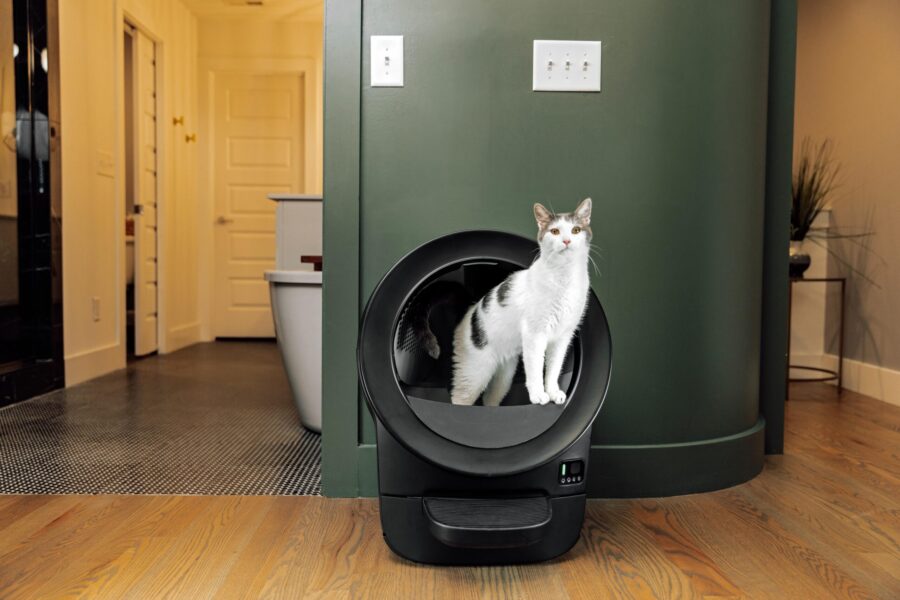
The best automatic litter boxes for cats can help your patients with regular feline weight monitoring and provide valuable health insights.
Weight is one of the most important health metrics veterinarians can monitor in feline patients. Even subtle fluctuations can provide early insight into developing medical concerns, making regular weight tracking an essential part of preventative care. Weight management is especially critical in larger cats, where gradual changes may be more difficult to notice. Most pet parents don’t weigh their cats regularly and don’t notice small changes that can indicate large problems. Modern technology enables regular feline weight monitoring with automatic litter boxes for large cats with built in scales. That way, clients can track minute changes in weight and provide you with a vital health metric.
Weight Loss Should Never Be Ignored
Unintentional weight loss is one of the earliest and most consistent indicators of underlying pathology. A decrease in body weight may indicate a range of underlying conditions, including:
- Hyperthyroidism
- Diabetes mellitus
- Inflammatory bowel disease
- Chronic kidney disease
- Gastrointestinal disease
- Dental pain
- Cancer
Unfortunately, many clients only weigh their cats once a year during an annual veterinary visit. And even if cat parents do notice weight loss, they might not understand it could be a symptom.
Large Cats Require Extra Vigilance
For larger cats, weight changes can be harder to identify through appearance alone. A one-pound loss may not be obvious to a client looking at a 20-pound cat, but clinically, that represents a meaningful 5% body weight change.
Because of this, veterinary teams should encourage clients with large-breed cats, overweight cats, and senior cats to monitor weight routinely at home. Litter boxes like the Litter-Robot 5 are equipped with scales that make it easy to monitor these weight changes. And because it fits cats up to 30 pounds, it is the best automatic litter box for large cats.
The Importance of Client Education and Normalizing at-Home Feline Weight Monitoring
Discussing routine weight monitoring with cat parents can improve early disease detection and strengthen preventative care compliance. Encourage clients to weigh cats weekly or monthly and to report any unexplained changes promptly. At-home weight tracking can be especially helpful in multi-cat households, where individuals are more difficult to monitor.
How Litter-Robot 5 and Litter-Robot 5 Pro Can Support Feline Weight Monitoring
Cat parents aren’t good at estimating feline weight, so ideally, every home would have a scale. While that’s not the case, some modern smart litter boxes have built-in scales. The Litter-Robot 5 and Litter-Robot 5 Pro can identify individual cats—thanks to cat facial recognition or PetTag RFID technology compatibility—and track weight changes down to 0.1 pounds, offering unique insights not available with other litter boxes. These models accommodate cats from 3 to 30 pounds, feature a larger globe with added headroom, and have a large capacity waste drawer, making them ideal for kittens, large cats, and homes with up to five cats.
Visit Whisker to learn more about how self-cleaning litter boxes for large cats can provide a vital health measurement tool for your feline patients.