
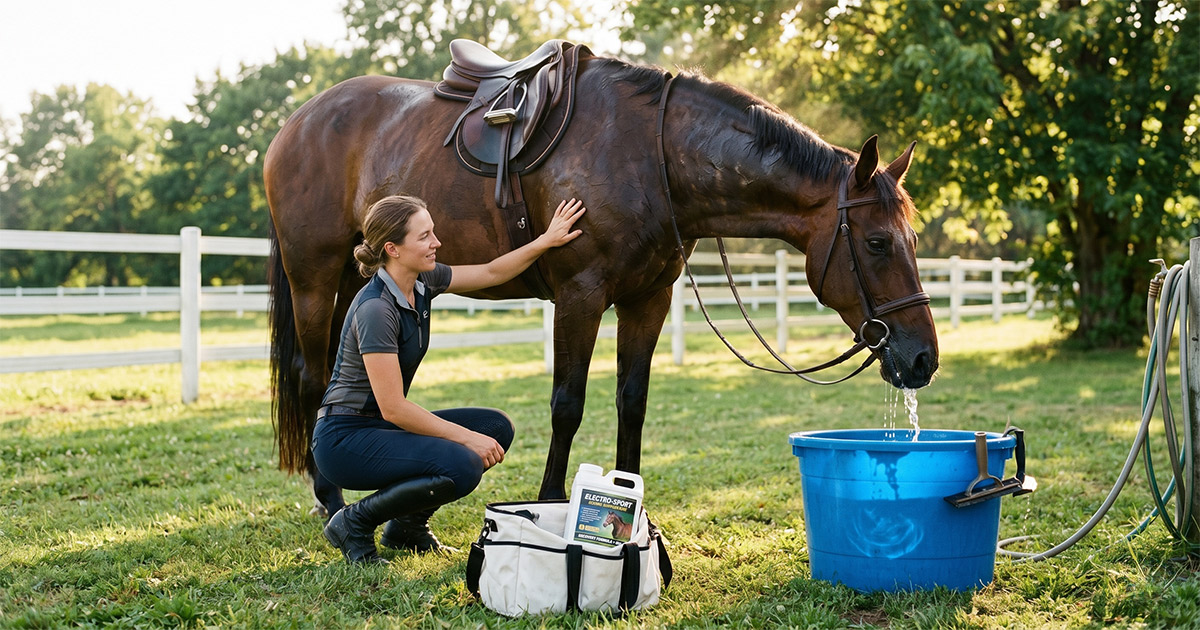
When temperatures rise, keeping horses hydrated becomes about much more than simply providing fresh water. During hot weather, exercise, transport, and competition, horses lose significant amounts of fluids and essential minerals through sweat. Without proper electrolyte and mineral replacement, dehydration can quickly affect performance, recovery, digestion, and overall wellness.
Understanding how hydration works in the equine body can help horse owners make smarter decisions during the demanding summer months.
The Science Behind Sweat Loss
Horses are extraordinary athletes, and they cool themselves primarily through sweating. In fact, horses can lose between 10 to 20 liters of fluid per hour during intense exercise or extreme heat conditions. Along with water, sweat contains critical electrolytes including sodium, chloride, potassium, calcium, and magnesium.
Unlike humans, equine sweat is highly concentrated with minerals, meaning horses lose substantial electrolyte reserves even during moderate work. These minerals are essential for:
- Muscle contraction
- Nerve function
- Fluid balance
- Thermoregulation
- Recovery after exercise
When losses are not replenished, dehydration and electrolyte imbalance can occur quickly.
Understanding Salt Requirements
Sodium and chloride are among the most important electrolytes horses lose through sweat. While forage and feed typically provide adequate potassium, many horses do not receive enough sodium through diet alone.
This is why plain salt remains one of the most important — and often overlooked — summer supplements.
Performance horses, endurance horses, and horses working in humid climates may require significantly more salt than lightly worked horses. Free-choice salt blocks are helpful, but many horses do not consume enough from blocks alone to replace heavy sweat losses.
Signs your horse may need additional salt support include:
- Excessive sweating
- Reduced thirst
- Slow recovery after work
- Muscle fatigue
- Cramping or “thumps”
- Decreased appetite
Adding loose salt or a properly balanced electrolyte supplement to feed can help maintain hydration and encourage drinking during hot weather.
Natural Electrolyte Options
Many horse owners prefer natural approaches to hydration support. Fortunately, there are several effective options that can complement a horse’s summer feeding program.
Natural hydration-supporting additions may include:
- Plain loose salt
- Himalayan salt
- Soaked beet pulp
- Electrolyte mineral blends
- Water-rich feeds
- Herbal hydration support
Offering soaked hay cubes or beet pulp can increase overall water intake while supporting digestive health. Some owners also use herbal blends containing ingredients like nettle, peppermint, or raspberry leaf to support circulation and hydration naturally.
Regardless of the supplement chosen, fresh clean water should always remain available. Electrolytes without adequate water access can worsen dehydration rather than improve it.
Signs of Dehydration in Horses
Early dehydration can be subtle. By the time a horse appears obviously distressed, fluid deficits may already be significant.
Common signs of dehydration include:
- Dry or tacky gums
- Sunken eyes
- Lethargy
- Reduced skin elasticity
- Dark urine
- Increased heart rate
- Poor recovery after exercise
- Reduced manure output
- Loss of appetite
In severe cases, dehydration may contribute to heat stress, muscle problems, or colic.
Monitoring water intake closely during summer is especially important for horses traveling, competing, or living in high humidity environments.
Performance Horse Considerations
Performance horses have dramatically higher hydration needs than horses at maintenance. Training, hauling, showing, and competition all increase sweat losses and place greater demands on thermoregulation.
Research has shown that balanced electrolyte supplementation before, during, and after exercise may improve stamina, recovery, and hydration efficiency.
For working horses, successful summer hydration strategies often include:
- Pre-loading electrolytes before heavy work
- Offering water frequently during travel
- Feeding soaked feeds
- Cooling horses promptly after exercise
- Monitoring sweat rates and recovery times
- Maintaining consistent daily salt intake
Every horse is different, and hydration plans should reflect workload, climate, diet, and individual sweating patterns.
Final Thoughts
Hydration is not simply about how much water a horse drinks — it’s about maintaining the delicate balance of fluids, minerals, and electrolytes that keep the body functioning properly.
During summer, proactive hydration management can support:
- Better performance
- Faster recovery
- Healthier digestion
- Reduced risk of heat stress
- Improved overall wellness
By understanding the relationship between sweat loss, salt balance, and electrolyte replacement, horse owners can help their horses stay healthier, safer, and more comfortable throughout the hottest months of the year.