
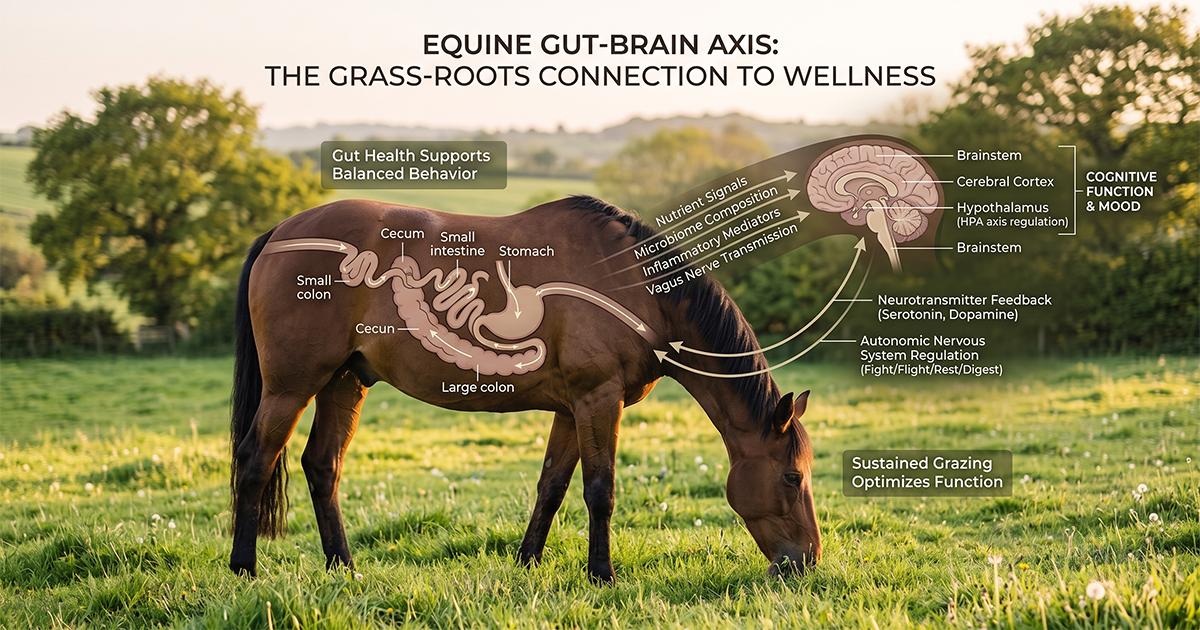
Many horse owners focus on training, environment, and management when addressing behavioral challenges, but one important factor is often overlooked: gut health. Emerging research continues to highlight the powerful relationship between the digestive system and the nervous system, commonly known as the gut-brain axis. In horses, a healthy digestive tract does more than support nutrient absorption—it may also influence mood, stress responses, focus, and overall behavior.
Understanding how gut health affects equine behavior can help owners and trainers take a more holistic approach to managing performance, temperament, and well-being.
Understanding the Gut-Brain Axis in Horses
The gut-brain axis refers to the communication network between the gastrointestinal tract and the central nervous system. While much of the research has focused on humans and other animals, similar mechanisms are believed to exist in horses.
The digestive tract contains millions of microorganisms that help break down forage, produce nutrients, and interact with the immune and nervous systems. These microbes can influence the production of neurotransmitters and signaling molecules that affect mood, stress responses, and behavior.
When the digestive system functions efficiently, horses are often more comfortable, relaxed, and capable of performing at their best. When digestive health is compromised, behavioral changes may be one of the first signs.
How Hindgut Fermentation Impacts Mood and Behavior
The equine hindgut is home to a vast population of beneficial bacteria responsible for fermenting fiber and producing volatile fatty acids, which provide a major source of energy for the horse.
A healthy hindgut environment supports:
- Stable energy levels
- Efficient digestion
- Reduced inflammation
- Consistent nutrient absorption
When the microbial balance is disrupted by dietary changes, excessive starch intake, stress, or illness, fermentation patterns can change. This imbalance may lead to digestive discomfort, gas production, inflammation, or increased sensitivity, all of which can influence a horse’s behavior.
Some horses experiencing digestive upset may become more reactive, tense, distracted, or resistant during work.
Signs of Gut Imbalance That May Appear as Behavioral Issues
Behavioral changes are not always training problems. In some cases, they may be linked to digestive discomfort.
Potential signs of gut imbalance include:
- Increased irritability
- Unexplained tension under saddle
- Resistance to work
- Difficulty focusing
- Ear pinning during grooming or saddling
- Changes in appetite
- Sensitivity around the girth area
- Cribbing, weaving, or other stereotypic behaviors
While these signs can have many causes, digestive health should be considered as part of a comprehensive evaluation.
The Importance of Forage and Feeding Frequency
Horses evolved as continuous grazers, consuming small amounts of forage throughout the day. Their digestive systems are designed for near-constant fiber intake.
Long periods without forage can contribute to:
- Increased stomach acid exposure
- Greater ulcer risk
- Hindgut disturbances
- Elevated stress levels
Providing consistent access to quality forage helps support digestive stability while promoting more natural feeding behavior.
Strategies that may support gut health include:
- Offering free-choice hay when appropriate
- Using slow feeders to extend eating time
- Minimizing long fasting periods
- Providing multiple forage meals throughout the day
These management practices can help maintain a healthier digestive environment while encouraging calmer behavior.
Supporting the Microbiome with Prebiotics and Natural Fibers
A diverse and balanced microbiome is essential for digestive health. While probiotics often receive attention, prebiotics and fermentable fibers play an equally important role by feeding beneficial bacteria already present in the gut.
Common sources of microbiome-supporting fibers include:
- Beet pulp
- Soy hulls
- Timothy and grass hays
- Certain forage-based supplements
Prebiotic ingredients may help encourage the growth of beneficial microbes and support healthy fermentation patterns.
When selecting supplements, horse owners should focus on products designed to complement a forage-based diet rather than replace proper nutrition and management.
Stress, Ulcers, and Behavioral Expression
Stress can significantly affect digestive health, and digestive issues can contribute to stress, creating a cycle that may influence behavior.
Factors that may increase stress include:
- Frequent travel
- Intensive training schedules
- Social isolation
- Abrupt dietary changes
- Limited turnout
Stress is also associated with an increased risk of gastric ulcers, which are common in performance horses. Horses experiencing ulcer-related discomfort may display behaviors such as:
- Irritability
- Poor performance
- Reluctance to move forward
- Girth sensitivity
- Changes in attitude
Addressing both the physical and environmental contributors to stress can help support digestive health and improve behavioral outcomes.
Practical Diet Adjustments for Calmer Horses
While no diet can completely eliminate behavioral challenges, supporting digestive health may help improve comfort and reduce some factors that contribute to unwanted behaviors.
Consider these practical adjustments:
Prioritize Forage
Ensure the majority of the diet comes from high-quality forage sources to support healthy digestion and natural feeding behavior.
Limit Excessive Starch and Sugar
Large grain meals can disrupt hindgut fermentation and contribute to digestive imbalances in some horses.
Feed Smaller, More Frequent Meals
Smaller meals can help maintain digestive stability while reducing stress on the gastrointestinal system.
Support Hydration
Adequate water intake is essential for proper digestive function and overall health.
Introduce Dietary Changes Gradually
Sudden feed changes can disrupt microbial populations and increase digestive stress.
Evaluate the Whole Horse
Behavior is influenced by multiple factors, including health, training, environment, pain, and nutrition. A comprehensive approach often produces the best results.
Final Thoughts
The connection between gut health and equine behavior is becoming increasingly recognized within the horse industry. A healthy digestive system supports more than nutrient absorption—it may influence comfort, stress levels, focus, and overall well-being. By prioritizing forage, supporting the hindgut microbiome, and reducing sources of digestive stress, horse owners can help create a stronger foundation for both physical health and positive behavior.
When behavioral changes occur, looking beyond training and considering digestive health may reveal an important piece of the puzzle.