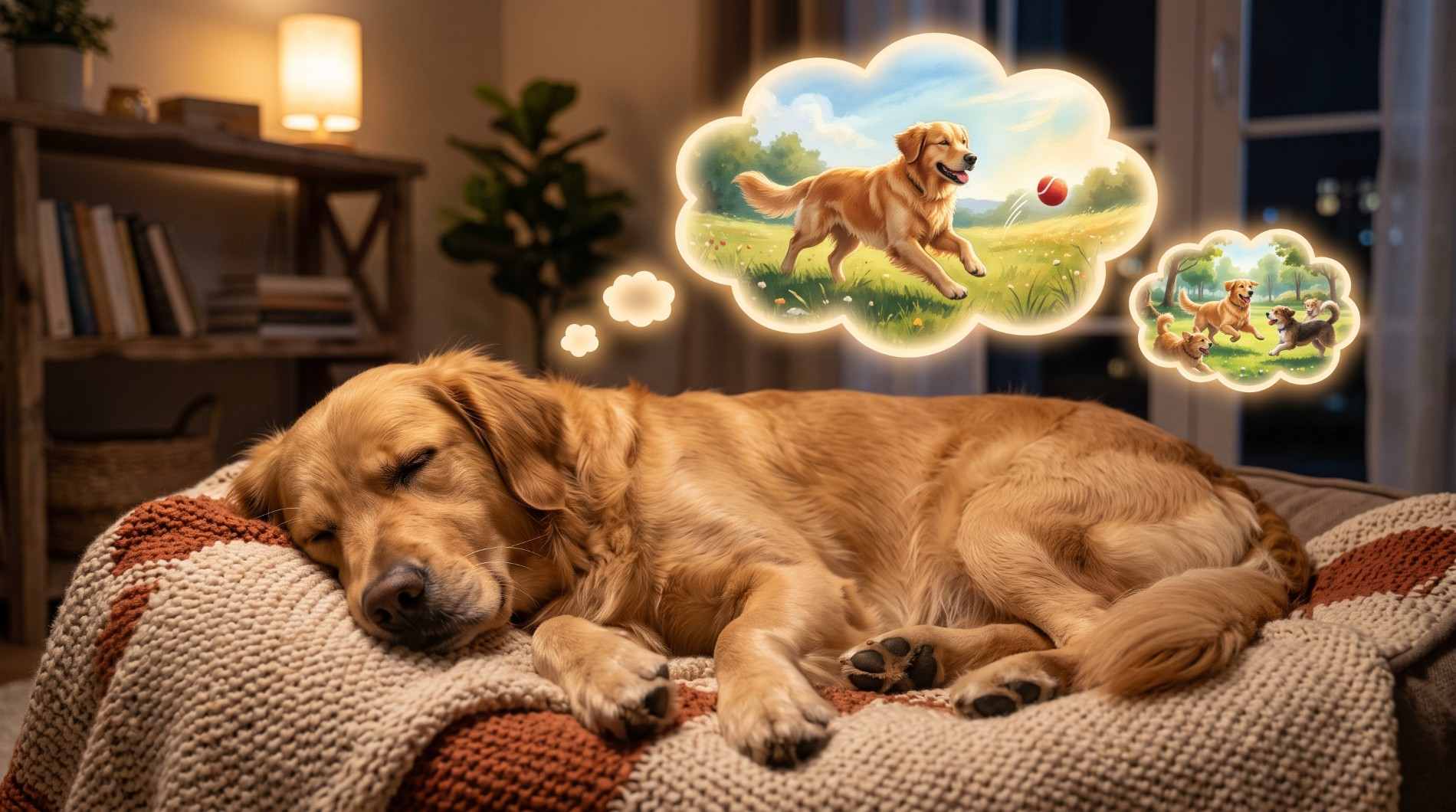
Do Dogs Dream? What Your Dog’s Sleep Can Tell You
Have you ever watched your dog sleeping and suddenly noticed a twitching paw, a little whimper, or a soft yip? Maybe their legs started moving as if they were running somewhere. It’s easy to wonder what’s happening behind those closed eyes.
TL;DR: Yes, dogs are believed to dream, and those little movements and sounds you see during sleep can happen during dreaming. Want to understand more about canine dreams and why they matter to your dog’s well-being? Learn more in our Do Dogs Dream? course.
So, do dogs really dream?
We can’t exactly ask a dog what they saw while sleeping. Still, evidence from canine sleep research points strongly toward dreaming.
Dogs experience different stages of sleep, including rapid eye movement (REM) sleep. During this stage, brain activity becomes more active, and you may notice your dog’s eyes moving beneath their eyelids. Their breathing can change, too, and some dogs twitch their paws, move their legs, or make little sounds.
Those sleepy movements can look surprisingly purposeful. One moment, your dog is curled up on the couch. Next, their paws are paddling away as if they’re chasing something.
What might dogs dream about?
This is where things get interesting.
We can’t know exactly what appears in a dog’s dreams, but researchers believe dogs may dream about experiences from their waking lives. That could include familiar activities, places, or interactions. Brain activity observed during animal sleep has given researchers clues that memories and experiences may be involved in dreaming.
So, could your dog be dreaming about a walk around the neighborhood? A game of fetch? That squirrel they spent 20 minutes watching from the window?
Possibly. But there’s an important distinction: we can observe signs associated with dreaming, but we can’t know the exact content of a dog’s dream.
That uncertainty is part of what makes canine dreams so fascinating.
Why does dreaming matter for your dog?
Sleep is more than downtime between walks and meals. It gives the body and brain time to rest and process information.
Understanding normal sleep behavior can also help you become a better observer of your dog. When you know what typical dreaming can look like, a twitching paw or quiet yip may seem a little less mysterious.
It’s also worth remembering that not every unusual movement during sleep is automatically a dream. If your dog has forceful or prolonged movements, seems confused afterward, or shows other concerning signs, talk with your veterinarian. Some neurological problems can resemble unusual sleep behavior.
What can dog parents learn from watching their dogs sleep?
A sleeping dog can give you a small glimpse into a part of their life we can’t experience with them.
You may notice patterns in how your dog settles down, when they become more active during sleep, or what sounds and movements they make. You don’t need to interpret every twitch. Simply paying attention can help you better understand normal canine behavior.
That curiosity is exactly where learning about dog dreams becomes useful. Animal Wellness Academy’s Do Dogs Dream? course takes a closer look at the phenomenon of canine dreams and why they’re connected to your dog’s well-being. The course is designed for pet owners as well as pet professionals and veterinarians, making it a simple way to explore a surprisingly fascinating part of canine behavior.
Take Our Course: Do Dogs Dream?
Want to learn more about what happens while your dog sleeps?
Explore our Do Dogs Dream? course to take a closer look at canine dreams and the role they may play in your dog’s well-being.
Frequently Asked Questions
Do dogs dream when they sleep?
Yes. Scientific evidence and similarities between canine and human sleep patterns indicate that dogs do dream, although we can’t know exactly what they experience in those dreams.
Why does my dog twitch or yip while sleeping?
Twitching, paw movements, changes in breathing, and quiet vocalizations can occur during REM sleep, the stage associated with dreaming.
Should I wake my dog if they seem to be dreaming?
It’s generally best to let a sleeping dog rest. A startled dog may react defensively when suddenly awakened, particularly if touched.
Can learning about dog dreams help me understand my dog?
It can give you a better understanding of normal canine sleep behavior and help you recognize the difference between ordinary sleep movements and behavior that may warrant veterinary attention.