
Regenerative grazing is gaining attention in equine management for good reason—it shifts the focus from simply “using” pasture land to actively improving it. For horse owners, this approach can lead to healthier horses, more resilient land, and long-term cost savings on feed and veterinary care.
What Regenerative Grazing Means in Equine Management
Regenerative grazing is a land management approach that works with natural ecological processes rather than against them. In horse care, it means managing grazing in a way that allows pasture plants to recover, soil biology to thrive, and grazing pressure to be distributed more evenly over time.
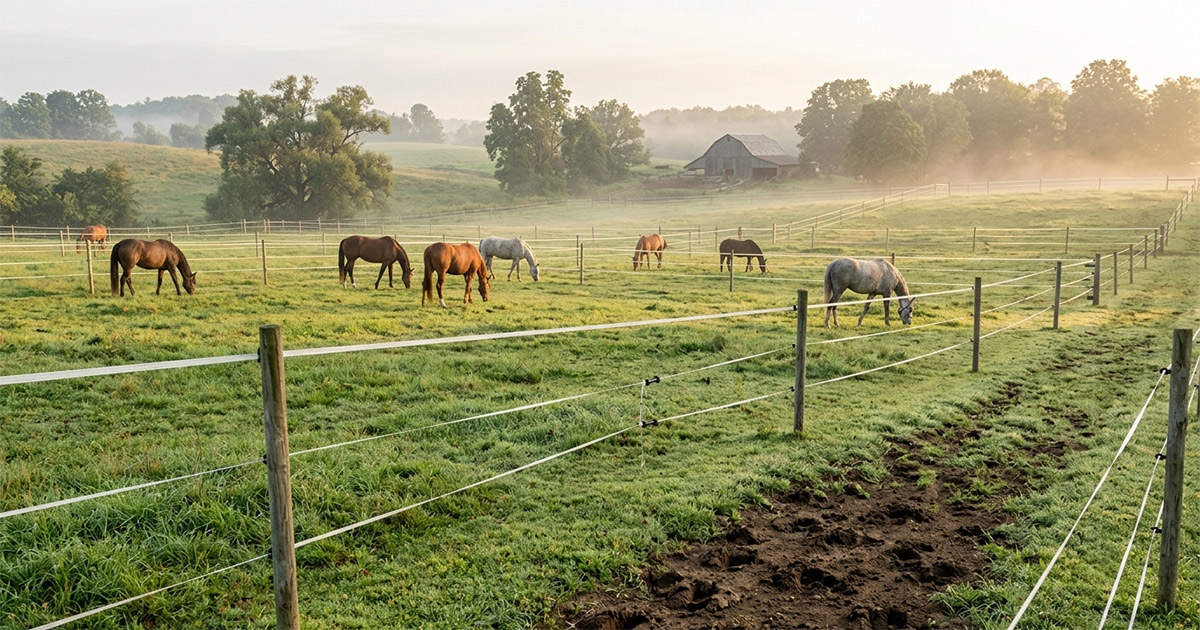
Instead of continuous grazing in a single field, horses are moved through smaller paddocks on a planned rotation. This mimics natural herd movement and prevents overgrazing.
Soil Health and Its Impact on Pasture Nutrition
Soil is the foundation of every nutrient your horse consumes through forage. Healthy soil contains diverse microbial life that helps plants absorb minerals and grow more nutrient-dense grasses and legumes.
When soil is depleted or compacted, pasture quality declines—often leading to:
- Lower protein and mineral content in forage
- Increased weeds and bare patches
- Reduced palatability for horses
Improving soil health directly improves the nutritional value of your pasture.
Rotational Grazing Systems Explained
Rotational grazing divides pasture into multiple sections (paddocks) and moves horses through them on a schedule based on grass recovery, not convenience.
A basic system includes:
- 3–8 paddocks (even small acreage works)
- Rest periods for grass regrowth (often 2–6 weeks depending on season)
- Flexible stocking based on growth rate
Even small farms can implement “track systems” or sacrifice paddocks to protect key grazing areas.
Benefits for Horses
1. Nutrient Diversity
Rotational grazing allows a wider variety of plants to recover and thrive, giving horses access to more diverse nutrients naturally found in mixed pasture species.
2. Reduced Parasite Load
By breaking up grazing cycles, horses are less likely to ingest parasite larvae that build up in overgrazed or continuously grazed fields.
3. Improved Digestion
Fresh, varied forage supports a healthier hindgut microbiome, which can improve digestion, stool consistency, and overall metabolic balance.
Environmental Benefits
Regenerative grazing doesn’t just benefit horses—it improves the land itself:
- Increased soil carbon storage
- Improved water retention and drainage
- Greater biodiversity in plants, insects, and soil organisms
- Reduced erosion and land degradation over time
Practical Setup for Small Acreage Owners
You don’t need large land holdings to start regenerative grazing. Even small properties can be managed effectively with:
- Temporary electric fencing for flexible paddock sizes
- A “sacrifice area” or dry lot for high-pressure conditions
- Careful monitoring of grass height (ideal grazing: ~4–8 inches, rest: ~8–12+ inches)
- Adjusted rotation speed based on season and rainfall
The key is consistency—not perfection.
Common Mistakes to Avoid
- Overgrazing paddocks before rest periods are complete
- Rotating on a fixed schedule instead of observing pasture recovery
- Ignoring soil compaction in high-traffic areas
- Not providing a non-grazing area during wet or dormant seasons
- Assuming more pasture time always equals better nutrition