Healthy hooves are the foundation of every horse’s movement, comfort, and long-term soundness. While external hoof care like trimming and shoeing is important, true hoof strength begins internally—through nutrition, hydration, movement, and overall management. Understanding how these factors work together helps horse owners support stronger, more resilient hooves year-round.
Hoof Anatomy Basics and Growth Cycle
A horse’s hoof is a complex, living structure made up of the hoof wall, sole, frog, and internal laminae that connect the hoof capsule to the coffin bone. Each part plays a role in shock absorption, traction, and circulation.
Hooves grow continuously at an average rate of about 6–10 mm per month, meaning a full hoof wall replacement takes roughly 9–12 months. Because of this slow growth cycle, nutritional or management changes may take weeks or even months to show visible improvement.
Nutrition’s Role in Hoof Integrity
Diet is one of the most influential factors in hoof quality. The hoof wall is primarily made of keratin, a protein that relies on consistent amino acid availability.
Key nutritional contributors include:
- Protein (amino acids): Supports keratin formation and structural strength
- Biotin: Commonly associated with improved hoof hardness and growth rate
- Zinc & copper: Essential trace minerals for connective tissue and horn quality
- Methionine & lysine: Building blocks for strong hoof tissue
Imbalances—especially in trace minerals—can lead to weak walls, cracks, or slow growth.
Hydration and Hoof Moisture Balance
Hooves naturally absorb and release moisture depending on environmental conditions. Both extremes—excessive dryness and constant saturation—can weaken hoof structure.
- Dehydrated hooves may become brittle and prone to cracking
- Overly wet hooves can soften, making them vulnerable to thrush and separation
Consistent access to clean water and balanced turnout conditions helps maintain healthy internal hoof moisture.
Common Deficiencies Linked to Hoof Issues
Several nutritional deficiencies are frequently associated with poor hoof quality:
- Zinc deficiency → white line disease, slow hoof growth
- Copper deficiency → weak hoof wall structure and poor pigmentation
- Protein deficiency → thin, brittle walls
- Biotin insufficiency → cracking and crumbling edges
Because forage alone may not always meet mineral needs, balanced ration evaluation is often necessary.
Movement and Terrain Influence on Hoof Strength
Movement is essential for hoof health. Each step stimulates circulation within the hoof capsule, delivering nutrients and removing waste products.
- Regular turnout encourages natural wear and circulation
- Varied terrain (sand, gravel, pasture) strengthens different hoof structures
- Stalled horses are more prone to weaker hoof growth due to reduced blood flow
Even light, consistent movement is more beneficial than intense but infrequent exercise.
Natural Supplements and Forage Considerations
In addition to a forage-first diet, some horses may benefit from targeted support:
- Balanced mineral supplements (especially zinc, copper, selenium)
- Biotin supplements for horses with chronic hoof issues
- Omega-3 fatty acids to support inflammation balance and tissue health
- High-quality forage as the foundation of all hoof nutrition
Always evaluate supplements in the context of the whole diet rather than individually.
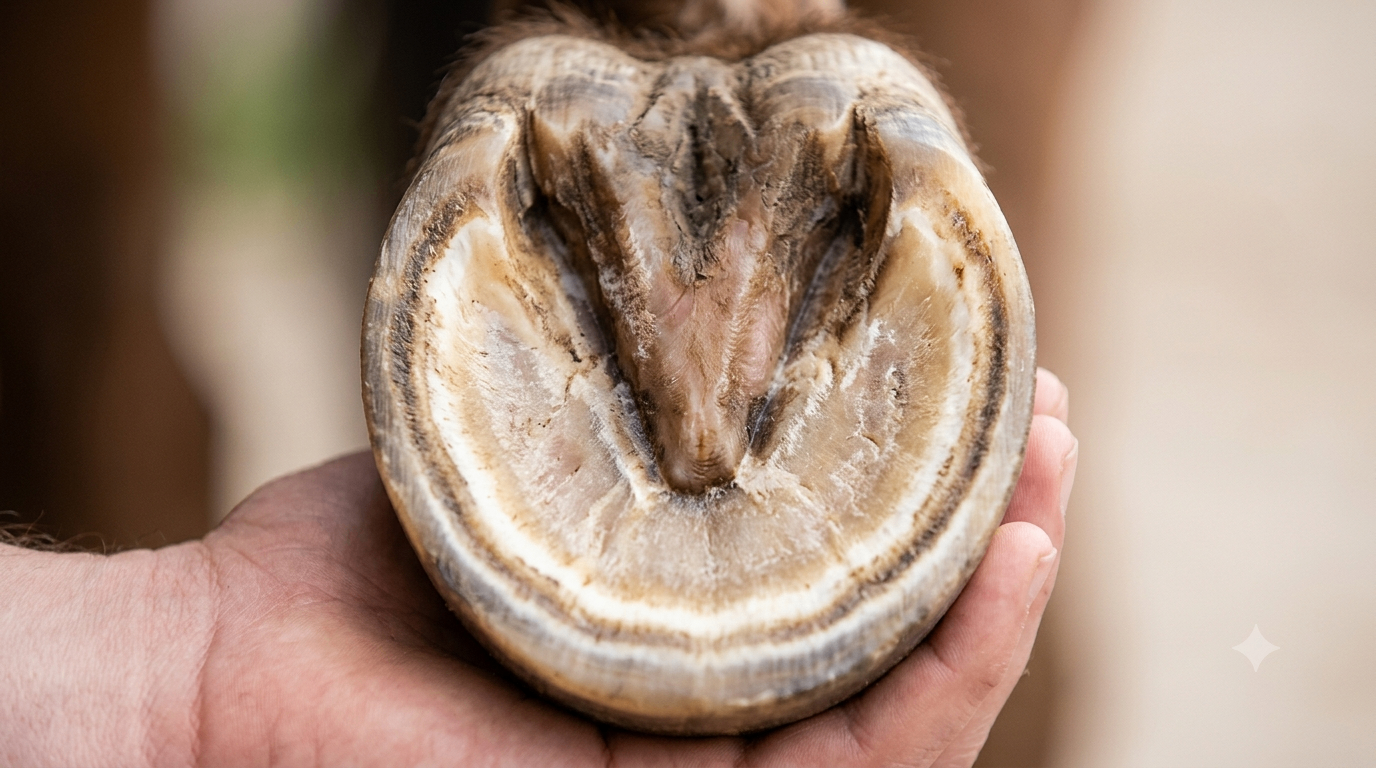
Signs of Healthy vs. Compromised Hooves
Healthy hooves typically show:
- Smooth, even hoof wall growth
- Strong, tight white line
- Elastic frog and sole
- Minimal cracking or flaring
- Consistent, symmetrical shape
Compromised hooves may show:
- Cracks, chips, or flares in the hoof wall
- Soft or overly dry horn
- Separation at the white line
- Frequent abscesses or sensitivity
- Uneven wear patterns
Early recognition allows for faster correction through diet, environment, and hoof care adjustments.