
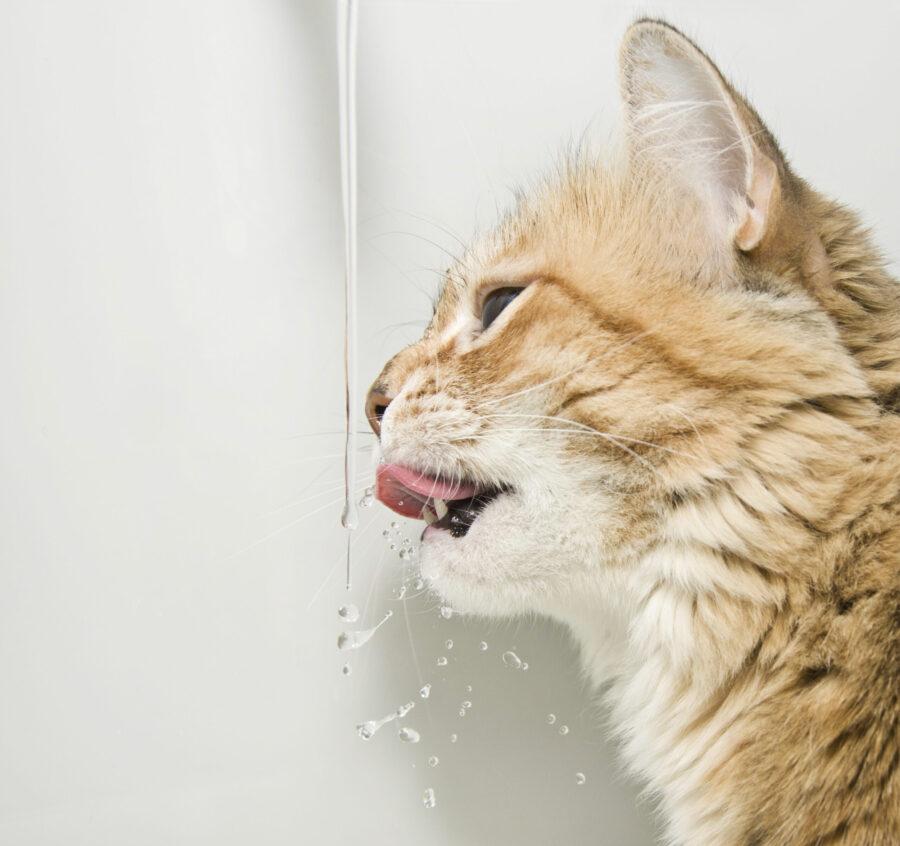
Your cat ignores the water bowl for days, then comes running the second you turn on the bathroom faucet. Sound familiar?
For some cats, that fascination with running water isn’t random. Many cats are attracted to moving water, which is one reason cat water fountains have become so popular.
But does every cat actually need a fountain? Not necessarily. And while a fountain may encourage some cats to drink more, claims that they automatically prevent kidney disease or urinary problems go beyond what the evidence can support.
So how do you know whether a fountain is worth trying for your cat? And if you do buy one, which features actually matter?
TL;DR: Cats are naturally drawn to moving water and often drink more from a fountain than a still bowl, which can support better hydration. The evidence on whether this directly prevents urinary issues is more limited than most marketing suggests, but improved hydration habits are still worth encouraging, especially for cats on dry food. Our course, Buying a Water Fountain for Your Cat?, taught by Ingrid King of The Conscious Cat, walks through what to look for in just over three minutes.
Why Do Cats Prefer Moving Water?
Have you ever wondered, do cats need a water fountain, or whether they’re simply being particular?
Many cats are naturally interested in moving water. You may see this when your cat watches a dripping faucet, plays with water coming from a tap, or prefers drinking from a running source rather than a stationary bowl.
One explanation is evolutionary. Domestic cats descended from ancestors adapted to relatively dry environments, and cats generally obtain a significant amount of their moisture from their food. Moving water may also be more attractive to some cats than water that has been sitting in a bowl.
That doesn’t mean every cat instinctively believes still water is unsafe. Some cats happily drink from a standard bowl their entire lives.
There’s also the issue of the drinking setup itself.
Some cats may dislike bowls that are deep or narrow because their whiskers repeatedly touch the sides. A wide, shallow drinking surface can be more comfortable for cats that seem reluctant to use traditional bowls.
The takeaway: if your cat repeatedly seeks out running water, a fountain may be worth experimenting with. But your cat’s individual behavior matters more than a blanket rule that every cat needs one.
Does a Fountain Actually Improve Hydration?
This is where it’s important to separate reasonable hydration advice from product marketing.
A fountain can make drinking more appealing to a cat that prefers moving water. For a cat that doesn’t drink readily from a traditional bowl, encouraging more voluntary drinking can be useful.
However, the evidence is more limited when it comes to claims about specific medical outcomes.
A frequently cited 2010 study looked at whether fountain use led to more diluted urine, a marker relevant to urinary tract health, and didn’t find a statistically significant difference in a small sample of cats.
That doesn’t mean fountains don’t help. It means the direct medical claims you’ll see on some product pages (“prevents kidney disease,” “cuts UTI risk by X%”) are overstated relative to what’s actually been studied.
If your cat has a kidney, urinary, or other medical condition, hydration should be discussed with your veterinarian. A fountain may be one way of encouraging water intake, but it isn’t a treatment.
Which Cats Benefit Most?
A fountain may be particularly worth considering if your cat:
- Shows little interest in a traditional water bowl
- Regularly tries to drink from faucets
- Seems more interested in moving water
- Eats primarily dry food
- Lives in a multi-cat household where water access may be an issue
- Simply drinks very little from the available water source
Cats eating wet food already receive a substantial amount of moisture through their diet, although they still need access to fresh drinking water.
For older cats or cats with diagnosed kidney or urinary conditions, don’t rely on a fountain as a DIY solution. Ask your veterinarian whether increasing water intake is appropriate for your cat and what approach they recommend.
What Should You Look for When Buying One?
This is where buying a fountain gets more complicated than it first appears.
You can find fountains in a wide range of shapes, materials and price points. But the most expensive or visually appealing model isn’t necessarily the one your cat will actually use.
Some of the features worth considering include:
Noise: A fountain that makes a constant buzzing or humming sound may be ignored by a noise-sensitive cat.
Drinking surface: A wide, accessible drinking area may be preferable for cats that dislike their whiskers touching the sides of a bowl.
Filter system: Filters can help keep water cleaner and remove certain particles, but they require regular maintenance and replacement.
Cleaning: A fountain that is difficult to take apart and clean can quickly become inconvenient.
Water flow: Different cats may prefer different types of water movement. Some like a gentle stream, while others prefer water that pools in a shallow basin.
And that’s only part of the buying decision.
If your cat is going to ignore the fountain because it doesn’t like the noise, shape or water flow, even the most expensive model won’t do much good.
That’s one reason it’s worth looking beyond appearance and price when choosing a fountain.
How Do You Get a Reluctant Cat to Use It?
Some cats investigate a new fountain immediately. Others take one look and walk away.
If your cat is hesitant, don’t assume the fountain has failed. The change itself may simply be unfamiliar.
Start by placing the fountain somewhere your cat already feels comfortable drinking. Make sure fresh water is available while you’re introducing the new fountain, rather than immediately removing the familiar option.
You can also give your cat time to investigate it without pressure.
If your cat continues to avoid it, consider whether something about the fountain itself could be the problem. Noise, water flow, location, cleanliness and the shape of the drinking area can all influence whether your cat wants to use it.
Choosing the right fountain in the first place can make that introduction much easier.
Take Our Course: Buying a Water Fountain for Your Cat?
We built a short course, Buying a Water Fountain for Your Cat?, that walks through the features worth looking for when choosing a fountain, plus practical considerations for finding one your cat will actually use. It’s taught by Ingrid King of The Conscious Cat and takes just over three minutes.
Frequently Asked Questions
Do all cats prefer moving water over a still bowl?
No. Many cats are attracted to moving water, but some are perfectly comfortable drinking from a traditional bowl. Your cat’s individual behavior is a better guide than assuming every cat needs a fountain.
Do cats need a water fountain?
Not necessarily. A clean bowl with fresh water can be perfectly suitable for many cats. A fountain may be useful if your cat shows a preference for moving water or doesn’t seem interested in drinking from a traditional bowl.
Is a cat water fountain a substitute for veterinary care?
No. A fountain can encourage drinking, but it isn’t a treatment for urinary, kidney or other medical conditions. Cats with diagnosed health problems should be managed according to their veterinarian’s recommendations.
How often should a cat water fountain be cleaned?
Cleaning requirements vary by fountain and manufacturer. Regular cleaning is important because buildup, debris and other changes to the water source can make a fountain less appealing to your cat. Follow the manufacturer’s cleaning instructions and replace filters as recommended.
Can wet food reduce the need for a cat water fountain?
Wet food provides considerably more moisture than dry food, so cats eating wet food may obtain more of their daily water through their meals. However, cats should still have access to fresh drinking water.
Is a cat water fountain worth it?
It can be, particularly if your cat already shows an interest in running water or doesn’t drink readily from a bowl. The key is choosing a fountain your cat will actually use and keeping it clean. If you’re unsure what features to prioritize, the Buying a Water Fountain for Your Cat? course provides a more detailed guide.