
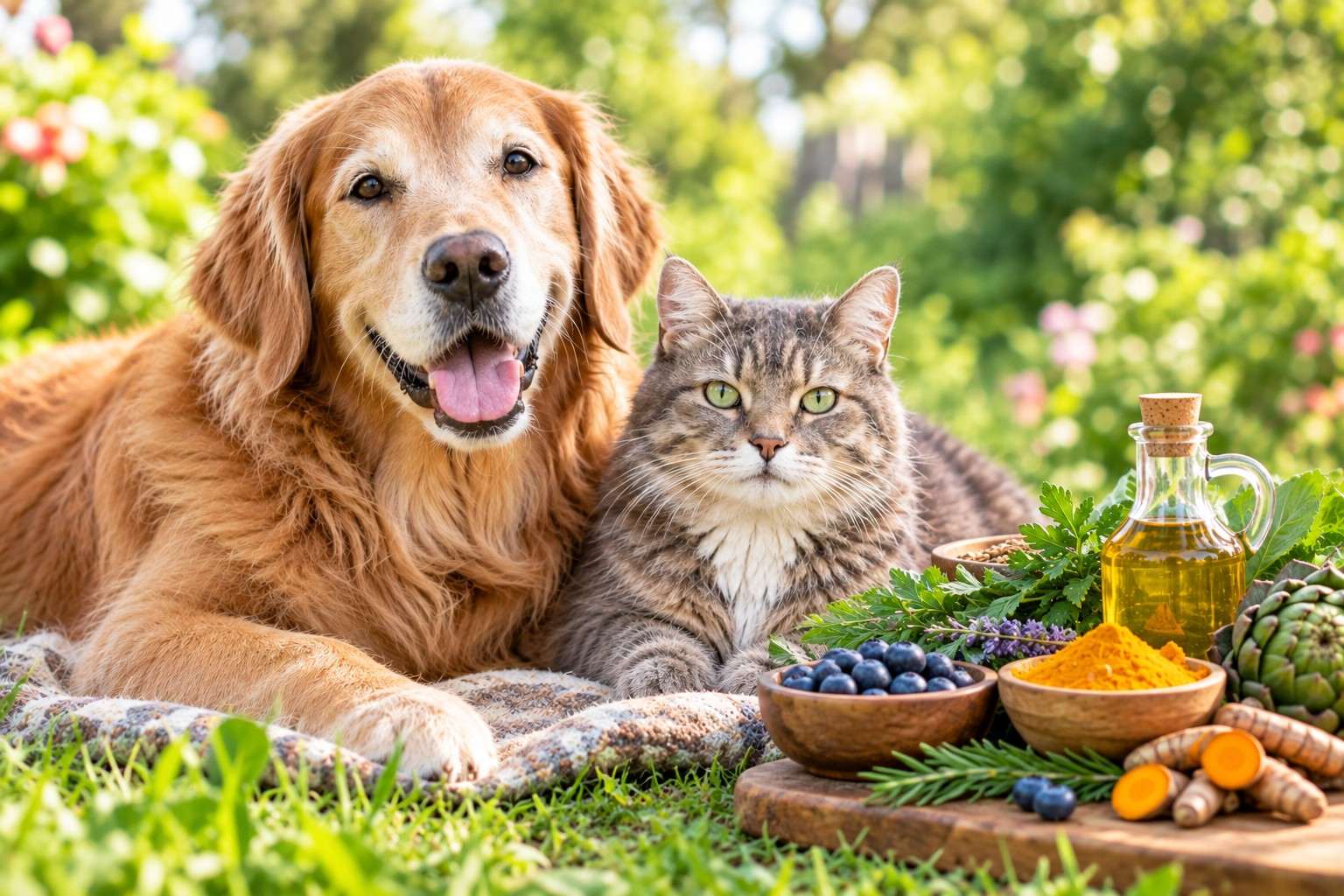
Natural Ways to Support Liver Health in Senior Dogs and Cats
As dogs and cats get older, their bodies need a little more support. The liver is especially worth paying attention to because it plays a major role in processing nutrients, producing important proteins, and handling substances the body needs to break down.
So, what can you do to support your aging pet’s liver naturally?
TL;DR: Aging can place added demands on the liver, but diet, appropriate nutrients, and carefully chosen natural therapies may help support normal liver function. The right approach depends on your pet’s age, health, diet, and medications. If you want to learn more about practical ways to support an aging liver, the 3 Natural Ways to Support Your Dog or Cat’s Aging Liver course offers a short, focused introduction to the topic.
Why Does Liver Support Matter as Your Pet Ages?
Your dog or cat’s liver has a lot on its plate.
It helps process nutrients from food, produces proteins the body needs, stores certain nutrients, and helps break down substances that need to be removed from the body. As an animal gets older, supporting these everyday functions becomes part of good senior-pet care.
That doesn’t mean every older pet has liver disease. Aging itself isn’t a diagnosis.
Still, it’s worth looking at the bigger picture. Diet, medications, environmental exposures, and overall health can all affect how much work the liver has to do.
What Natural Options May Support an Aging Liver?
Several natural ingredients have been studied or used as part of integrative approaches to liver support. Three areas are especially useful for pet owners to understand.
1. Could milk thistle support the liver?
Milk thistle is one of the better-known herbs used in liver-support products for dogs and cats. Its active compounds, called silymarins, have antioxidant properties and have been investigated for their potential hepatoprotective effects.
That doesn’t make milk thistle appropriate for every animal. Product quality, dosage, existing liver disease, and other medications all matter.
2. Why do antioxidants matter?
The liver is exposed to oxidative stress as it carries out its normal work. Antioxidants help the body manage free radicals and oxidative damage.
Nutrients and compounds such as vitamin E, vitamin C, and N-acetyl cysteine are among the ingredients that may come up when discussing antioxidant support. But more isn’t necessarily better. Supplementation should be based on the individual animal rather than a long list of ingredients.
3. What role does nutrition play?
A healthy liver still needs the right raw materials.
A balanced, species-appropriate diet provides nutrients needed for normal metabolic function. Some integrative approaches also look at specific B vitamins and other nutritional co-factors that participate in enzyme activity.
For senior pets, the goal is to support overall nutritional needs rather than chase one “liver detox” ingredient.
Can You Detox an Aging Pet’s Liver?
Be careful with the word “detox.”
A dog or cat with suspected liver disease may need veterinary testing and treatment, not a DIY cleanse. Fasting or aggressive detox routines can also be inappropriate, particularly for cats.
Natural support should complement sensible veterinary care, not replace it. If your pet has abnormal liver enzymes, appetite changes, vomiting, weight loss, jaundice, or unusual tiredness, talk with your veterinarian before trying supplements or dietary changes.
Take Our Course: 3 Natural Ways To Support Your Dog Or Cat’s Aging Liver
Your pet’s golden years deserve more than guesswork. If you want a simple introduction to natural liver support and the options available for older dogs and cats, take the 3 Natural Ways to Support Your Dog or Cat’s Aging Liver course and add another useful tool to your pet wellness knowledge.
Frequently Asked Questions
What is the best natural liver support for dogs?
There isn’t one best option for every dog. Nutrition, overall health, medications, and the reason for liver concerns all affect what may be appropriate. Milk thistle and antioxidant support are among the natural approaches discussed in integrative veterinary care.
Can cats use natural liver supplements?
Some natural ingredients are used in both dogs and cats, but cats can respond differently to supplements and dietary changes. Always check with your veterinarian before giving your cat a new supplement.
Can diet help support an aging liver?
Yes. A balanced diet provides the nutrients the liver needs for normal function. For pets with diagnosed liver disease, however, dietary needs can be more specific and should be discussed with a veterinarian.
Should I give my senior pet a liver detox?
Avoid starting a detox or fasting routine without veterinary guidance. Senior pets, particularly cats, may have specific nutritional and medical needs that make aggressive detox approaches inappropriate.