
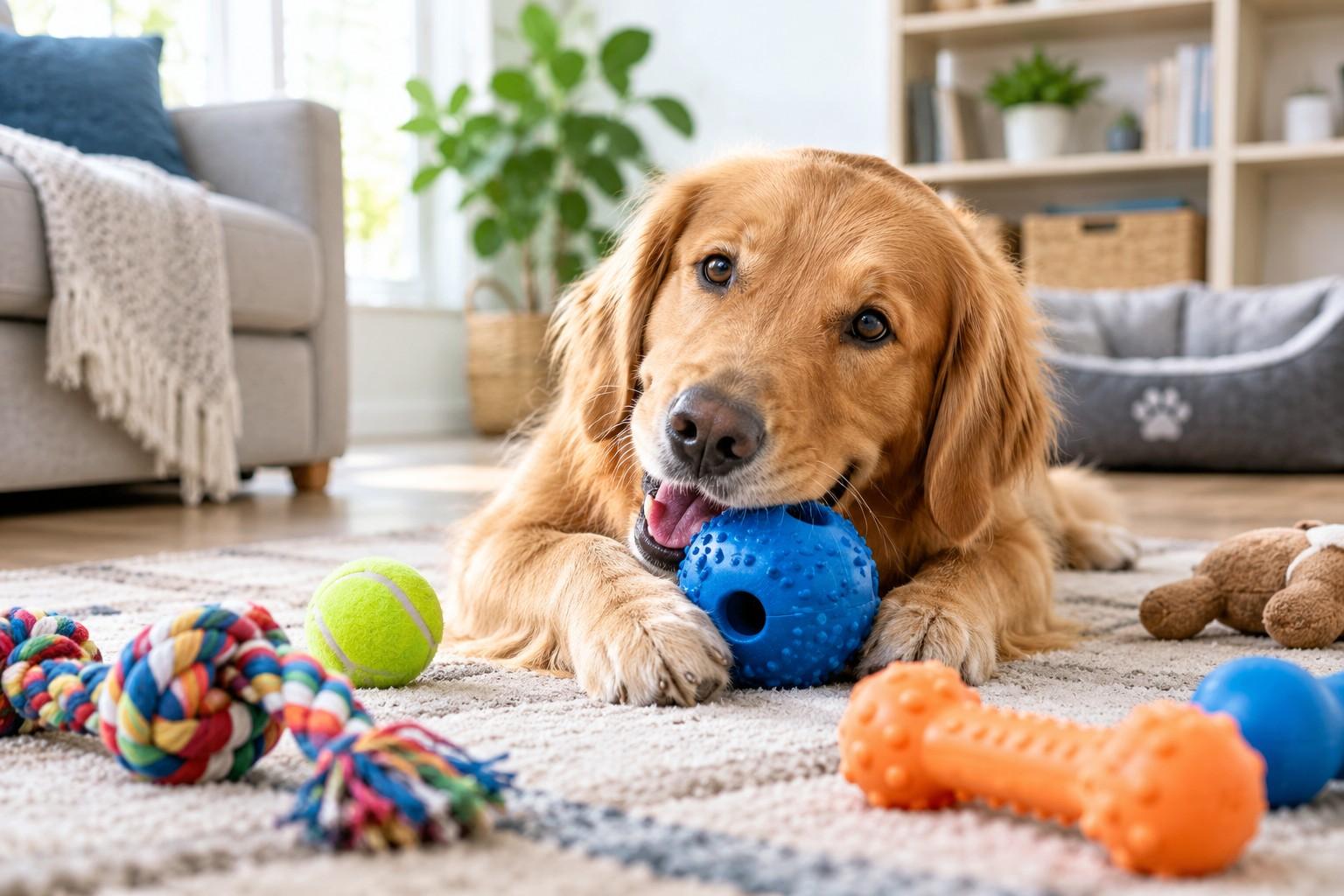
How Can You Keep Your Dog Safe While Playing With Toys?
Dogs love toys. A good toy can keep your dog moving, thinking, chewing and playing. But even a favorite toy can become a safety concern if it is damaged, too small, poorly suited to your dog, or used without supervision.
TL;DR: Choose dog toys based on your dog’s size, chewing habits and play style, and check them regularly for damage. Want to learn more about choosing and using toys safely? Take our 6 Safety Tips for Dog Toys course to build your confidence as a more informed dog parent.
Why Does Dog Toy Safety Matter?
A toy should be fun, but it also needs to be appropriate for the dog using it.
A tiny toy may be easy for a large dog to swallow or get stuck in its mouth. A toy with loose pieces can become a tempting target for a determined chewer. Even sturdy toys eventually wear down, especially when your dog loves to gnaw, tug or carry them everywhere.
That means buying a toy once and forgetting about it isn’t enough. Your dog’s toys deserve regular attention, too.
How Do You Choose the Right Toy for Your Dog?
Start with your individual dog rather than the toy’s appearance.
Think about your dog’s size, age, chewing strength and favorite way to play. A dog who loves to retrieve may need something different from a dog who spends hours chewing. Puppies may also interact with toys differently as they explore their surroundings.
Look closely at the toy before handing it over. Is it an appropriate size? Could your dog easily break off a piece? Are there strings, squeakers, stuffing or other parts that could become loose?
There’s no single “safest” toy for every dog.
What Should You Check on Your Dog’s Toys?
Make toy inspections part of your routine.
Look for cracks, tears, missing pieces, exposed stuffing, loose threads and other signs of wear. Pay extra attention to toys your dog chews heavily. A toy that was perfectly fine a few weeks ago may no longer be suitable today.
And don’t wait for a toy to fall apart completely before replacing it.
If you’re unsure whether a damaged toy can still be used, it’s safer to remove it and choose another option.
Should Dogs Be Supervised With Toys?
For many dogs, supervision is a smart part of playtime, especially with unfamiliar toys or toys that contain smaller components.
Watch how your dog actually uses the toy. Some dogs gently carry a toy around. Others immediately try to tear, shred or chew it apart. That behavior tells you a lot about whether the toy is a good match.
Supervision also gives you a chance to notice changes in your dog’s play habits.
Maybe your dog suddenly avoids a toy. Maybe they are chewing it much more aggressively than usual. Small observations like these can help you make better choices.
Take Our Course: 6 Safety Tips for Dog Toys
Ready to become more confident about the toys you give your dog?
The 6 Safety Tips for Dog Toys course can help you learn practical considerations to keep in mind when choosing and using toys.
FAQs About Dog Toy Safety
How often should I check my dog’s toys?
Check them regularly, especially toys your dog uses frequently or chews heavily. Replace toys when they become damaged or develop loose parts.
What size toy is safest for a dog?
The appropriate size depends on your dog’s size, mouth and play style. Avoid toys that are small enough for your dog to swallow or that could become lodged in the mouth.
Can dogs play with toys unsupervised?
It depends on the dog and the toy. Dogs who destroy or swallow pieces of toys may need closer supervision, particularly with unfamiliar or easily damaged toys.
Should I throw away a damaged dog toy?
If a toy has broken, torn or developed loose pieces that could create a safety concern, replacing it is the safer choice.