
What Foods Should You Never Feed Your Dog?
Dogs are curious eaters. If something smells interesting, there’s a good chance your dog will want to taste it, too. But some foods that are perfectly ordinary for people can be dangerous for dogs. Knowing what belongs on your plate and what should stay far away from your dog can prevent a frightening situation.
TL;DR: Some everyday foods, including chocolate, grapes and raisins, onions, garlic, macadamia nuts, and products containing xylitol, can be dangerous for dogs. Want to get better at spotting these risks? Learn which 10 foods you should never feed your dog in this Animal Wellness Academy course.
Which foods are dangerous for dogs?
A few foods tend to come up again and again when veterinarians and animal poison-control experts discuss household food hazards.
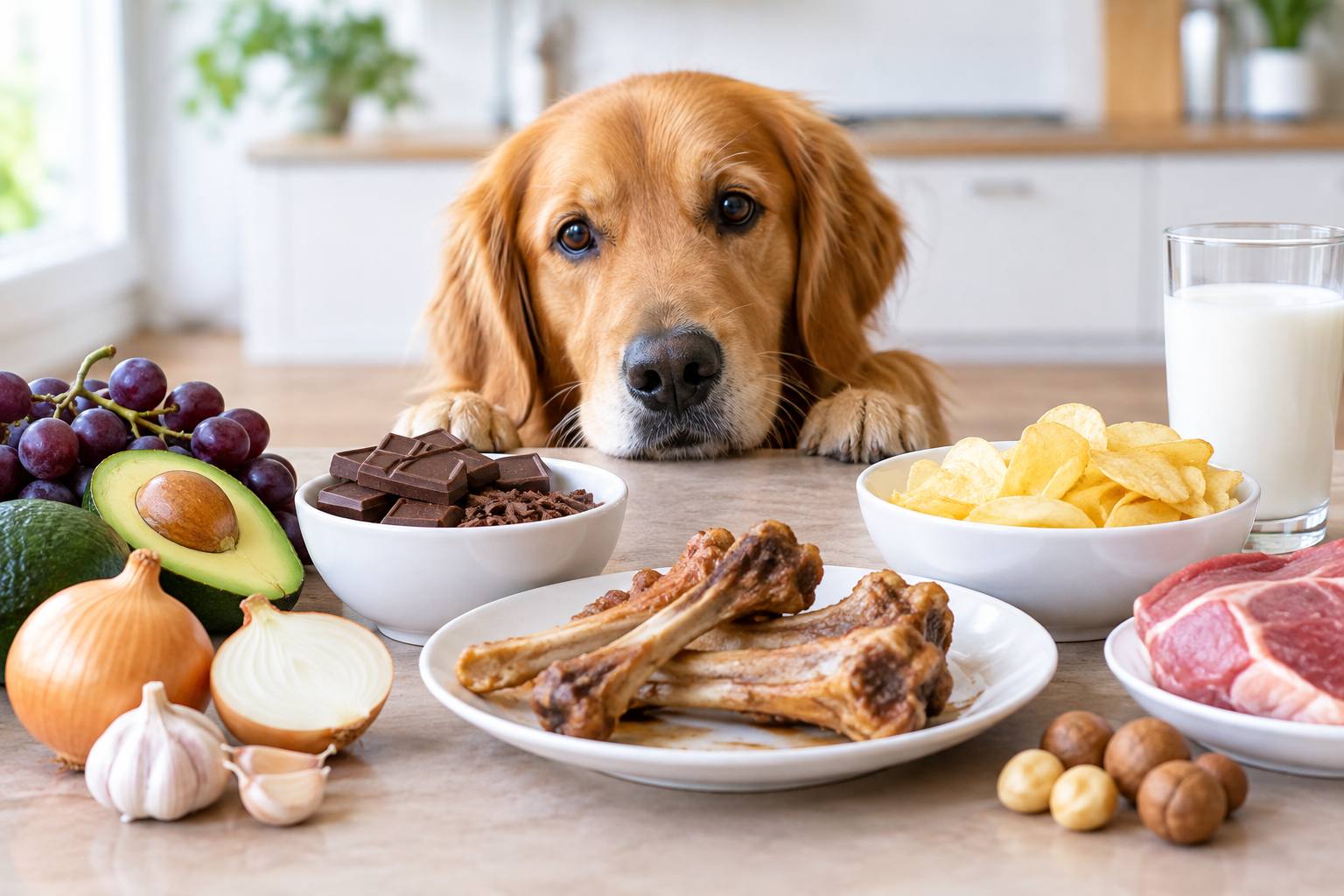
Chocolate is one of them. Grapes and raisins can also pose a serious risk, while onions and garlic may cause gastrointestinal irritation and damage to red blood cells. Macadamia nuts are another food dogs should avoid.
Then there’s xylitol, a sweetener that can hide in products you might not think of as a threat. It can be found in some sugar-free gum, candy, baked goods, peanut and nut butters, toothpaste, and other products. In dogs, xylitol can cause a rapid drop in blood sugar and potentially life-threatening complications.
That’s part of what makes food safety tricky. It’s not always obvious from the name on the package.
Why should dog parents know these foods?
Dogs are often quick to investigate countertops, grocery bags, lunch leftovers, open trash cans, and anything that falls on the kitchen floor. A small mistake can happen in seconds.
Food and drink exposures remain a significant source of calls to the ASPCA Animal Poison Control Center. In 2025, food and drink accounted for 16.4% of reported exposures, with grapes, raisins, xylitol-containing gum, onions, and garlic among the major concerns. Chocolate was also a notable source of exposures.
Knowing the common hazards gives you another layer of protection. You can read labels more carefully, store risky foods where your dog can’t reach them, and make better decisions about what gets shared at snack time.
What should you do if your dog eats something dangerous?
First, don’t wait for symptoms before taking the situation seriously. Some toxic exposures can cause serious problems even when a dog initially appears fine.
If you suspect your dog has eaten a potentially toxic food, contact your veterinarian or an emergency veterinary clinic promptly. For suspected xylitol or chocolate ingestion, the FDA specifically advises contacting a veterinarian or emergency animal hospital right away.
Having the product packaging available can also help your veterinary team determine what your dog consumed.
How can you learn more about dangerous foods?
You don’t need to memorize every possible household hazard overnight. Start with the foods that pose the biggest risks and learn where they can turn up.
The Animal Wellness Academy course, 10 Deadly Foods You Should Never Feed Your Dog, is designed for pet owners, pet professionals, and veterinarians. It focuses specifically on identifying dangerous foods and includes a lesson, quiz, and course certificate.
That makes it a simple way to build your food-safety knowledge before an accident happens.
Take Our Course: 10 Deadly Foods You Should Never Feed Your Dog
Want to learn which foods could put your dog’s health at risk?
Our 10 Deadly Foods You Should Never Feed Your Dog course helps you recognize common food dangers and make safer choices for your pup.
FAQs
What foods are toxic to dogs?
Chocolate, grapes and raisins, onions, garlic, macadamia nuts, and foods containing xylitol are among the foods that can be dangerous for dogs.
Is xylitol dangerous for dogs?
Yes. Xylitol can cause a rapid drop in blood sugar and may lead to severe complications, including seizures and liver failure.
What should I do if my dog eats a toxic food?
Contact your veterinarian or an emergency veterinary clinic promptly, especially if you suspect exposure to xylitol or chocolate. Don’t wait for symptoms to appear before seeking advice.
Can dogs eat human food?
Some human foods can be appropriate for dogs, but others can be dangerous. Before sharing a snack, check whether the specific food and ingredients are considered safe for dogs.