
Halloween Safety for Dogs and Cats: 10 Tips Every Pet Parent Should Know
Halloween brings costumes, candy, decorations, and plenty of excitement. But for dogs and cats, these seasonal changes can introduce hazards that are easy to overlook.
From chocolate toxicity to frightening visitors, knowing how to prepare your home can help protect your pets throughout the holiday.
TL;DR: The best way to keep dogs and cats safe on Halloween is to secure candy, remove choking hazards, use pet-safe decorations, and give animals a quiet place away from visitors. Avoid forcing pets into costumes, and contact a veterinarian promptly if your pet eats something potentially toxic or swallows a foreign object.
What Are the Biggest Halloween Dangers for Dogs and Cats?
The main Halloween hazards for pets include toxic candy, swallowed wrappers, unsafe decorations, poorly fitting costumes, and stress caused by unfamiliar people and noise.
Dogs may be tempted by food left within reach, while cats often investigate dangling decorations, strings, and small objects. Both can become frightened by costumes, doorbells, and changes to their usual environment.
The safest approach is to prepare before Halloween night. Keep tempting items out of reach, supervise pets around decorations, and provide a quiet place where they can relax.
10 Halloween Safety Tips for Dogs and Cats
1. Keep Halloween Candy Away From Pets
Chocolate is toxic to dogs and cats. Dark chocolate and baking chocolate generally pose a greater risk because they contain higher concentrations of toxic compounds.
Sugar-free candy can also be dangerous. Some products contain xylitol, a sweetener that can cause a rapid drop in blood sugar and other serious complications in dogs.
Store candy in closed containers or cupboards. Keep trick-or-treat bags off the floor, and remind children not to share sweets with pets.
Can dogs eat Halloween candy? No. Keep candy away from pets, including sugar-free sweets, chocolate, and products containing raisins or other potentially toxic ingredients.
If your pet eats candy that may be harmful, contact your veterinarian or an animal poison-control service immediately. Do not wait for symptoms to appear.
2. Watch Out for Candy Wrappers and Small Objects
Candy isn’t the only concern. Foil, plastic wrappers, lollipop sticks, and small costume accessories can cause choking or digestive tract obstructions if swallowed.
Keep rubbish in a secure bin and clear away packaging after treats are opened. Pay particular attention to dogs that like to chew and cats that play with small, moving objects.
If you think your pet has swallowed a foreign object, seek veterinary advice rather than waiting to see whether it passes.
3. Choose Pet-Safe Halloween Decorations
Decorations can be attractive to curious pets, especially those that move, dangle, or make noise.
Keep electrical cords secured, place small decorations out of reach, and avoid leaving items where pets can chew or swallow them. Cats may be especially interested in hanging decorations and strings.
Use battery-operated lights instead of open flames in pumpkins or candles. Place even battery-powered decorations somewhere pets cannot chew them, since swallowed batteries can cause serious injuries.
Also take care with decorative materials, sprays, and scented products. Check product labels and ask your veterinarian about substances that may be unsafe for your animal.
4. Be Careful With Halloween Costumes
Not every dog or cat enjoys wearing a costume. Some tolerate simple outfits, while others feel restricted or frightened.
If you dress your pet, choose something that fits properly and does not restrict breathing, movement, vision, or hearing. Avoid loose pieces that could be chewed off or swallowed.
Introduce the costume gradually before the event, and watch your pet’s response. If they freeze, hide, struggle to escape, or repeatedly try to remove it, take it off.
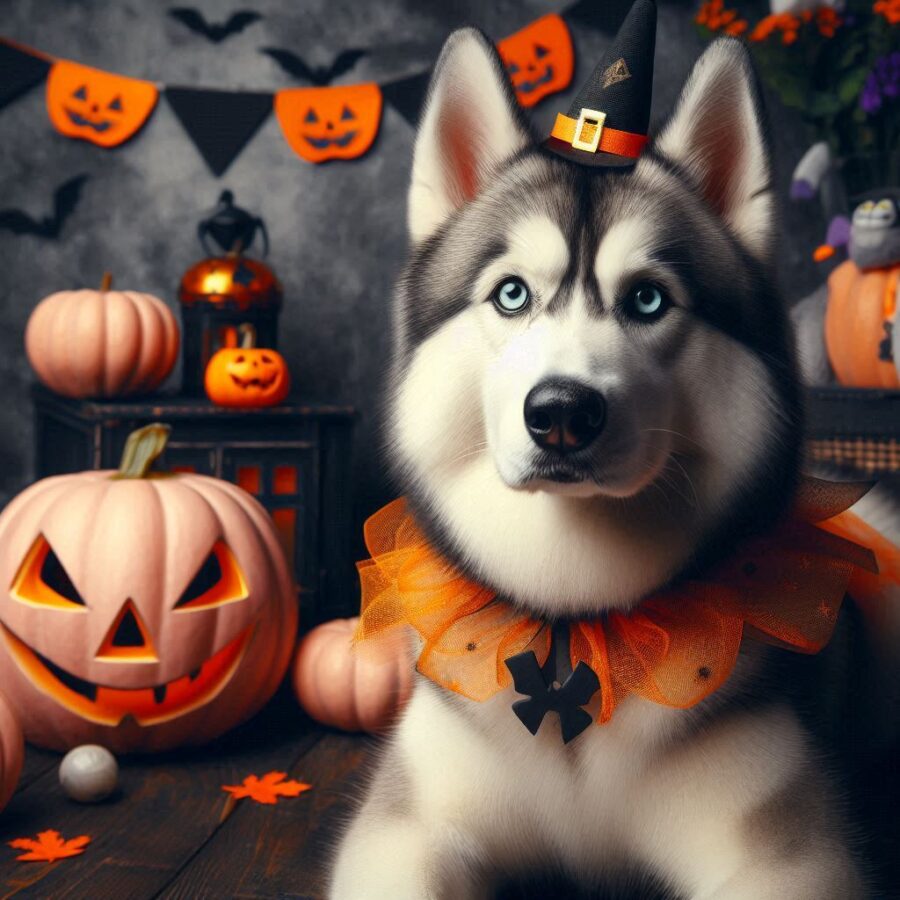
A festive bandana or a photo without a costume may be a better choice for an uncomfortable pet.
5. Give Pets a Quiet Place Away From Visitors
Doorbells, excited children, unfamiliar faces, and sudden movements can overwhelm some animals.
Prepare a quiet room before guests arrive. Provide familiar bedding, water, and a favorite toy. Cats may appreciate a hiding place, while dogs may settle more easily in a familiar room or crate if they already feel comfortable there.
Let pets choose whether to interact with visitors. Never force a frightened animal to greet guests or participate in the festivities.
For more advice, read our guide to helping dogs and cats cope with loud noises and sound sensitivity.
6. Prevent Pets From Escaping Through Open Doors
Repeated trips to the front door can create opportunities for a dog or cat to slip outside. A frightened pet may run away when startled by a visitor or unfamiliar costume.
Keep pets in a secure room during busy trick-or-treating hours if needed. Check that doors, gates, and windows are secure, and make sure your pet’s identification tags and microchip details are current.
If you take your dog outdoors, use a secure leash and stay alert to unfamiliar people, noises, and decorations.
7. Keep Glow Sticks and Batteries Out of Reach
Glow sticks, light-up accessories, and battery-powered decorations can look like toys to pets.
Chewing these items may expose animals to irritating chemicals or dangerous components. Swallowed batteries can cause serious internal injury.
Keep them stored securely, inspect decorations for damage, and discard broken items promptly. If your pet chews or swallows a glow stick, battery, or light-up accessory, contact your veterinarian for advice.
8. Keep Human Treats and Party Foods Off the Menu
Halloween gatherings often include more than candy. Guests may leave food unattended, and pets may find opportunities to grab something from a plate or rubbish bin.
Chocolate, grapes, raisins, and foods containing xylitol can pose serious risks. Rich or fatty foods may also upset digestion, and some can contribute to pancreatitis.
Offer your pet their usual food and appropriate treats instead. Ask guests not to feed your animals without permission, even if they want to share a small bite.
9. Consider Your Pet’s Personality Before Taking Them Trick-or-Treating
Some dogs enjoy walks and meeting new people. Others find crowds, costumes, and unfamiliar sounds frightening. Cats generally benefit from staying in their familiar indoor environment rather than joining busy Halloween activities.
Think about how your pet normally responds to strangers and stimulation. If they become anxious, pull away, bark excessively, hide, or try to escape, skip the outing.
If you do take your dog out, keep them on a secure leash, maintain a safe distance from crowds, and leave if they appear uncomfortable.
10. Know When to Contact a Veterinarian
If your pet eats potentially toxic candy, chews a battery, swallows a decoration, or develops signs of illness after an exposure, seek veterinary advice promptly.
Keep the product packaging or take a photo of its ingredients. Tell the veterinary team what your pet may have eaten, how much, and when it happened, if known.
Do not induce vomiting or give home remedies unless a veterinary professional specifically instructs you to do so.
Prompt advice can help determine what action is needed, even if your pet seems normal at first.
How Can You Make Halloween Less Stressful for Your Pet?
Safety also means considering your pet’s emotional comfort. A busy household, unfamiliar smells, loud sounds, and changes to routine can be stressful for animals.
Keep feeding and walking schedules as consistent as possible. Provide a familiar resting place, and allow your pet to withdraw when they need space.
Watch for changes in body language, such as hiding, trembling, pacing, panting, or attempts to escape. These signs can indicate distress, although they can also have other causes.
If your pet regularly struggles with visitors or loud noises, speak with your veterinarian about ways to support them. Planning ahead is more helpful than waiting until your pet is already overwhelmed.
Frequently Asked Questions
Is Halloween candy toxic to dogs and cats?
Yes. Chocolate can be toxic to both dogs and cats, and xylitol-containing candy is particularly dangerous to dogs. Raisins and some other ingredients can also be harmful. Keep all Halloween candy away from pets and contact a veterinarian if your pet eats something potentially toxic.
Are Halloween pumpkins safe for pets?
Plain pumpkin flesh is generally safe for many dogs and cats in small amounts. However, moldy pumpkins, candles, decorative coatings, and other materials can pose risks. Keep carved pumpkins out of reach and seek veterinary advice if your pet eats moldy material or an unknown substance.
Should cats stay indoors on Halloween?
Keeping cats indoors is generally the safer choice, especially when doors are opening frequently and visitors are arriving. Provide a quiet, secure space where your cat can rest away from the activity.
Can dogs wear Halloween costumes?
Some dogs tolerate costumes, but others find them uncomfortable or frightening. Choose a properly fitted outfit that allows normal movement, breathing, vision, and hearing. Remove it if your dog shows signs of distress.
What should I do if my dog eats chocolate on Halloween?
Contact your veterinarian or an animal poison-control service immediately. The risk depends on the type and amount of chocolate, your dog’s size, and other factors. Do not wait for symptoms or attempt to induce vomiting without professional guidance.
How can I keep my pet calm when trick-or-treaters arrive?
Prepare a quiet room with familiar bedding, water, and toys. Keep your pet away from the front door if they might become frightened or escape, and let them rest without forcing interaction with visitors.
Keep Halloween Fun, Safe, and Comfortable
Halloween doesn’t have to be stressful for dogs and cats. With a little planning, you can reduce common hazards while allowing your pet to enjoy the holiday in a way that suits their needs.
Keep candy and decorations secure, supervise costumes and outdoor activities, and provide a quiet retreat when the excitement becomes too much. If your pet may have eaten something harmful, contact your veterinarian promptly.
A safe Halloween starts with knowing what to watch for and preparing before the festivities begin.