
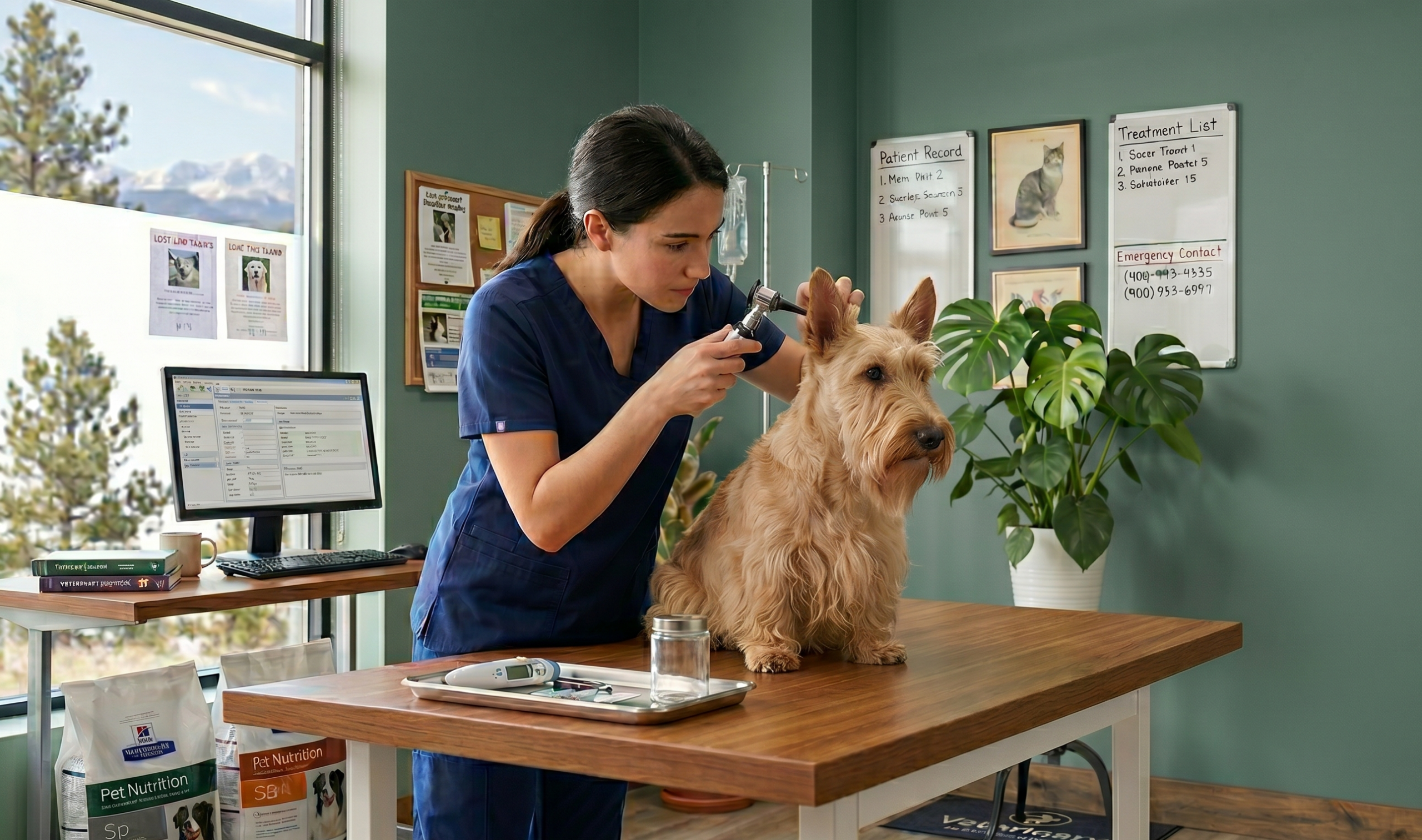
Maintaining ear health in dogs is a common challenge in veterinary medicine, particularly when dealing with canine otitis externa (OE). Recent research has shed light on the complex microbial communities inhabiting the canine ear canal, highlighting both their role in health and their potential to contribute to disease and antimicrobial resistance (AMR).
The Ear Canal Microbiota
The canine ear canal is naturally polymicrobial, hosting diverse bacterial species. In healthy dogs, culture-based methods most frequently identified Staphylococcus pseudintermedius (24.5%) and Staphylococcus epidermidis (5.7%). Metagenomic sequencing revealed a richer microbial landscape, with Bacteroides fragilis (15.8%) and Ezakiella coagulans among the dominant species.
In contrast, dogs with OE showed a marked microbial shift. Culture results highlighted S. pseudintermedius (30.5%) and Clostridium perfringens (4.5%), while metagenomic profiling revealed pathogen-dominated communities, with S. pseudintermedius accounting for nearly 39% of the relative abundance.
Culture vs. Metagenomics
- Culture-based methods: Useful for identifying viable isolates, guiding antimicrobial susceptibility testing, and confirming clinical relevance.
- Shotgun metagenomics: Provides a broader view of microbial diversity, including unculturable organisms, and allows detection of genetic signatures linked to AMR and virulence.
Together, these approaches offer complementary insights, underscoring the importance of integrating both in clinical and research settings.
Antimicrobial Resistance & Virulence
AMR profiling revealed diverse resistance determinants, including efflux pump systems and methicillin resistance-associated genes. This is particularly concerning given the zoonotic potential of pathogens such as Staphylococcus spp., Pseudomonas aeruginosa, and Escherichia coli. These organisms not only complicate treatment in veterinary patients but also pose risks to human health through close contact with companion animals.
Clinical Implications for Veterinarians
- Diagnosis: Consider both culture and metagenomic approaches for a comprehensive understanding of microbial involvement.
- Treatment planning: Awareness of AMR determinants is crucial for selecting effective therapies and avoiding treatment failures.
- Preventive care: Routine monitoring of ear health and early intervention can help mitigate microbial shifts that predispose to OE.
- Zoonotic awareness: Educating pet owners about hygiene and safe handling practices is essential to reduce transmission risks.
Key Takeaway
This study reinforces that Staphylococcus pseudintermedius is a predominant member of the canine ear microbiota, with increased prevalence in canine otitis externa. Combining culture-based diagnostics with metagenomic sequencing can help veterinarians gain a more nuanced understanding of microbial communities, AMR, and virulence factors—ultimately improving patient outcomes and safeguarding public health