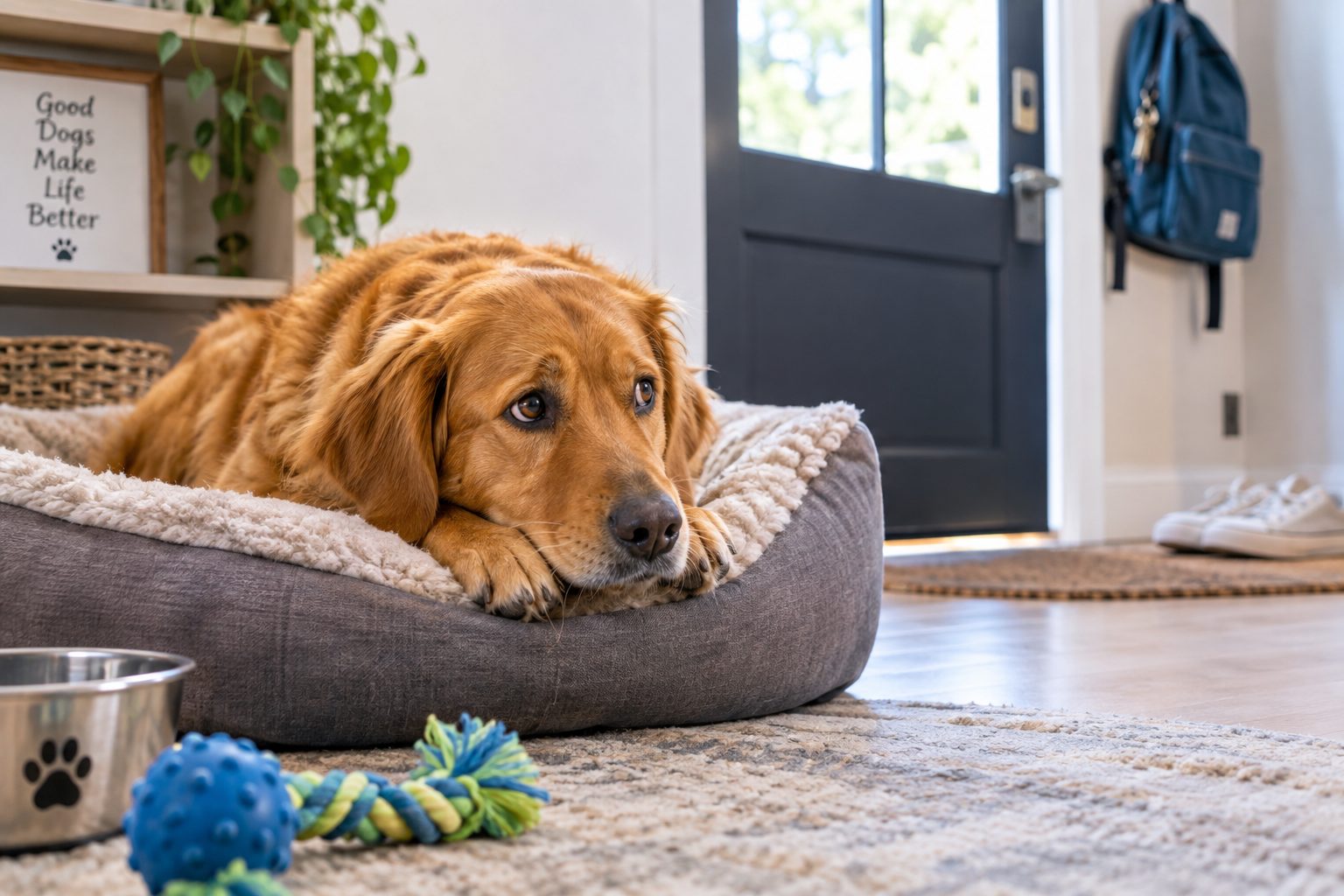
How Can You Help a Dog With Separation Anxiety?
Leaving the house should be a normal part of life. But for some dogs, the moment their person picks up the keys or walks toward the door can trigger panic. Barking, pacing, destructive behavior, accidents, or frantic attempts to follow can all be signs that being alone is genuinely difficult for them.
The good news is that separation-related behaviors can be addressed. The first step is understanding what your dog is experiencing and choosing a training approach that matches their needs.
TL;DR: Helping a dog with separation anxiety starts with understanding the behavior, identifying triggers, and building their ability to feel safe when alone. Small, carefully planned steps can make departures less stressful over time. If you want a practical introduction to the process, explore Animal Wellness Academy’s 4 Steps to Combat Canine Separation Anxiety course.
Does Your Dog Really Have Separation Anxiety?
A dog who barks when you leave doesn’t automatically have separation anxiety.
Some dogs vocalize because they’re bored. Others react to changes in routine, unfamiliar surroundings, frustration, or a lack of appropriate stimulation. Separation anxiety is different. The distress is specifically connected to being separated from a particular person or people.
Look at what happens before, during, and after you leave.
Does your dog start following you from room to room? Do they become restless when they notice departure cues such as shoes, keys, or a work bag? Once you’re gone, do they bark continuously, pace, destroy doors or windows, eliminate indoors, or try to escape?
Those details matter.
Understanding the behavior first can help you avoid treating the wrong problem.
What Can Make Being Alone So Difficult?
Dogs don’t all respond to separation in the same way.
A change in household routine can be stressful. Moving homes, losing a companion, a major schedule change, or suddenly spending more time alone can affect a dog’s behavior. Some dogs are also more prone to separation-related distress than others.
That means there isn’t one magic trick that works for every dog.
Your dog may need a gradual training plan that starts with very short periods of separation. Another dog may need changes to their environment, daily routine, or pre-departure habits alongside training.
The goal is to make alone time manageable rather than overwhelming.
What Should You Do When Your Dog Panics?
One common mistake is moving too quickly.
If a dog becomes distressed after five minutes alone, practicing thirty-minute absences won’t teach them that being alone is safe. It may simply give them more opportunities to rehearse the behavior you’re trying to change.
Instead, separation training generally works best when absences are kept below the point where the dog becomes highly distressed, then increased gradually as the dog becomes more comfortable.
That requires observation and patience.
You may also need to pay attention to what happens before the actual departure. Your dog can learn that certain cues predict your absence, so changing how those cues are handled may become part of the plan.
Can You Help Your Dog Feel More Comfortable Alone?
Yes, but progress rarely happens overnight.
Think small. A few calm minutes can be more useful than pushing for a long absence your dog can’t handle yet.
You can also make the environment easier to manage by providing appropriate enrichment, keeping routines predictable, and giving your dog a comfortable place to settle. These steps don’t replace behavior modification, but they can support the process.
Most of all, avoid punishment for behaviors that happen while you’re away. If your dog is acting out because they’re distressed, punishment after you return won’t teach them how to feel safer next time.
It can make an already stressful situation harder.
Take Our Course: 4 Steps To Combat Canine Separation Anxiety
If leaving your dog home alone has become stressful for both of you, learning more about separation anxiety can be a worthwhile first step. Explore the 4 Steps to Combat Canine Separation Anxiety course at Animal Wellness Academy to learn from Dr. Moira Hechenleitner, DVM, CSAT, and build a better understanding of how to approach separation-related behaviors.
Frequently Asked Questions
How do I know if my dog has separation anxiety?
Look for distress specifically associated with being left alone, such as persistent barking, pacing, destructive behavior, escape attempts, or other signs of panic after you leave. A professional can help determine what’s behind the behavior.
Can separation anxiety in dogs be cured?
Many dogs can improve with an appropriate behavior modification plan, although progress varies from dog to dog. Training often requires gradual changes and consistency rather than a quick fix.
Should I punish my dog for destroying things while I’m away?
No. Destructive behavior related to separation distress is not something your dog is doing out of spite. Punishment after the fact won’t teach them how to cope with being alone and may increase stress.
How long does separation anxiety training take?
There isn’t a universal timeline. Some dogs make progress relatively quickly, while others need a longer, more gradual plan. The severity of the behavior, the individual dog, and how consistently the training plan is followed can all affect progress.