
How Can You Make Your Lawn and Garden Safer for Pets?
A green lawn and a flourishing garden are lovely places for dogs to sniff, explore, and stretch their legs. But if you use weed killers, insecticides, or other lawn and garden chemicals, it’s worth thinking about how those products could affect your pets. Dogs investigate the world with their noses and mouths, and cats may walk through treated areas before grooming their paws.
TL;DR: Pet-friendly lawn and garden care starts with understanding which chemicals you use, how pets might come into contact with them, and what safer alternatives are available. Natural products aren’t automatically harmless, so always check the ingredients and follow label directions. To learn more about practical options for a pet-conscious yard, explore Animal Wellness Academy’s Pet-Friendly Alternatives to Lawn and Garden Chemicals course.
How Can Lawn and Garden Chemicals Affect Pets?
Pets can encounter lawn and garden products in several ways. They may lick treated grass, chew plants, sniff freshly applied products, or pick up residues on their paws and fur. Some animals may also drink from puddles or containers contaminated with chemicals.
The risk depends on the product, its ingredients, the amount involved, and how the animal is exposed. Certain pesticides, herbicides, fertilizers, and slug or snail baits can cause harm if swallowed or handled improperly.
Possible warning signs of poisoning vary, but may include vomiting, drooling, diarrhea, weakness, tremors, or unusual behavior. If you suspect your pet has been exposed to a harmful product, contact your veterinarian or a local animal poison service promptly. Don’t wait for symptoms to appear, and don’t try to induce vomiting unless a veterinary professional instructs you to do so.
Which Garden Products Deserve Extra Attention?
Before applying anything to your lawn or garden, read the label and check the active ingredients. Keep products in their original containers, stored securely away from pets.
Pay particular attention to:
- Weed killers: Some formulations can irritate or harm pets if they are swallowed or contact is excessive.
- Insecticides: Risks vary widely by ingredient. Certain products used around gardens can be especially dangerous to cats.
- Fertilizers: Some contain ingredients that irritate the digestive tract, while combination products may include additional pesticides.
- Slug and snail baits: Some formulations can cause serious poisoning if pets eat them.
- Mulch and plant treatments: Cocoa bean mulch and some treated materials may pose risks, depending on their ingredients.
Never assume a product is safe simply because it’s sold for home or garden use. Follow the label’s pet-related precautions and keep animals away for the specified period.
What Are Safer Alternatives to Lawn and Garden Chemicals?
You don’t need a perfectly weed-free lawn to have an attractive yard. A few changes to your gardening routine can reduce the need for chemical treatments.
Consider these approaches:
- Pull weeds by hand. Removing weeds early, before they spread, can reduce the need for herbicides in smaller garden areas.
- Improve lawn care. Appropriate mowing, watering, and grass selection can help your lawn resist weeds and other problems.
- Identify pests before treating them. Some insects cause little damage, while beneficial insects help control pests naturally. Find out what’s affecting your plants before choosing a treatment.
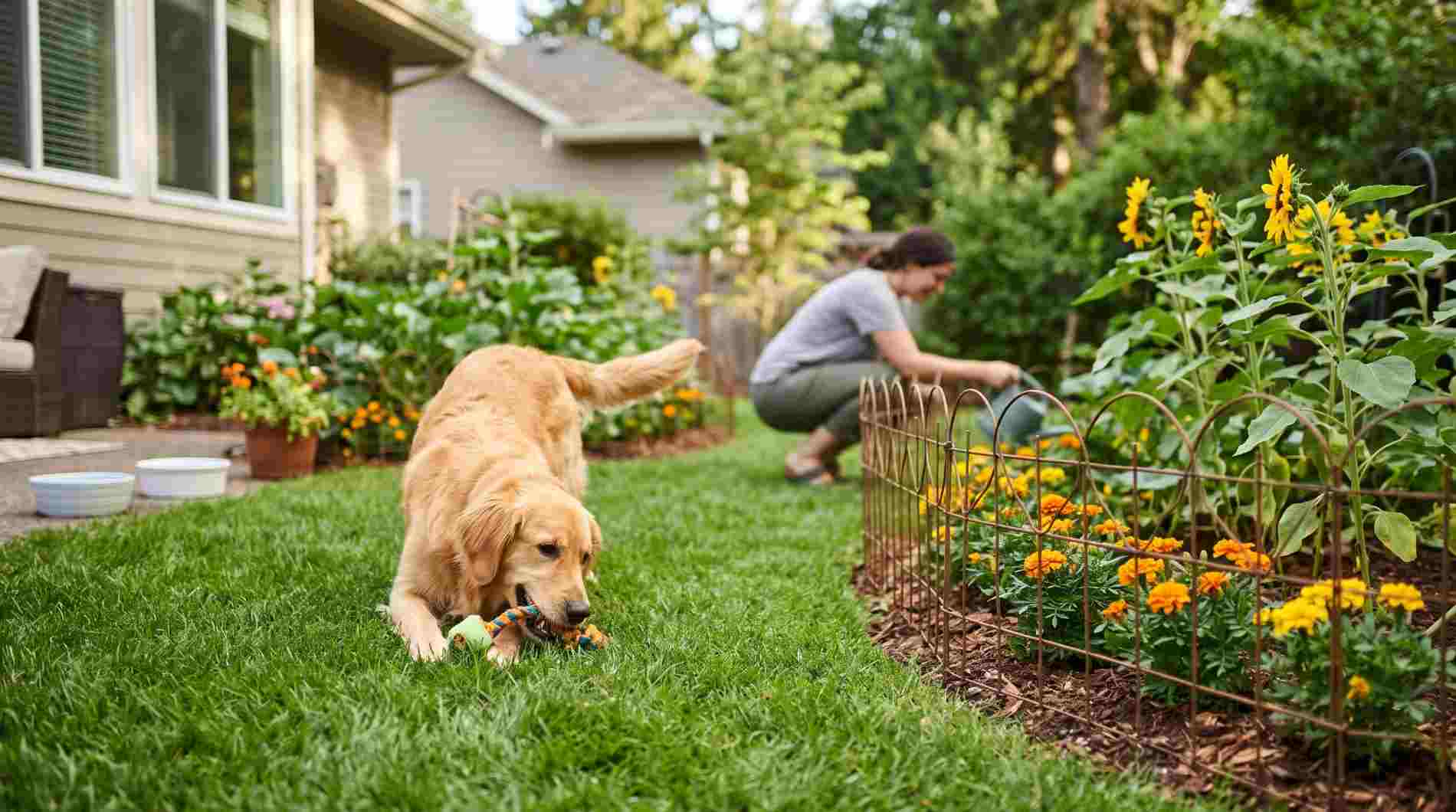
- Use physical barriers. Garden netting, plant covers, and fencing can help protect plants from certain pests without spraying chemicals.
- Choose products carefully. If treatment is necessary, ask a qualified gardening professional about targeted options with lower risks to pets and other wildlife. Always check the product label.
These methods are part of integrated pest management, which combines prevention, monitoring, and different control methods instead of relying on routine pesticide use.
How Can You Create a More Pet-Friendly Garden?
Think about how your dog or cat uses the yard. Does your dog chew grass, dig in flower beds, or roll on the lawn? Does your cat wander between plants and groom their paws afterward?
Keep pets away from treated areas for the full period specified on the product label. Store garden products securely, clean up spills promptly, and keep pets away from compost or other materials they might eat.
It’s also worth checking which plants grow in your yard. Some common ornamental plants can be toxic to pets, so chemical-free gardening alone doesn’t guarantee a safe outdoor space.
For more guidance, Animal Wellness Academy’s short course introduces natural methods for maintaining a lawn and garden while considering your companion’s health.
Take Our Course: “Pet-friendly alternatives to lawn and garden chemicals”
Want to rethink your lawn care routine without giving up a healthy garden?
The Pet-friendly alternatives to lawn and garden chemicals course from Animal Wellness Academy introduces ways to care for outdoor spaces while being more mindful of your dog’s health. It’s a useful starting point for pet parents who want to explore alternatives to conventional garden treatments and make more informed choices.
Frequently Asked Questions
Are lawn chemicals dangerous for dogs and cats?
Some products can harm pets if swallowed or if exposure occurs through their skin or paws. The risk depends on the ingredients, amount, and type of exposure. Follow label instructions and contact a veterinarian if you suspect poisoning.
Are natural lawn and garden products always safe for pets?
No. Natural ingredients can still be harmful to animals. Check the product’s ingredients and safety directions before using it around your pets.
How can I control garden weeds without herbicides?
Hand-pulling weeds, mulching appropriately, and maintaining healthy grass can help reduce weed growth. The best method depends on the type of weed and where it’s growing.
Where can I learn more about pet-friendly garden care?
Animal Wellness Academy’s Pet-friendly alternatives to lawn and garden chemicals course introduces natural lawn and garden care methods for pet owners interested in making more informed choices.