
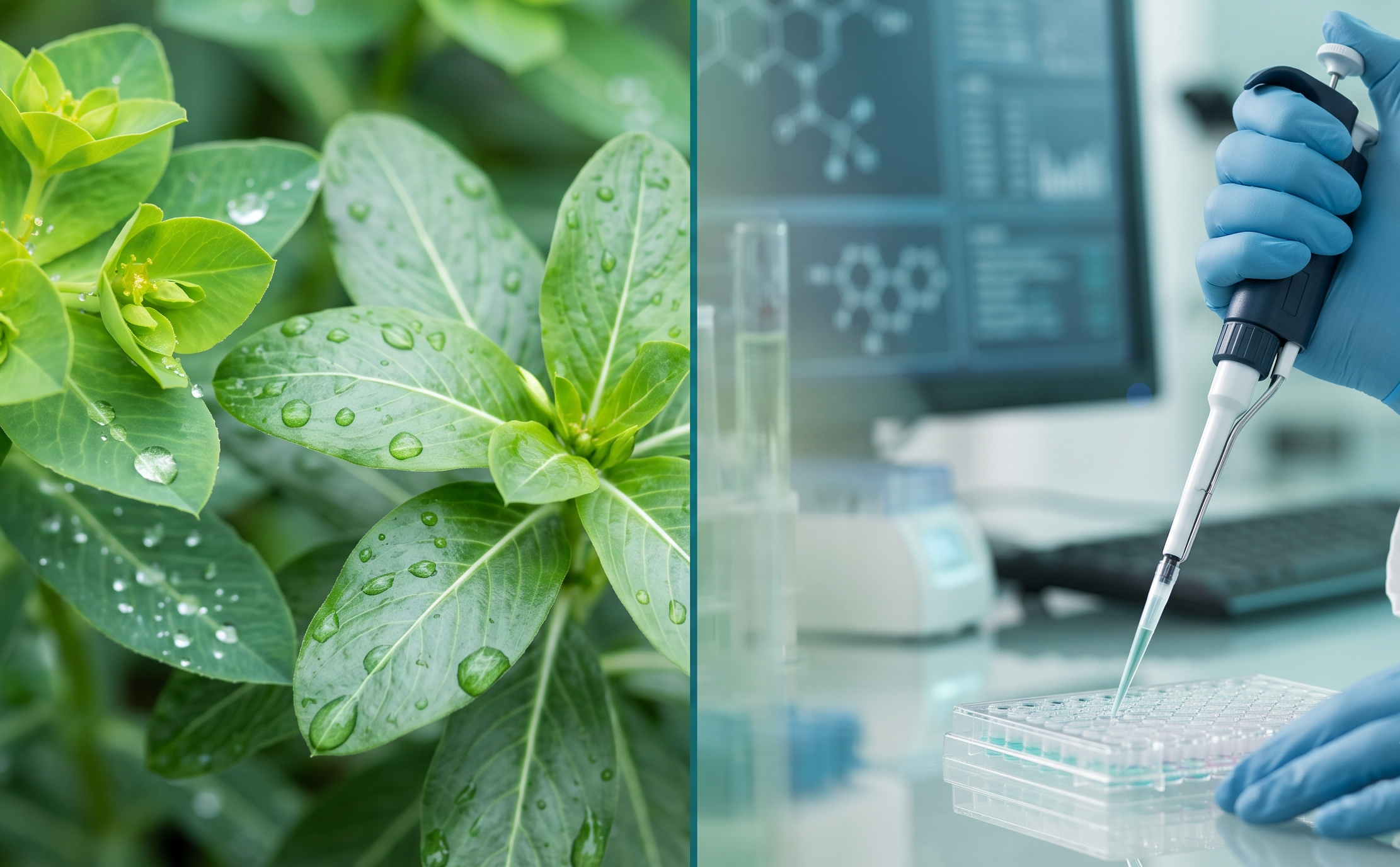
Mammary tumors remain among the most common neoplasms in both dogs and cats, with malignant forms posing significant clinical challenges. While surgery continues to be the cornerstone of treatment, recurrence and limited responsiveness to conventional therapies in advanced cases highlight the need for novel adjuvant approaches. Increasingly, phytochemicals and plant-derived extracts are gaining attention as potential adjuncts in veterinary oncology.
Why Natural Products Are Relevant
- Accessibility & Cost: Plant-derived compounds are often more affordable and widely available compared to synthetic drugs.
- Owner Acceptance: Their perception as “natural” and well-tolerated agents may improve compliance among pet owners.
- Translational Potential: Success stories such as paclitaxel (Taxus brevifolia), etoposide (Podophyllum species), and vincristine (Catharanthus roseus) demonstrate the broader relevance of plant-derived anticancer agents in both human and veterinary medicine.
Current Evidence in Dogs and Cats
Canine Mammary Tumors (CMTs)
- Most available studies focus on canine models.
- Compounds such as celastrol, homoharringtonine (HHT), and benzyl isothiocyanate (BITC) have shown strong in vitro activity.
- BITC has also demonstrated antitumor effects in xenograft models.
- Euphorbia royleana extract stands out for its low IC50 values and in vivo efficacy in preclinical studies.
Feline Mammary Tumors (FMTs)
- Despite their aggressive nature, research remains sparse.
- Only one study on FMC cells was identified in recent reviews.
- This imbalance underscores the urgent need for species-specific investigations.
Promising Candidates for Future Research
| Compound | Evidence | Potential |
|---|---|---|
| Celastrol | Strong in vitro activity | Mechanistic relevance in oncogenesis |
| Homoharringtonine (HHT) | Potent activity in canine models | Translational potential |
| BITC | In vitro + xenograft efficacy | Antitumor activity beyond cell culture |
| Euphorbia royleana extract | Low IC50, in vivo xenograft success | High-priority plant extract |
Practical Takeaways for Veterinary Clinicians
- Stay Informed
- Research Advocacy: Encourage and support clinical trials, especially in feline models where data are scarce.
Looking Ahead
The imbalance between canine and feline data is a major gap. By consolidating current evidence and identifying translational barriers, veterinary oncology can move toward species-specific strategies. The success of plant-derived anticancer agents in human medicine reinforces the potential relevance of these compounds in veterinary practice.
For now, celastrol, HHT, BITC, and Euphorbia royleana extract appear most promising for prioritization in future studies. Initial in vitro evaluation in feline mammary tumor cells may provide a critical starting point. Ultimately, bridging the gap between preclinical promise and clinical application will require careful attention to pharmacokinetics, safety, and species-specific responses.
Conclusion
Phytochemicals and plant extracts represent an exciting frontier in veterinary oncology. While evidence is strongest in canine models, expanding research into feline mammary tumors is essential. With careful translational work, these natural compounds may one day complement conventional therapies, offering veterinarians new tools against one of the most common and challenging neoplasms in companion animals.