

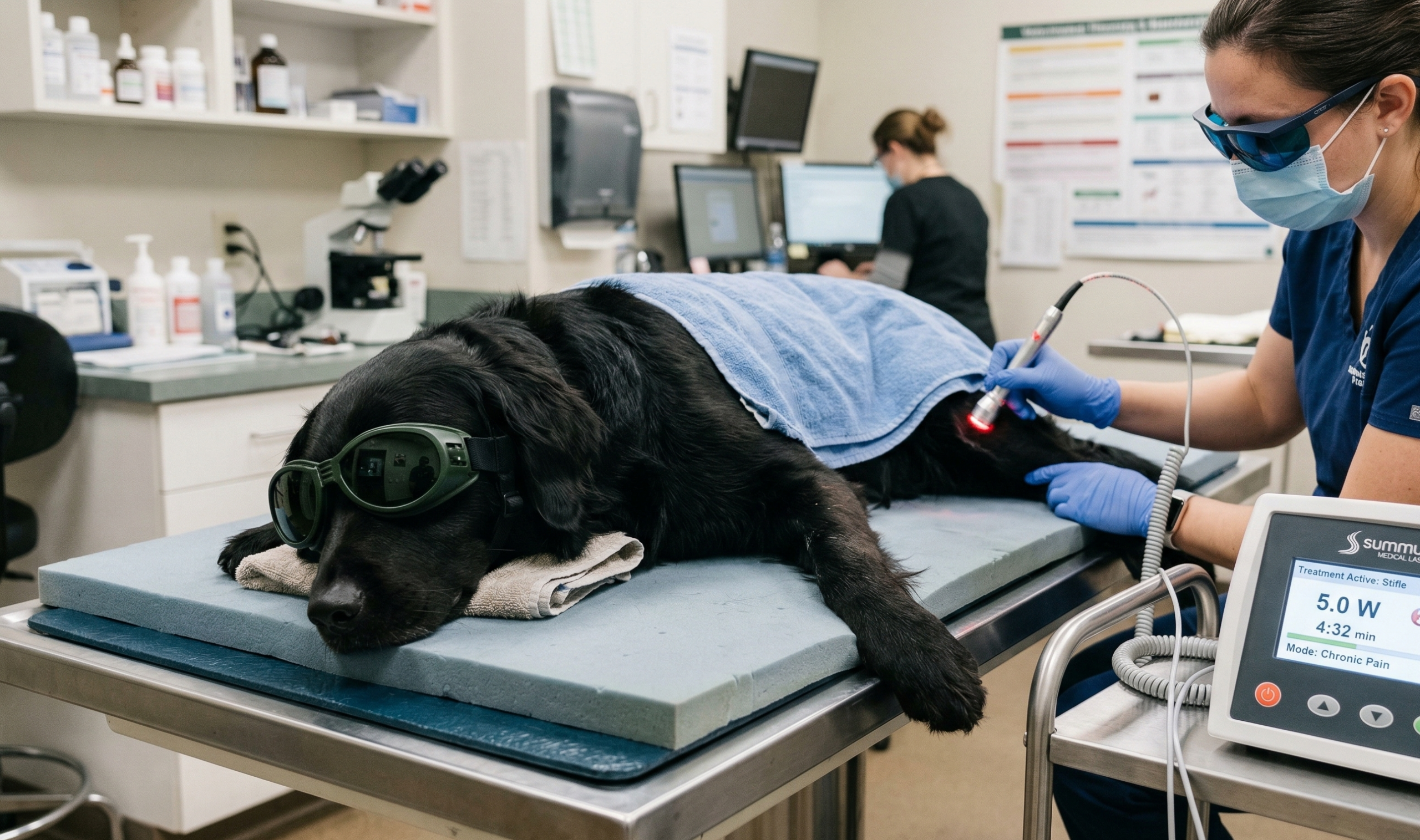
Osteoarthritis (OA) is one of the most common chronic conditions affecting dogs, often leading to pain, reduced mobility, and diminished quality of life. Conventional management typically relies on non-steroidal anti-inflammatory drugs (NSAIDs), nutraceuticals, and other pharmacological interventions. While NSAIDs remain the cornerstone of therapy, their use is contraindicated in certain patients due to adverse effects on the gastrointestinal tract, kidneys, or liver. This limitation has fueled growing interest in alternative and multimodal approaches.
What is Laser Acupuncture?
Laser acupuncture combines the principles of traditional acupuncture with modern laser technology. Instead of needles, low-intensity laser light is applied to specific acupuncture points. This technique produces anti-inflammatory, analgesic, antiedematous, and bio-stimulatory effects, making it a non-invasive option for managing OA in dogs.
Study Insights
A recent study evaluated laser acupuncture in 19 dogs diagnosed with osteoarthritis. Ten dogs received laser acupuncture therapy using a dual-wavelength system capable of continuous and pulsed synchronized emissions, while nine served as controls. After 30 days, the treatment group demonstrated:
- Significant pain reduction
- Improved joint mobility
- Decreased muscle enzyme levels (LDH and CPK)
- Changes in inflammatory markers (IL-6 and IL-10, though not TNF-α)
- Enhanced antioxidant potential
These findings highlight measurable physiological improvements alongside clinical benefits, underscoring the therapeutic potential of laser acupuncture.
Clinical Relevance
For veterinary professionals, laser acupuncture offers a viable option in cases where pharmacological treatment is contraindicated or ineffective. It is non-invasive, well-tolerated, and adaptable to the site of disease. While these preliminary results are promising, larger randomized controlled trials are needed to confirm long-term efficacy and establish standardized treatment protocols.
Conclusion
Laser acupuncture represents an exciting frontier in veterinary pain management. By integrating this modality into multimodal treatment plans, veterinarians can provide safer, more comprehensive care for dogs suffering from osteoarthritis—especially those unable to tolerate conventional medications.


