
Traveling with your canine companion can be an exciting adventure, but it’s important to recognize that many dogs experience stress during trips. Whether you’re heading to the vet, visiting family, or embarking on a vacation, understanding how to naturally ease your dog’s travel anxiety can make the journey more comfortable for everyone involved.
Understanding Travel Stress
Dogs thrive on routine and familiarity. When their environment suddenly changes—new sounds, smells, and movements—many become anxious. Some dogs may drool, pant heavily, whine, or even vomit during car rides. Recognizing these signs early allows you to take steps to help your companion feel more secure.
Start Early with Positive Associations
The best approach is gradual conditioning. Begin by introducing your dog to the vehicle while it’s parked. Let them explore the car at their own pace while offering their favorite treats. Keep these initial sessions short—just five to ten minutes. Once they seem comfortable, start with very brief drives, perhaps just to the end of the driveway or around the block. Slowly increase the distance as your dog shows signs of relaxation.
Exercise Before Travel
Physical activity is one of the most effective natural stress relievers. Take your dog for a good walk or play session before hitting the road. A tired dog is typically a calmer dog, and burning off excess energy can help them settle more easily during the journey.
Maintain Familiar Routines
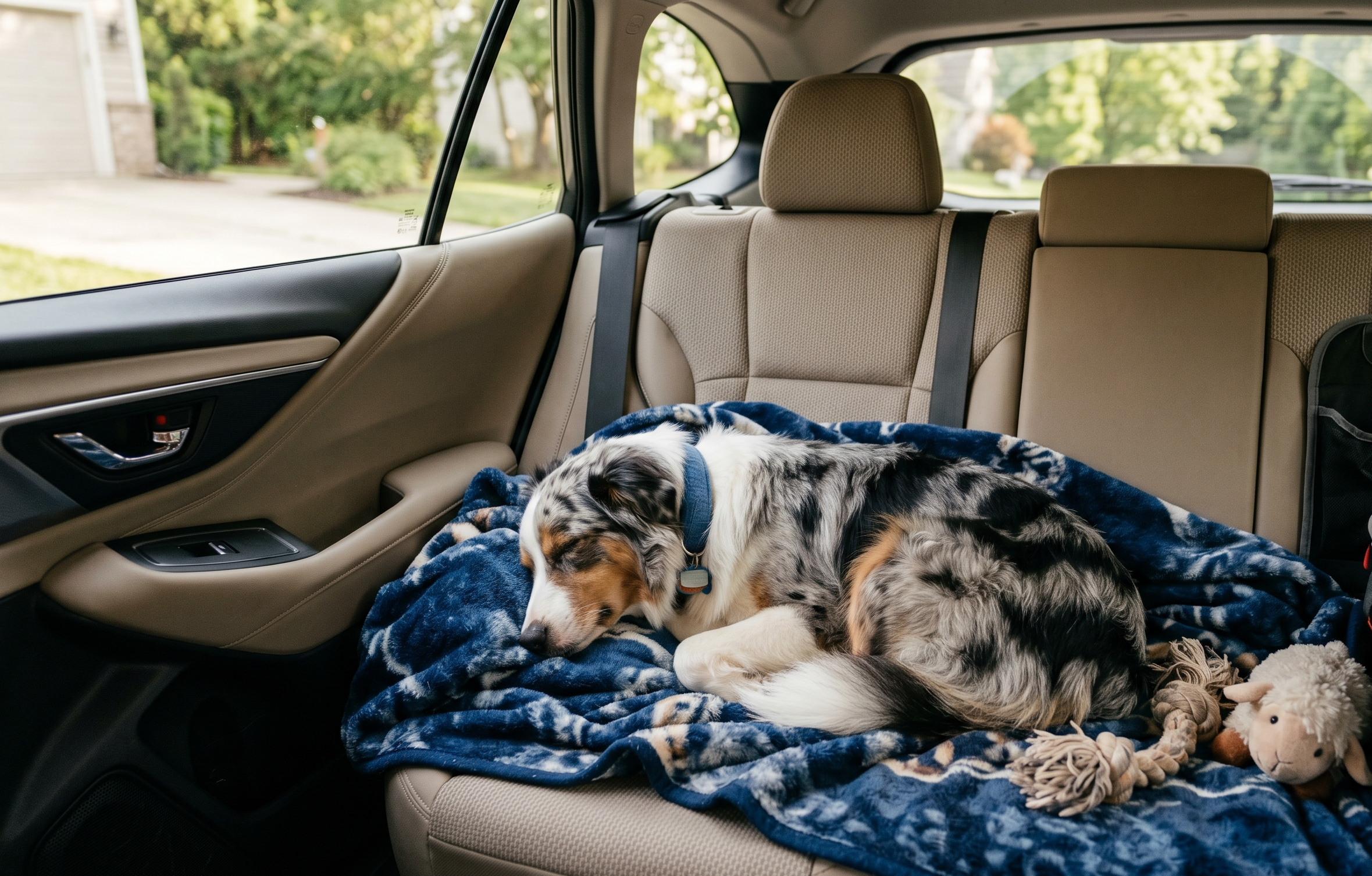
Keeping some aspects of your dog’s regular schedule intact can significantly reduce anxiety. Try to feed them at their usual times and bring along familiar items like their favorite blanket, bed, or toys. These comfort objects carry reassuring scents from home.
Create a Comfortable Space
Secure your dog safely in a crash-tested harness or travel crate during car rides. This not only protects them but also provides a defined space where they can feel secure. Some dogs find comfort in having their crate covered with a light blanket, creating a den-like environment.
Plan for Frequent Breaks
On longer trips, stop regularly to allow your dog to stretch their legs, relieve themselves, and drink water. These breaks help prevent motion sickness and give them mental breaks from the stress of travel.
Supplements for Stress
Probiotics can be helpful during stressful periods (like travel or moving to a new home) since stress can affect your dog’s digestive system. These are considered very safe, but it’s best to use products specifically made for dogs rather than human versions.
Chamomile: This is one of the more commonly used and generally safer herbs for dogs. It can have mild calming effects and may help with anxiety. Dogs tolerate it well in small amounts. Talk to your veterinarian before given it to your dog.
Valerian Root: This is considered to be the most studied supplement for pet anxiety. It has calming properties and is found in some commercial pet calming products. However, it can affect dogs differently, so consult your veterinarian before giving it to your dog.
When to Seek Professional Help
If your dog’s travel anxiety seems severe or doesn’t improve with these natural approaches, consult your veterinarian. They can evaluate whether underlying health issues might be contributing to the stress and discuss additional options, including possible calming aids or referral to a veterinary behaviorist who specializes in anxiety-related behaviors.
Remember, patience is key. Every dog adjusts to travel at their own pace, and what works for one may not work for another. With consistent, positive experiences, most dogs can learn to tolerate—and even enjoy—traveling with their family.