

Feline Lower Urinary Tract Disease (FLUTD) is one of the most commonly encountered conditions in small animal practice. Among its many causes, Feline Idiopathic Cystitis (FIC) stands out as the most prevalent — accounting for the majority of FLUTD cases — and stress is widely recognized as a key trigger. For veterinary professionals seeking a more well-rounded approach to managing this condition, integrative and holistic modalities offer promising adjunctive support alongside conventional treatment.
The Stress-FLUTD Connection
Cats are highly sensitive animals. Environmental stressors — such as changes in routine, multi-cat households, indoor confinement, or owner absence — can activate the hypothalamic-pituitary-adrenal (HPA) axis, leading to dysregulation of the bladder’s protective glycosaminoglycan (GAG) layer. This leaves the urothelium vulnerable to inflammation, resulting in the classic clinical signs: pollakiuria, stranguria, hematuria, and in some cases, life-threatening urethral obstruction — particularly in castrated males.
Separation anxiety is also a recognized contributor, with affected cats showing urinary changes alongside behavioral signs such as excessive vocalization, house soiling, and altered activity levels. Understanding this mind-body connection is essential when building a comprehensive treatment plan.
Conventional Management: The Foundation
Standard care for FIC typically includes:
- Pain management and anti-inflammatory therapy
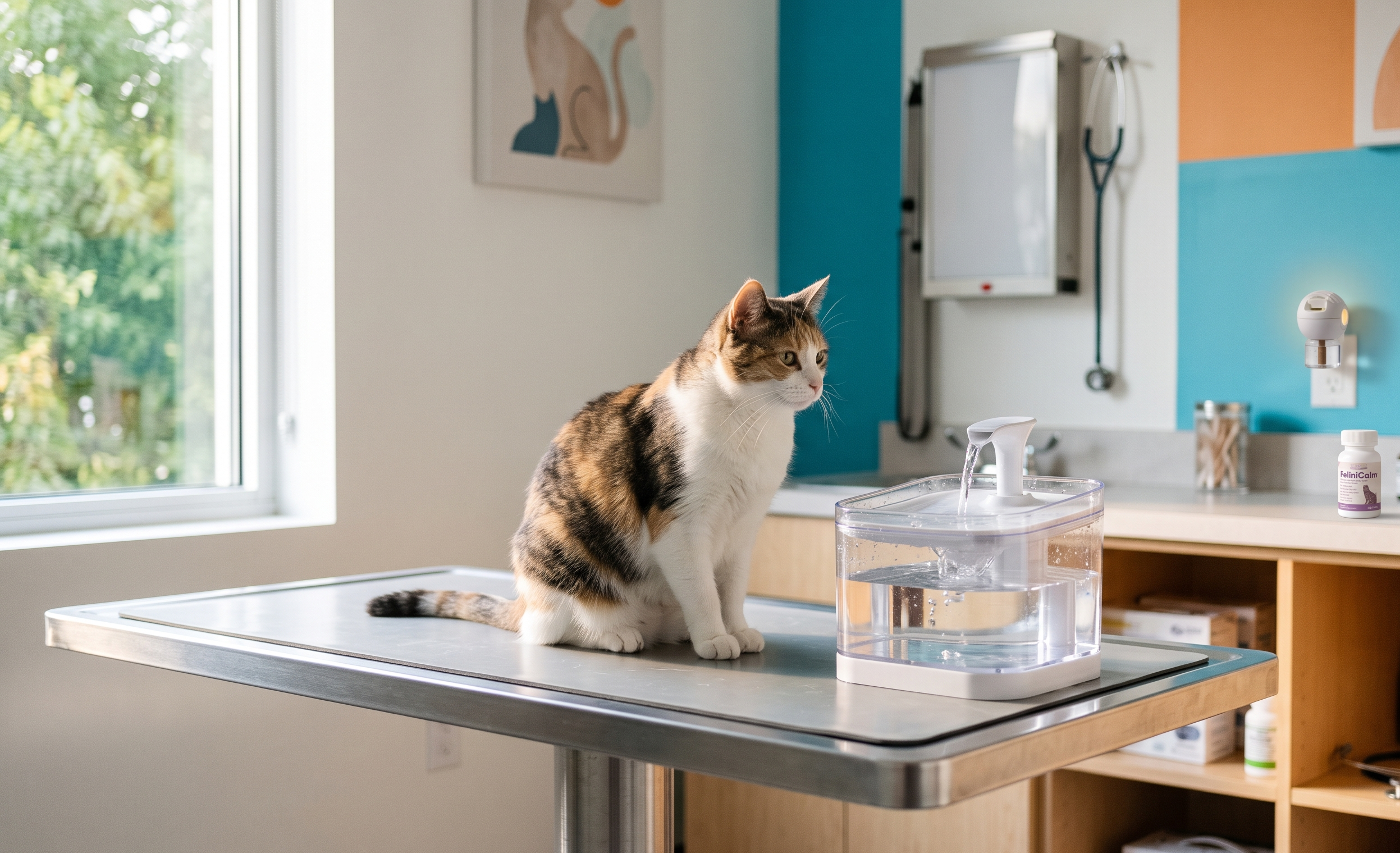
- Increased water intake through wet food diets and water fountains
- Urinalysis and diagnostics to rule out infection, uroliths, and obstruction
- Environmental enrichment to reduce baseline stress levels
While these interventions are critical, they do not always address the root emotional and physiological stress response driving recurrence. This is where integrative medicine can play a meaningful complementary role.
Integrative, Holistic, and Natural Modalities
1. Environmental Enrichment (The MEMO Approach)
The cornerstone of FIC management remains environmental modification. The “Indoor Cat Initiative,” developed at Ohio State University, emphasizes:
- Multiple litter boxes in quiet, accessible locations
- Vertical spaces and hiding spots
- Predictable daily routines
- Positive social interaction
This low-cost intervention has shown meaningful reductions in FIC recurrence and should be discussed with every cat owner.
2. Pheromone Therapy
Synthetic feline facial pheromone products have been studied for their calming effects in cats. These products mimic the natural F3 fraction pheromone cats deposit when they feel safe and comfortable. Diffusers placed in areas where the cat spends the most time can help reduce anxiety-driven urinary episodes. Evidence is variable, but the safety profile is excellent, making it a reasonable adjunct.
3. Nutritional Supplements
Several supplements have been explored for their role in supporting urinary and emotional health in cats:
- Alpha-casozepine (Zylkene): A milk-derived protein with anxiolytic properties. It works on GABA receptors similarly to benzodiazepines but without the sedative side effects.
- L-theanine: An amino acid found in green tea that has shown calming properties in several species.
- GAG supplementers (e.g., Cosequin for Cats): May help support and restore the bladder’s protective mucosal lining.
- Omega-3 fatty acids: Their anti-inflammatory properties may help modulate bladder inflammation associated with FIC.
4. Acupuncture
Veterinary acupuncture is gaining traction as a legitimate integrative tool. In cats with chronic FIC, acupuncture may help modulate the autonomic nervous system, reduce HPA axis hyperactivation, and provide anti-inflammatory effects. Practitioners certified through the Chi Institute or IVAS are well-positioned to incorporate this safely into a feline wellness plan.
5. Herbal Medicine
Certain herbal preparations — such as marshmallow root (Althaea officinalis) — are thought to have soothing, demulcent properties on mucous membranes, including the bladder lining. Valerian root has also been used in feline stress protocols. It is important to note that herbal use in cats requires careful consideration of feline metabolic limitations, particularly their reduced ability to glucuronidate certain compounds. Always consult with a veterinary herbalist before recommending herbal protocols for feline patients.
6. Hydration Support and Diet
A canned or raw diet with high moisture content remains one of the most evidence-supported interventions for FLUTD management. Increased urinary dilution reduces bladder irritant concentration and lowers the risk of crystalluria. Encouraging water intake through multiple fresh water sources and water fountains is a simple, effective strategy.
7. Mind-Body Behavioral Support
For cats with significant anxiety or separation-related issues, behavioral modification techniques — including desensitization and counter-conditioning — can reduce the frequency of stress-induced flares. Referral to a board-certified veterinary behaviorist may be warranted in refractory cases.
A Final Word
Feline idiopathic cystitis is a multifactorial condition, and no single intervention addresses every patient. The most successful outcomes come from integrating conventional diagnostics and treatment with thoughtful environmental, nutritional, and holistic support. Veterinary professionals are uniquely positioned to bridge this gap — offering cats and their owners a truly comprehensive path to wellness.
Always tailor your approach to the individual patient, and continue monitoring the growing body of evidence supporting integrative feline medicine.


