
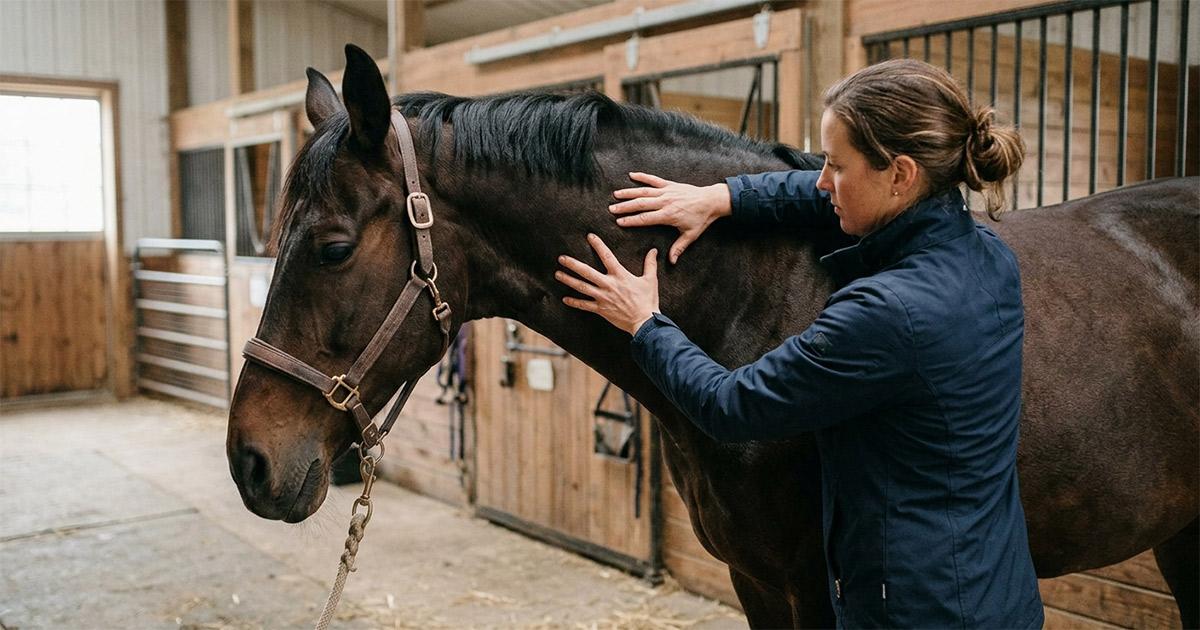
Massage therapy has become an increasingly valuable tool in modern equine care, supporting everything from athletic recovery to long-term wellness in senior horses. While often viewed as an “extra,” equine massage is actually grounded in well-established principles of musculoskeletal health, circulation, and nervous system regulation.
When applied correctly, massage can help horses move more freely, recover more efficiently, and maintain a healthier balance between training stress and physical restoration.
Overview of Equine Massage Therapy Principles
Equine massage therapy is based on the manual manipulation of soft tissue—muscles, fascia, tendons, and ligaments—to improve function and reduce restrictions in movement.
Key principles include:
- Releasing tension patterns stored in muscle tissue
- Improving circulation and lymphatic flow
- Supporting neuromuscular communication
- Encouraging parasympathetic (rest-and-repair) nervous system activity
Unlike training or conditioning work, massage focuses on recovery and regulation, helping the body return to balance after physical or emotional stress.
Muscle Tension and Performance Connection
Muscle tension in horses is rarely isolated—it often reflects workload, saddle fit issues, compensation patterns, or emotional stress. Over time, tight or restricted muscles can limit stride length, reduce engagement, and increase injury risk.
When tension builds, horses may show:
- Shortened or uneven stride
- Resistance to bending or collection
- Behavioral changes under saddle
- Reduced performance consistency
Massage helps interrupt these patterns by softening overactive muscles and restoring more efficient movement.
Key Benefits of Equine Massage Therapy
Improved Circulation
Massage increases blood flow to targeted tissues, delivering oxygen and nutrients while helping remove metabolic waste. This supports faster recovery after intense training or competition.
Fascia Release
Fascia is the connective tissue that surrounds muscles. When it becomes restricted, movement can feel “stuck” or uneven. Massage helps restore glide and elasticity within these layers.
Stress Reduction
Massage also affects the nervous system. Many horses shift into a calmer, more relaxed state during and after treatment, which can improve behavior, focus, and overall well-being.
When Horses Benefit Most from Massage
Massage therapy can be helpful at multiple stages of a horse’s life and training cycle:
- During training: Supports muscle recovery and prevents chronic tension buildup
- Post-injury (vet-guided): Assists rehabilitation by improving circulation and mobility
- Senior horses: Helps maintain comfort, flexibility, and ease of movement
- Travel or competition periods: Reduces stiffness and stress-related tightness
Consistency is often more effective than occasional treatment, especially for performance horses.
Techniques Used by Professionals
Certified equine massage therapists may use a combination of methods, including:
- Effleurage (long, sweeping strokes to warm tissues)
- Petrissage (kneading to release deeper muscle layers)
- Myofascial release (targeting connective tissue restrictions)
- Trigger point therapy (addressing localized tight spots)
- Stretching and range-of-motion work
Each technique is selected based on the horse’s condition, workload, and response to touch.
At-Home Supportive Touch Techniques
While professional treatment is essential for deeper work, owners can support their horses between sessions using gentle, mindful touch.
Simple approaches include:
- Slow grooming with a soft curry comb to encourage relaxation
- Light stroking along the neck, shoulders, and hindquarters
- Observing areas of sensitivity or resistance
- Pairing touch with calm breathing and quiet environment
The goal is not to “fix” tissue, but to reinforce relaxation and awareness.
Integrating Massage into a Wellness Routine
Massage works best as part of a broader equine wellness strategy that includes:
- Balanced training programs
- Appropriate saddle fit
- Adequate turnout and movement
- Nutrient-dense forage-based feeding
- Regular veterinary and bodywork check-ins
When combined, these factors help maintain long-term soundness and reduce the risk of chronic tension patterns developing.