Gastritis in dogs is a common presenting complaint, characterized by inflammation of the gastric mucosa. While conventional treatment remains the gold standard, many pet owners are turning to natural and herbal remedies. Here is a practical overview of what practitioners should know.
1. Slippery Elm (Ulmus rubra)
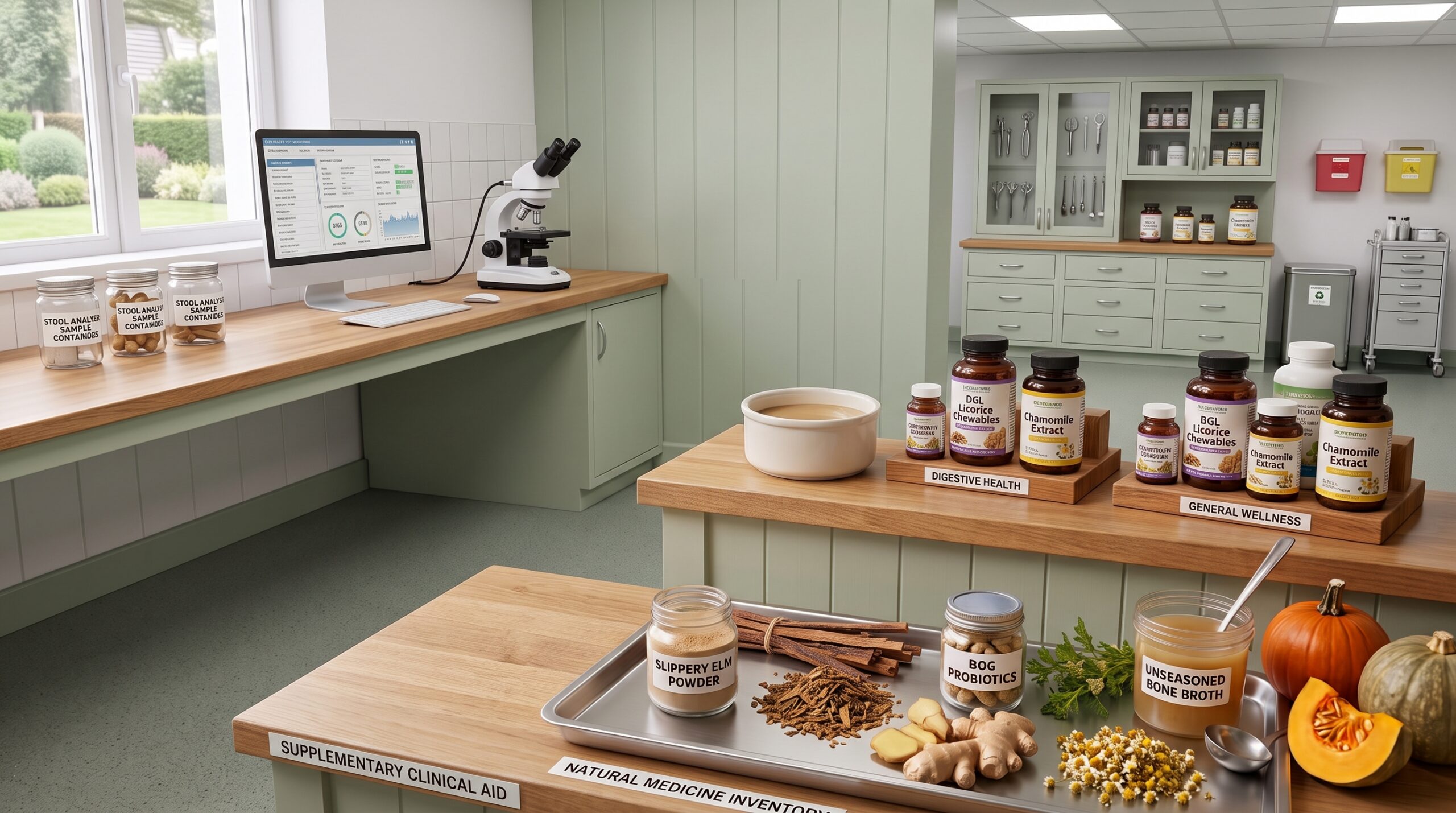
Slippery elm contains mucilage, a gel-like substance that may coat and soothe the gastric lining. It has a long history of use in both human and veterinary folk medicine. Some practitioners use it as a supportive supplement during mild gastric flare-ups. Research in dogs remains limited.
2. Probiotics
Probiotic supplementation is arguably the most evidence-supported natural approach. Strains such as Lactobacillus acidophilus and Bifidobacterium animalis may help restore gut flora balance and reduce mucosal inflammation. Species-specific formulations are strongly recommended over human products.
3. Ginger (Zingiber officinale)
Ginger has demonstrated anti-nausea and anti-inflammatory properties in several studies. It may help reduce gastric motility disturbances associated with gastritis. However, large amounts can be irritating to the GI tract, so caution is advised.
4. Bone Broth (Unseasoned)
Plain, unseasoned bone broth is often recommended as a gut-supportive food during gastric recovery. It provides easily digestible nutrients and hydration while being gentle on an inflamed stomach. Practitioners should ensure the broth contains no onion, garlic, or added sodium, as these are toxic to dogs.
5. Chamomile (Matricaria chamomilla)
Chamomile has well-documented anti-inflammatory and antispasmodic properties. It may help reduce gastric cramping and soothe irritated mucosa. It is generally considered safe in small amounts, though it should be avoided in dogs with known sensitivity to plants in the Asteraceae family.
6. Licorice Root (Glycyrrhiza glabra)
Licorice root, particularly deglycyrrhizinated licorice (DGL), has shown promise in supporting gastric mucosal integrity. DGL specifically has had the glycyrrhizin compound removed, reducing the risk of side effects such as fluid retention and hypertension associated with long-term use of whole licorice root.
7. Bland Dietary Management with Whole Foods
A short-term bland diet using boiled chicken and plain white rice is a time-honored approach to managing acute gastritis. It reduces gastric acid stimulation and gives the mucosal lining time to recover. Some practitioners also incorporate pumpkin puree for its fiber content and soothing properties.
Important Clinical Takeaways
- Evidence is limited. Robust, peer-reviewed clinical trials are required in dogs specifically.
- Drug interactions matter. Herbs like ginger and licorice root can interact with NSAIDs, corticosteroids, and anticoagulants.
- Dosing is critical. Natural does not mean risk-free. Always guide clients carefully.
Natural and herbal approaches can play a supportive role in managing canine gastritis. A thorough veterinary workup and evidence-based treatment plan is a win-win.