
How to Teach Your Dog Not to Chew Things She Shouldn’t
You leave your favorite shoes by the door for just a moment, and suddenly they have tooth marks. Or perhaps your dog has decided the corner of the sofa makes a better chew toy than anything you bought her.
Sound familiar? Chewing is a normal dog behavior, but that doesn’t mean your belongings have to become fair game. With the right approach, you can teach your dog what she can chew while helping her develop better habits around the house.
TL;DR: To teach your dog not to chew household items, redirect her to appropriate chew toys, reward the behavior you want, and keep tempting objects out of reach. Avoid punishment and focus on setting her up for success. For more practical, positive training tips, explore our How to Teach Your Dog Not to Chew Things She Shouldn’t course.
Why Does Your Dog Chew Everything?
Chewing can serve several purposes for dogs. Puppies may chew as they explore their surroundings and go through teething. Adult dogs may chew for enjoyment, stimulation, or comfort. Some dogs also turn to destructive chewing when they’re bored, frustrated, or struggling with being left alone.
The first step is to consider what might be driving your dog’s behavior. Does she chew furniture when nobody is playing with her? Does she go straight for shoes whenever she gets the chance? Or does the chewing happen mainly when she’s home alone?
Paying attention to the circumstances can help you choose a more effective solution. If the behavior starts suddenly or becomes excessive, check with your veterinarian to rule out an underlying problem.
How Can You Stop Your Dog From Chewing Household Items?
The goal isn’t to stop your dog from chewing altogether. It’s to teach her which items are appropriate.
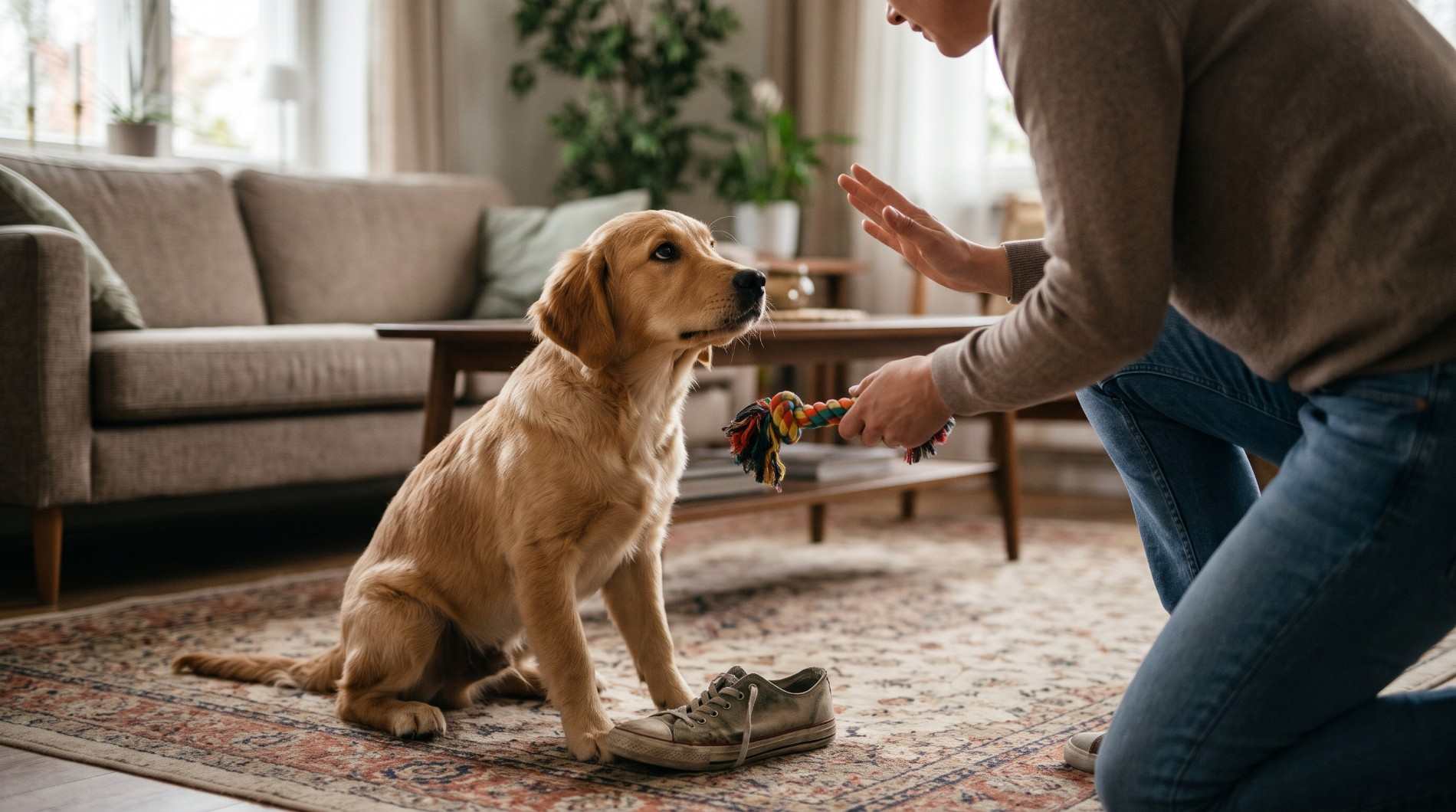
Offer appealing alternatives. Keep suitable chew toys available and rotate them to maintain your dog’s interest. Choose toys that match her size and chewing style, and supervise her with new items to make sure they remain safe.
Redirect her calmly. If you catch your dog chewing a shoe, interrupt gently and offer an appropriate toy instead. When she switches to the toy, praise her. Repeating this process helps her learn which choice earns your attention.
Reward the behavior you want. Notice when your dog chooses her own toys instead of your belongings. A little praise or a suitable reward can reinforce that good decision.
Try to stay consistent. If an old slipper is sometimes allowed as a toy but another shoe is off-limits, your dog may struggle to understand the difference.
How Can You Make Your Home Chew-Proof?
Training becomes easier when your dog has fewer opportunities to make mistakes.
Put shoes, remote controls, children’s toys, and other tempting objects away. Use gates or a comfortable, dog-safe area when you can’t supervise closely. Make sure electrical cords, medications, cleaning products, and other hazardous items are inaccessible.
Your dog also needs appropriate outlets for her energy and curiosity. Regular walks suited to her needs, play, short training sessions, and sniffing activities can give her something more rewarding to do than dismantling your furniture.
If chewing happens mainly when your dog is alone, don’t assume she’s being spiteful. Separation-related distress may require a different plan, so consider seeking help from a qualified behavior professional.
Should You Punish Your Dog for Chewing?
Punishment may frighten or confuse your dog without teaching her what to do instead. Scolding her after discovering a damaged cushion is especially unlikely to help because she may not connect your reaction with the earlier behavior.
Instead, focus on prevention, redirection, and rewarding appropriate choices. Progress may take time, particularly with puppies or dogs that have practiced unwanted chewing for months.
For more guidance, Animal Wellness Academy’s course explores positive ways to redirect chewing toward appropriate items, helping dog parents build better habits without relying on harsh corrections.
Take Our Course: “How to Teach Your Dog Not to Chew Things She Shouldn’t”
Ready to protect your favorite belongings while helping your dog learn better chewing habits?
Our How to Teach Your Dog Not to Chew Things She Shouldn’t course offers practical, positive training tips to help you redirect your dog toward appropriate chew items and build a happier routine at home.
Frequently Asked Questions
Do dogs grow out of chewing everything?
Puppies may chew less as they mature, but dogs of any age can chew when they need stimulation or access to appealing objects. Training and management help establish appropriate habits.
What should I give my dog to chew instead?
Choose durable, dog-appropriate chew toys that suit her size and chewing strength. Supervise chewing and replace toys that become damaged or develop loose pieces.
How long does it take to stop destructive chewing?
There’s no fixed timeline. Progress depends on your dog’s age, habits, environment, and the reasons behind the chewing. Consistent practice and prevention can help.
When should I seek professional help?
Speak with your veterinarian if chewing begins suddenly, becomes excessive, or leads to possible injury or ingestion of foreign objects. If chewing is linked to distress when your dog is alone, a qualified behavior professional can help you develop a suitable plan.