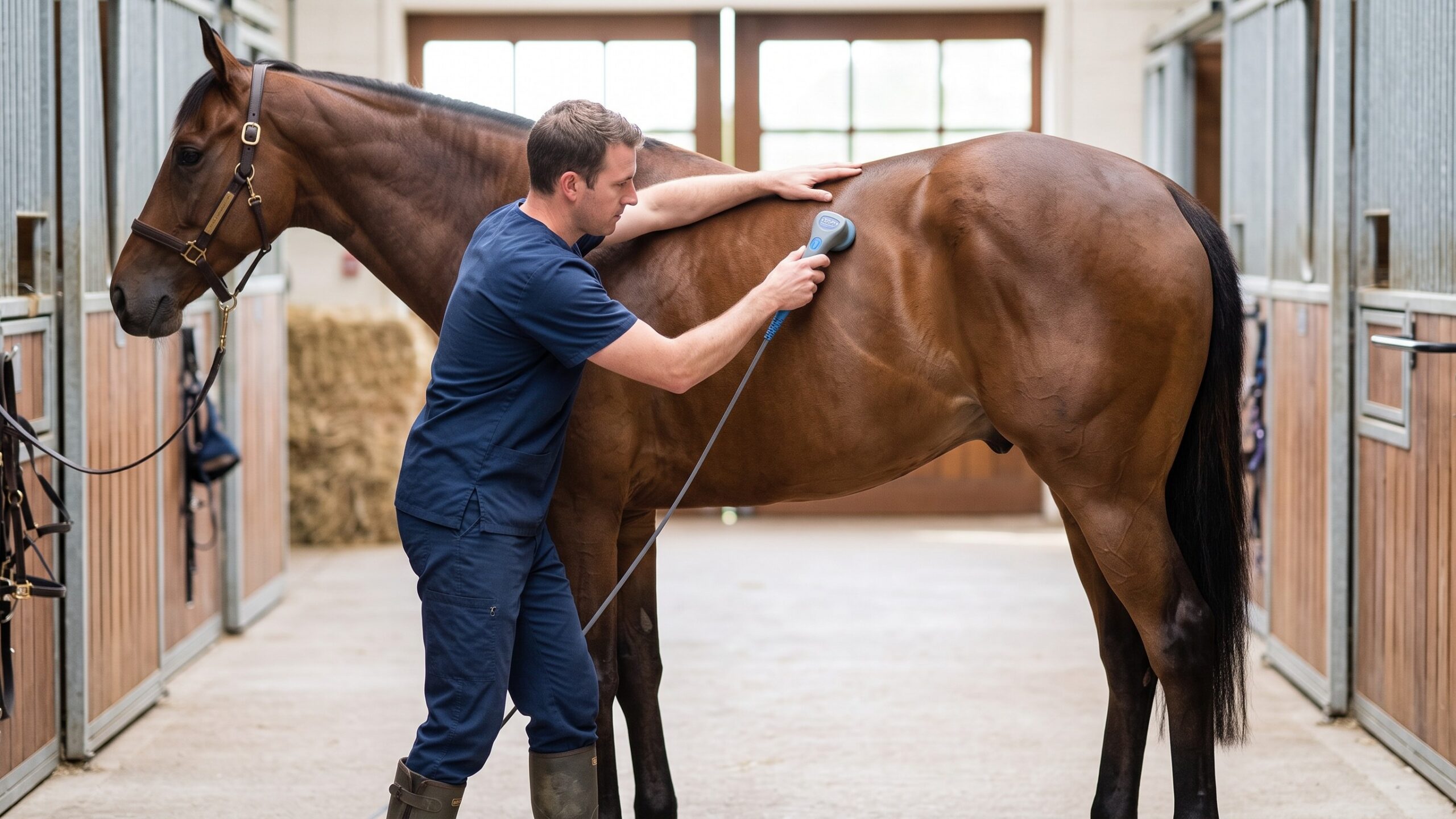
Capacitive and resistive electric transfer (TECAR) therapy has been gaining traction in equine rehabilitation, but until recently, objective data on its immediate effects in horses was scarce. A new pilot study sheds light on how TECAR influences the longissimus dorsi muscle in Thoroughbred racehorses, offering veterinarians practical insights into its potential applications.
Study Design
- Subjects: 20 clinically healthy Thoroughbred racehorses, aged 2–3 years.
- Groups: Randomized into a TECAR treatment group (n = 10) and a sham-treatment control group (n = 10).
- Assessments:
- Thermographic imaging for body surface temperature.
- Palpation-based muscle tone scoring.
- Timeline: Measurements taken before treatment, immediately after, and 10 minutes post-treatment in the thoracolumbar region (Th15–L6).
Key Findings
- Thermal Response:
- TECAR therapy produced a significant rise in body surface temperature.
- Mean values increased from 25.3 ± 1.5 °C pre-treatment to 28.9 ± 1.3 °C immediately post-treatment (p < 0.001).
- Elevated temperature persisted after 10 minutes (27.6 ± 1.3 °C; p = 0.002).
- Sham group changes were minimal, confirming the specificity of TECAR’s effect.
- Muscle Tone Reduction:
- Palpation scores dropped from a median of 3 [2–3] before treatment to 0 [0–1] immediately afterward (p < 0.001).
- This suggests TECAR therapy can rapidly reduce muscle tension in the longissimus dorsi.
Clinical Implications
For equine practitioners, these findings highlight TECAR therapy as a promising adjunct in managing back muscle tension in racehorses. The immediate thermal effect may enhance local circulation, while reduced muscle tone could support improved flexibility and comfort.
Potential applications include:
- Rehabilitation programs for horses recovering from musculoskeletal strain.
- Performance optimization in racehorses by alleviating back stiffness.
- Preventive care to maintain thoracolumbar health in high-performance animals.
Limitations & Future Directions
While the pilot study provides encouraging evidence, it is limited by its small sample size and short observation window. Long-term studies are needed to determine:
- The duration of TECAR’s effects beyond 10 minutes.
- Its role in chronic conditions such as back pain or muscle fibrosis.
- Comparative efficacy against other physiotherapy modalities like laser therapy or shockwave therapy.
TECAR therapy shows measurable benefits in Thoroughbred racehorses, producing both an immediate thermal response and a reduction in muscle tone. For veterinarians, this modality could become a valuable tool in equine physiotherapy, particularly for managing back muscle health in racing and performance horses.