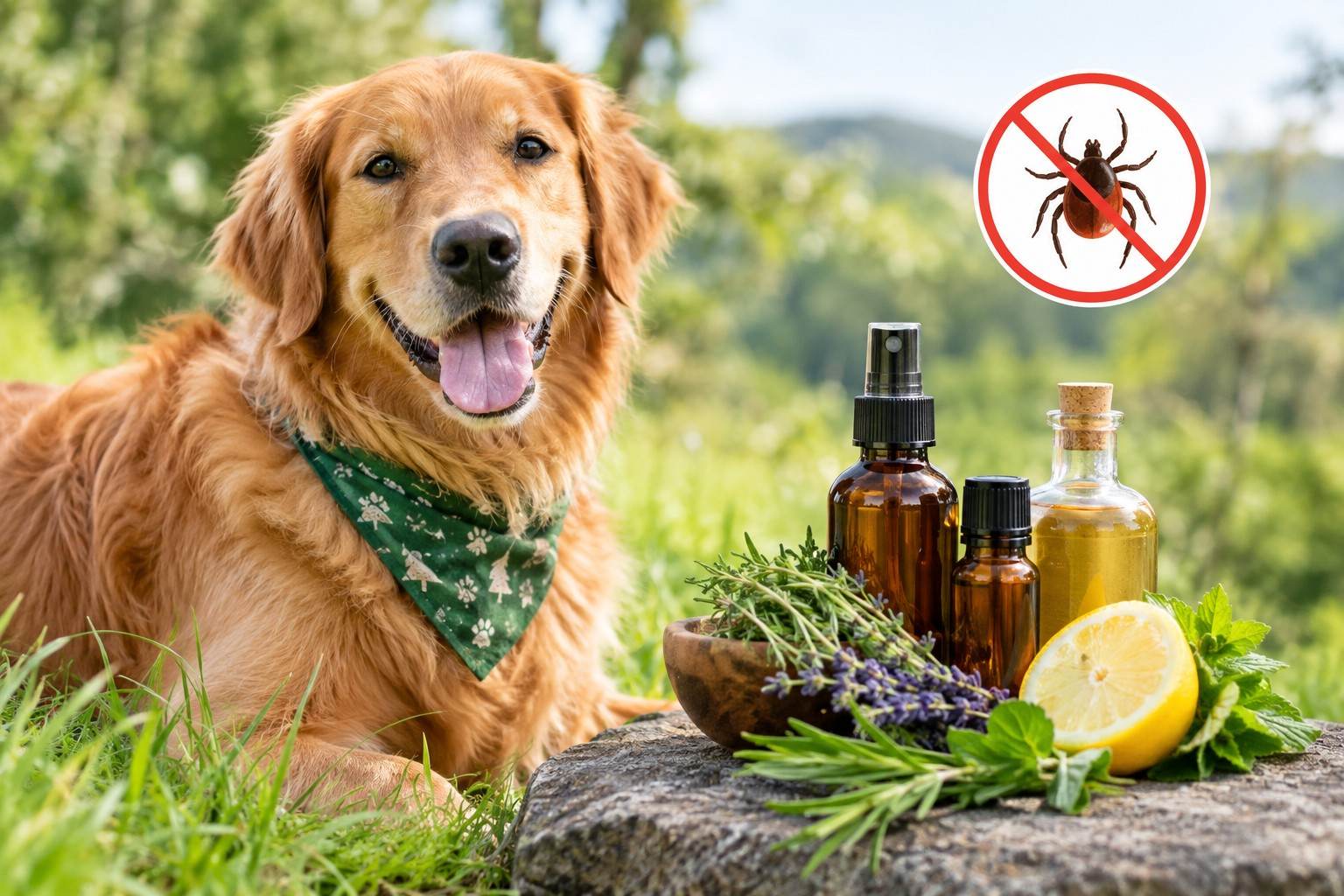
How to Protect Your Dog From Ticks With Natural Repellents
Your dog comes back from a walk happy, tired, and ready for dinner. Then you spot it: a tiny tick crawling through their fur.
Ticks are more than an outdoor nuisance. Dogs can pick them up in grassy, wooded, and brushy areas, and they can bring ticks into the home with them. Regular tick checks are one of the simplest ways to catch them early.
But what if you’d like to learn more about natural ways to help repel ticks? There are several plant-based ingredients worth knowing about, although “natural” doesn’t automatically mean risk-free.
TL;DR: Some natural ingredients, including oil of lemon eucalyptus, turmeric oil, and geranium oil, have been studied for tick-repellent properties. If you want to learn more about these three options and how they may fit into your dog’s tick-prevention routine, check out our 3 Natural Tick Repellents for Dogs course.
Why Should Dog Parents Care About Tick Prevention?
Ticks can carry diseases, and dogs can also bring ticks inside after spending time outdoors. That makes prevention a year-round consideration for many dog parents, especially if your pup loves hiking, camping, long walks, or exploring tall grass.
A good routine doesn’t have to be complicated. Check your dog after outdoor adventures, pay attention to areas such as the ears and between the legs, and remove any attached ticks promptly.
You can also learn about different repellent options and decide what makes sense for your dog.
Which Natural Tick Repellents Are Worth Knowing About?
The AWA course focuses on three natural alternatives: oil of lemon eucalyptus, turmeric oil, and geranium oil.
Oil of lemon eucalyptus
Oil of lemon eucalyptus has been used in insect-repellent products and has demonstrated repellent activity against ticks. There is an important distinction, though: CDC guidance refers to formulated, EPA-registered products containing oil of lemon eucalyptus or PMD, rather than pure essential oil.
Turmeric oil
That familiar golden spice has another interesting use. Research discussed by Animal Wellness Academy has examined turmeric oil for its ability to repel ticks, including its effect on ticks interacting with a dog’s coat.
Geranium oil
Geranium has a strong, distinctive scent, and studies have found geranium essential oil can have repellent effects against certain ticks. The type of tick matters, so it shouldn’t be treated as a universal solution.
Are Natural Tick Repellents Always Safe for Dogs?
No. This is where a little caution matters.
Essential oils are highly concentrated, and some can cause problems when pets ingest them or have concentrated oils applied directly to their skin or coat. ASPCA recommends taking care with essential oils around pets and discussing their use with a veterinarian.
Natural repellents also shouldn’t replace basic tick precautions. Daily tick checks, prompt removal, and appropriate veterinary-recommended prevention still matter.
Take Our Course: 3 Natural Tick Repellents for Dogs
If you’re a dog parent who wants to understand your options before choosing a tick-repellent approach, the 3 Natural Tick Repellents for Dogs course offers a short introduction to three natural alternatives to traditional chemical repellents. The course includes a lesson, quiz, and certificate and takes about six minutes to complete.
Frequently Asked Questions
What are natural tick repellents for dogs?
Natural tick repellents are products or ingredients derived from plants or other naturally occurring substances that may help discourage ticks. Examples covered in the AWA course include oil of lemon eucalyptus, turmeric oil, and geranium oil.
Can I use essential oils directly on my dog?
Don’t assume that an essential oil is safe simply because it comes from a plant. Concentrated essential oils can cause health problems in pets, and safety depends on the specific oil, concentration, formulation, and method of exposure. Talk with your veterinarian before using one on your dog.
Are natural tick repellents enough to prevent tick-borne disease?
No single repellent should be treated as a complete tick-prevention plan. Regular tick checks and prompt removal are important, and your veterinarian can help you choose appropriate prevention based on your dog’s lifestyle and local tick risks.
Where can I learn more about natural tick repellents for dogs?
The Animal Wellness Academy’s 3 Natural Tick Repellents for Dogs course provides a focused introduction to three natural alternatives and is designed for pet owners, pet professionals, and veterinarians.