
How Can Your Dog Choose Her Own Essential Oils?
Your dog has a powerful nose. She uses it to investigate new places, identify familiar people and animals, and make sense of the world around her. So when essential oils are part of an aromatherapy routine, why not pay attention to what she tells you about different scents?
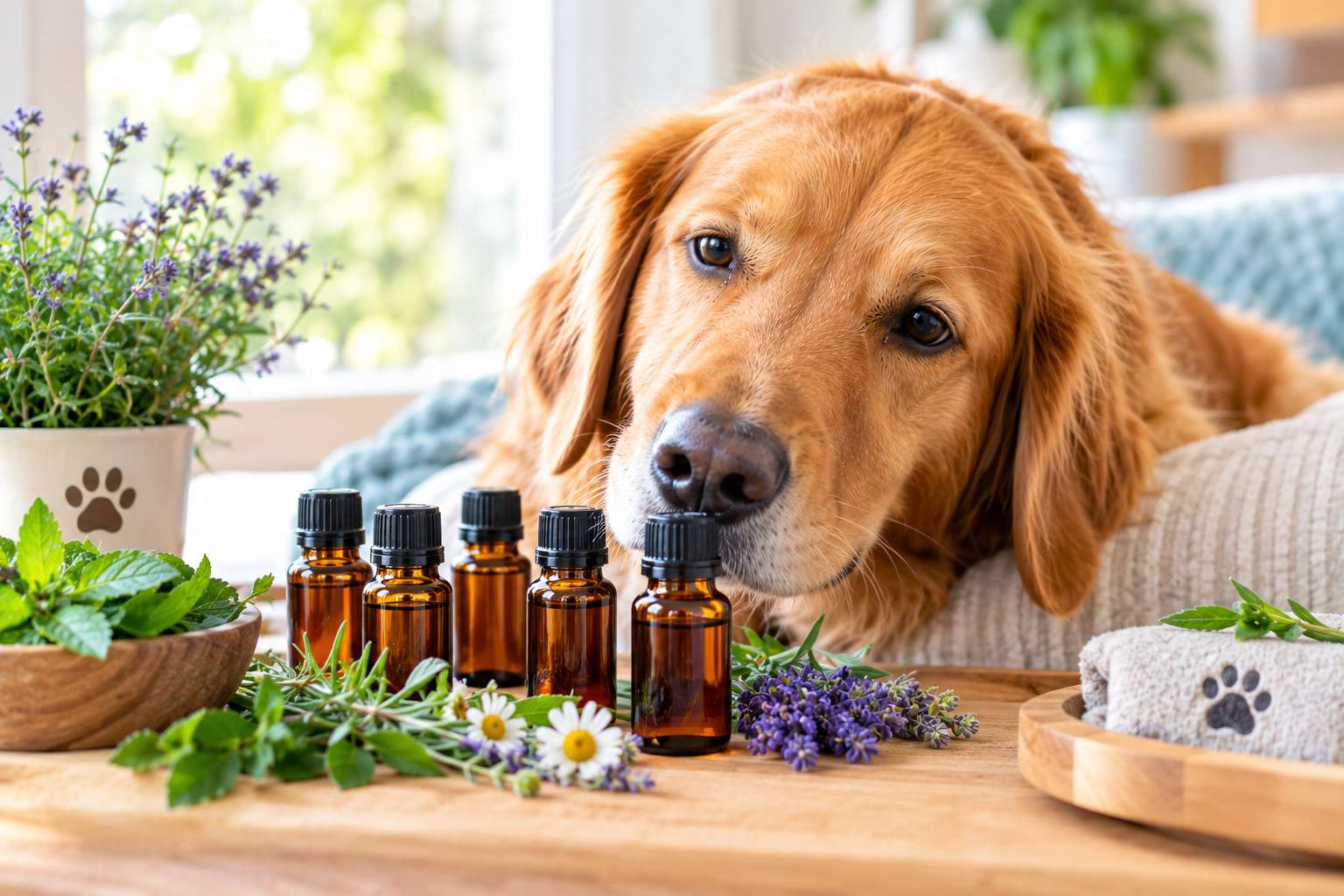
Some approaches to canine aromatherapy involve allowing a dog to show a preference among a small selection of oils. Rather than assuming your favorite scent will be hers, you can watch her response and respect her choice.
TL;DR: Dogs experience the world through their sense of smell, and some aromatherapy approaches allow them to show which scents they prefer. If you want to explore this idea further, take our “Helping Your Dog Choose Her Own Essential Oils” course to learn more about canine aromatherapy and letting your dog participate in the selection process.
Why Let Your Dog Have a Say?
Dogs don’t experience scents the way we do. A smell you find pleasant may be uninteresting or overwhelming to your dog.
Giving your dog an opportunity to move toward or away from a scent puts her response at the center of the experience. This can be especially useful for pet parents interested in a more observant approach to aromatherapy.
The goal isn’t to make your dog choose a particular oil. It’s to pay attention.
A dog may show interest by approaching a scent, sniffing it, or staying engaged with it. If she turns away, backs up, or loses interest, that’s information too. Don’t force her to continue.
How Does Essential Oil Self-Selection Work?
The basic idea is simple: offer your dog an appropriate selection and observe her response.
Animal Wellness Magazine describes a process in which dog parents narrow the options based on their intended purpose, then allow the dog to sniff the caps or otherwise investigate the scents. A dog may show a preference for one oil while turning away from another.
That doesn’t mean your dog can diagnose herself or determine what treatment she needs. It simply gives you another way to observe her preferences.
And that distinction matters. Aromatherapy shouldn’t replace veterinary care, especially if your dog has a health or behavior concern that needs attention.
What Should You Watch For?
Your dog’s body language is worth paying attention to.
She may move closer to investigate a scent, spend more time sniffing it, or show continued interest. On the other hand, turning her head away, backing away, or leaving can signal that she doesn’t want to engage with that scent.
Don’t chase her with an oil or hold her in place to make her smell it. Let her approach voluntarily.
Essential oils are concentrated substances, so safety matters. Avoid allowing your dog to lick or ingest undiluted oils, and don’t assume that a plant-derived product is automatically safe. Guidance on appropriate oils, dilution, exposure and application should come from a qualified veterinary professional familiar with your dog’s individual needs.
What Can You Learn From This Course?
If you’re curious about canine aromatherapy, Helping Your Dog Choose Her Own Essential Oils offers an opportunity to explore the idea of letting your dog participate in the selection process.
The course can help you understand why your dog’s sense of smell matters, how self-selection fits into aromatherapy, and what to consider when introducing essential oils into your dog’s routine.
It’s a useful starting point for dog parents who want to learn before experimenting, rather than simply reaching for an oil because it smells good to them.
Take Our Course: “Helping Your Dog Choose Her Own Essential Oils”
Want to learn more about canine aromatherapy and give your dog a voice in choosing her scents?
The Helping Your Dog Choose Her Own Essential Oils course explores how you can observe your dog’s preferences and approach essential oil selection with greater awareness. You’ll learn more about working with your dog’s remarkable sense of smell and why her response matters.
Frequently Asked Questions
Can dogs choose their own essential oils?
Some canine aromatherapy approaches allow dogs to show preferences among selected scents. The dog is allowed to approach and investigate rather than being forced to smell or use an oil.
What if my dog turns away from an essential oil?
Respect her response. Turning away, backing up, or losing interest can indicate that she doesn’t want to engage with that scent. Never force a dog to interact with an essential oil.
Are essential oils safe for dogs?
Safety depends on the specific oil, concentration, method of exposure and individual dog. Essential oils are concentrated, so they should not be treated as automatically safe simply because they come from plants. Veterinary guidance is a good idea before using them with your dog.
Can aromatherapy replace veterinary care?
No. Aromatherapy should not be used as a substitute for veterinary assessment or treatment when a dog is sick, injured or showing concerning physical or behavioral changes.