
Reactive vs. Aggressive Dogs: How Can You Tell the Difference?
Does your dog bark, lunge, or growl when another dog approaches? It can be unsettling to see your usually sweet companion react this way, especially when other people assume your dog is aggressive. But these behaviors don’t always mean the same thing.
Understanding the difference between reactive and aggressive dogs can help you respond more calmly, recognize what your dog may be communicating, and choose the right kind of support. Instead of focusing only on stopping a behavior, it’s important to understand what might be driving it.
TL;DR: Reactive and aggressive dog behaviors can overlap, but they aren’t interchangeable. Reactivity often involves an intense response to a trigger, such as fear, frustration, or excitement, while aggression describes behaviors that threaten or harm another individual. Learning to recognize the difference can help you make safer choices. Animal Wellness Academy’s Reactive vs. Aggressive Dogs course is a useful next step for exploring these behaviors and learning what to consider when supporting your dog.
What Is the Difference Between a Reactive and an Aggressive Dog?
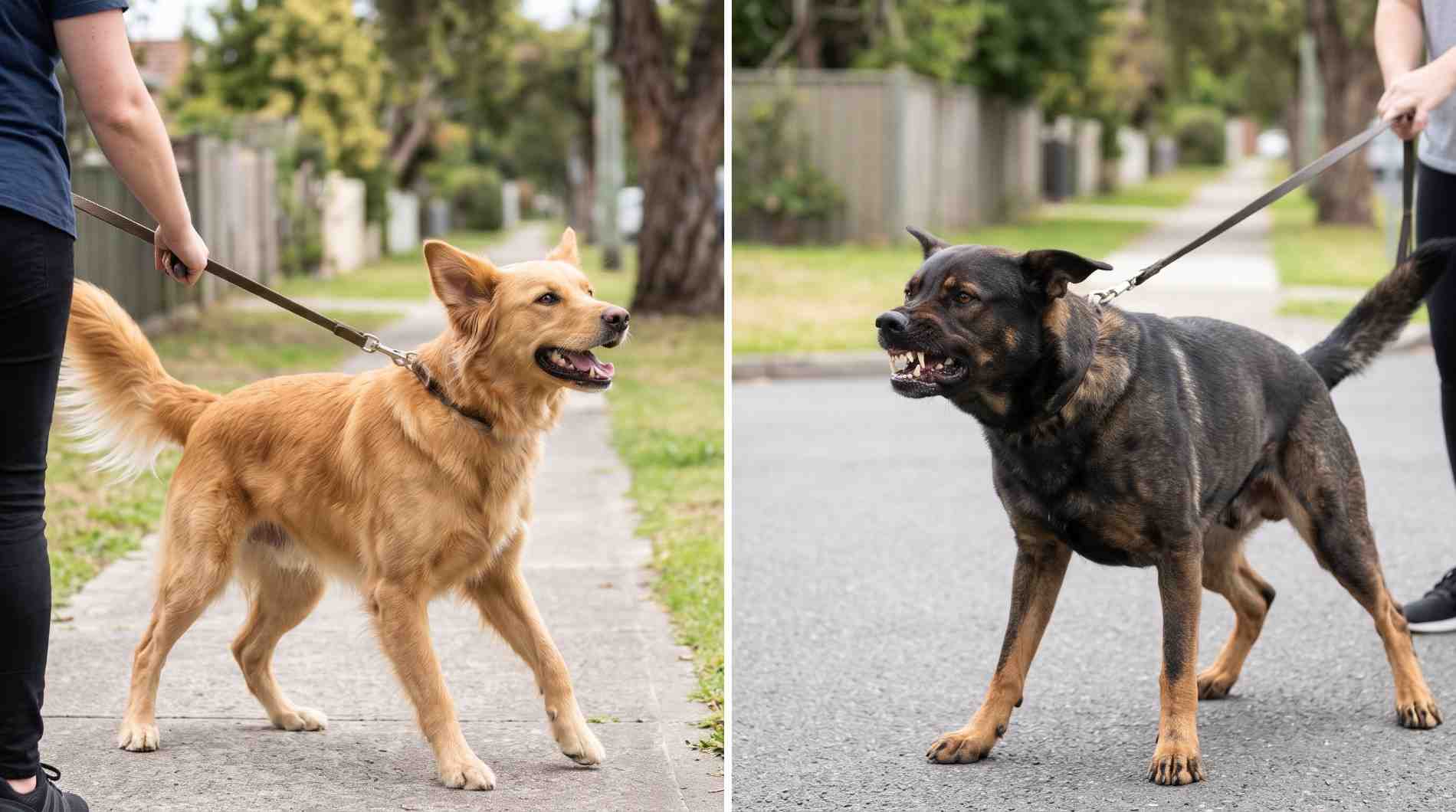
A reactive dog responds strongly to something in their environment. A dog might bark at passing dogs, lunge toward a stranger, or become highly excitable when seeing a squirrel. The response may be linked to fear, frustration, excitement, or feeling overwhelmed.
Aggression, on the other hand, refers to behaviors such as snapping, biting, or threatening displays that can create a risk of injury. Growling, showing teeth, and lunging may also occur in aggressive situations, but no single behavior tells the whole story.
Reactivity describes a pattern of responding; aggression describes a set of behaviors that can pose a safety risk. A dog can be reactive without biting, and a reactive dog may also display aggression in certain situations. Context, body language, history, and the circumstances surrounding an incident all matter.
Neither label alone tells you why a dog behaves a certain way.
What Signs Should You Look for in Your Dog’s Body Language?
Barking and growling are easy to notice, but dogs often communicate discomfort before making a sound. Look for changes in posture and facial expression, including:
- A stiff body or fixed stare
- Ears pinned back or held unusually forward
- A tucked tail or raised hackles
- Lip licking, turning away, or trying to retreat
- Growling, snapping, or lunging when pressure increases
No single signal confirms what your dog is feeling. Consider the whole situation, including what happened just before the behavior and how your dog responds when given more space.
How Can You Help a Reactive Dog?
The first step is to make situations safer and less overwhelming. If your dog reacts to other dogs on walks, cross the street, change direction, or choose a quieter route before your dog reaches the point of barking and lunging.
Reward-based training can help your dog develop more comfortable responses to triggers over time. Work at a distance where your dog can still notice the trigger without becoming overwhelmed, and reward calm engagement with you. Progress gradually rather than forcing close encounters.
Avoid yelling, leash jerks, or punishment for growling. These responses can increase fear and stress, and suppressing a warning signal doesn’t necessarily resolve the discomfort behind it.
If your dog has bitten someone, repeatedly threatens other animals, or is difficult to manage safely, consult your veterinarian and a qualified behavior professional. Sudden behavior changes also deserve a veterinary check, since pain or illness can contribute to irritability or defensive behavior.
Take Our Course: “Reactive vs. Aggressive Dogs”
Want to better understand the behavior you’re seeing at home or on walks?
Animal Wellness Academy’s Reactive vs. Aggressive Dogs course is an opportunity to explore the differences between these behavior patterns and learn what to consider when deciding how to support your dog. Building your knowledge can help you recognize when everyday training may be appropriate and when professional guidance is the safer choice.
Frequently Asked Questions
Can a reactive dog also be aggressive?
Yes. Reactivity and aggression can overlap. A dog that reacts strongly to triggers may also display threatening or biting behavior in certain circumstances, so take safety concerns seriously.
Does barking or growling mean my dog is aggressive?
Not necessarily. Dogs may bark or growl because they feel afraid, frustrated, excited, or uncomfortable. Look at the context and other body-language signals rather than relying on one behavior alone.
Can reactive dog behavior improve with training?
Many dogs can learn to respond more comfortably to triggers with careful management and reward-based training. Progress varies, and some dogs need individualized help from a qualified professional.
When should I seek professional help for my dog’s behavior?
Seek help if your dog has bitten, repeatedly threatens people or animals, or is difficult to manage safely. A veterinarian can assess possible health causes and recommend appropriate behavior support.