
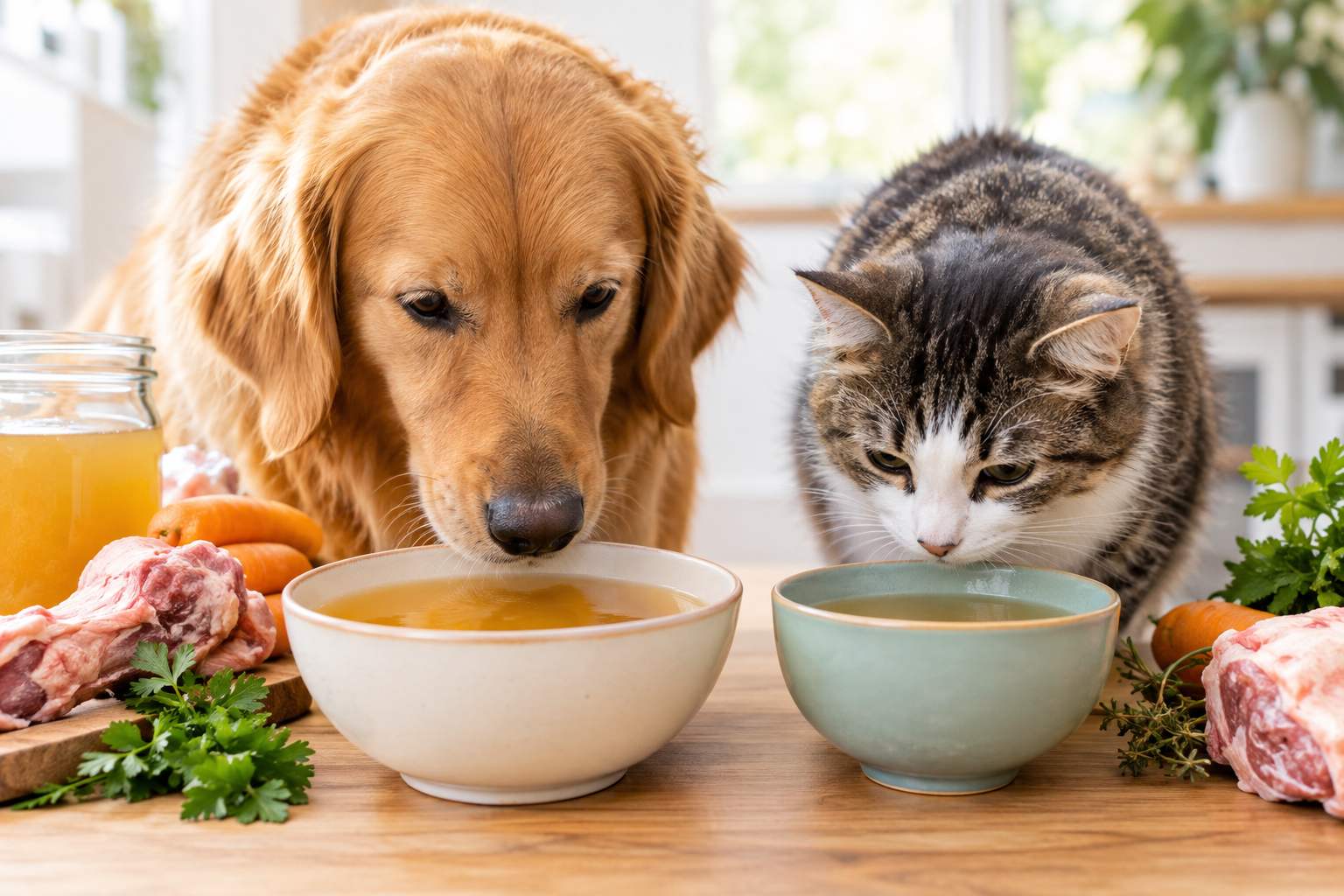
Are Bone Broths Good for Dogs and Cats? What Pet Parents Should Know
Bone broth has become a popular addition to pet bowls, and it’s easy to see why. A warm, savory broth can make a regular meal more appealing while giving dog and cat parents another way to add variety to their pets’ diets.
But is bone broth actually good for dogs and cats? And what should you know before adding it to their meals?
TL;DR: Bone broth can be a useful addition to some dogs’ and cats’ diets, but how it’s prepared and served matters. If you want to learn more about why bone broths may be beneficial for pets and how to make informed choices for your dog or cat, check out our Bone Broths—Why They’re So Good for your Dog or Cat course.
Why Do Pet Parents Give Bone Broth to Dogs and Cats?
For many pet parents, bone broth is an easy way to add something different to a pet’s usual meal. It can be poured over food, offered in a small amount on its own, or used to make a meal more enticing.
That can be especially helpful for pets who occasionally turn their noses up at their food. A little extra flavor may make the bowl more interesting.
Bone broth is also associated with nutrients and compounds that come from the ingredients used to prepare it. The exact nutritional profile depends on the bones, meat, vegetables, cooking method, and other ingredients involved.
So, there’s more to consider than simply picking up any broth from the grocery store.
What Should You Look for in Bone Broth for Pets?
Not every bone broth is appropriate for dogs or cats.
Some commercial broths may contain ingredients that aren’t suitable for pets, including excessive sodium or seasonings that can cause problems. Onion and garlic, for example, should not be included in foods given to dogs or cats.
Read the ingredient list carefully. A broth made with simple, pet-appropriate ingredients is a very different choice from a heavily seasoned product intended for people.
Portion size matters, too. Bone broth should complement a balanced diet rather than replace your pet’s regular food unless a veterinary professional has specifically recommended a different feeding plan.
Can Bone Broth Support Your Pet’s Overall Wellness?
This is where things get interesting.
Bone broth is often discussed in connection with hydration, appetite, and nutrients such as collagen-related proteins and minerals. However, its nutritional value can vary considerably depending on how it’s made.
That means it’s worth understanding what actually ends up in the finished broth instead of assuming every recipe offers the same benefits.
Your dog or cat’s age, health, diet, and individual needs also matter. A growing puppy, senior dog, healthy adult cat, and pet with a medical condition may have very different nutritional requirements.
How Can You Learn More About Bone Broth for Pets?
If you’ve been curious about bone broth but aren’t sure what makes it a worthwhile addition to your pet’s routine, learning the basics can help you make better decisions.
The Animal Wellness Academy course Bone Broths—Why They’re So Good for Your Dog or Cat offers a focused lesson on the topic. The course is taught by Dr. Suzi Beber and is listed as a 4-minute, 25-second lesson, making it a quick way for busy pet parents to learn more.
A little knowledge can go a long way when you’re deciding what belongs in your pet’s bowl.
Take Our Course: Bone Broths—Why They’re So Good for your Dog or Cat
Want to learn more about bone broth and why it may be a useful addition to your dog or cat’s routine?
Our Bone Broths—Why They’re So Good for your Dog or Cat course gives pet parents a convenient way to explore the topic and make more informed choices about their pets’ nutrition.
Frequently Asked Questions
Is bone broth good for dogs?
Bone broth can be an appropriate addition to some dogs’ diets when it is made with pet-safe ingredients and served in suitable amounts. Always check the ingredients before offering it.
Can cats have bone broth?
Cats can have certain bone broths, provided the ingredients are appropriate for cats. Avoid broths containing ingredients such as onion, garlic, or excessive amounts of salt.
Can I give my dog bone broth every day?
Whether daily bone broth is appropriate depends on your dog’s overall diet, health, and individual needs. It should complement, rather than unnecessarily replace, a nutritionally complete diet.
What should I avoid in bone broth for pets?
Avoid broths containing ingredients that may be harmful to pets, including onion, garlic, and excessive sodium. Always check the label or recipe before serving.