
Do Dogs Grieve? Understanding Loss and Helping Your Dog Cope
Dogs form strong bonds with the people and animals around them. So when a companion is suddenly gone, you may notice that your dog seems different. They might become quieter, stick closer to you, eat less, or lose interest in activities they usually enjoy.
But do dogs actually grieve?
TL;DR: Yes, dogs can experience changes in behavior and emotion after losing a companion. While they may not understand death in the same way people do, they can still feel the absence of someone familiar. If you want to better understand do dogs grieve and learn practical ways to support your dog through loss and adjustment, take the Do Dogs Grieve? course from Animal Wellness Academy.
How Can You Tell If Your Dog Is Grieving?
There isn’t one behavior that proves a dog is grieving. Every dog responds to loss differently, and changes may depend on their relationship with the companion who is gone.
Some dogs become more clingy and want to stay close to their person. Others may seem withdrawn or less interested in their usual routines. You might also notice changes in appetite or activity.
These changes can be unsettling, especially when you’re grieving too. It can be hard to know whether your dog needs extra attention, more time to adjust, or something else entirely.
Paying attention to what has changed is a useful place to start.
Why Does Losing a Companion Affect Dogs?
Dogs are creatures of routine. They get used to seeing certain people and animals, sharing spaces with them, and experiencing everyday life together.
When that companion suddenly isn’t there, the routine changes, too.
A dog may not understand the concept of death, but that doesn’t mean they don’t notice the absence. The missing sounds, smells, interactions, and familiar patterns can all leave a noticeable gap in their day.
That can help explain why a dog who has lost a companion may behave differently afterward.
How Can You Support a Dog After a Loss?
Start with patience.
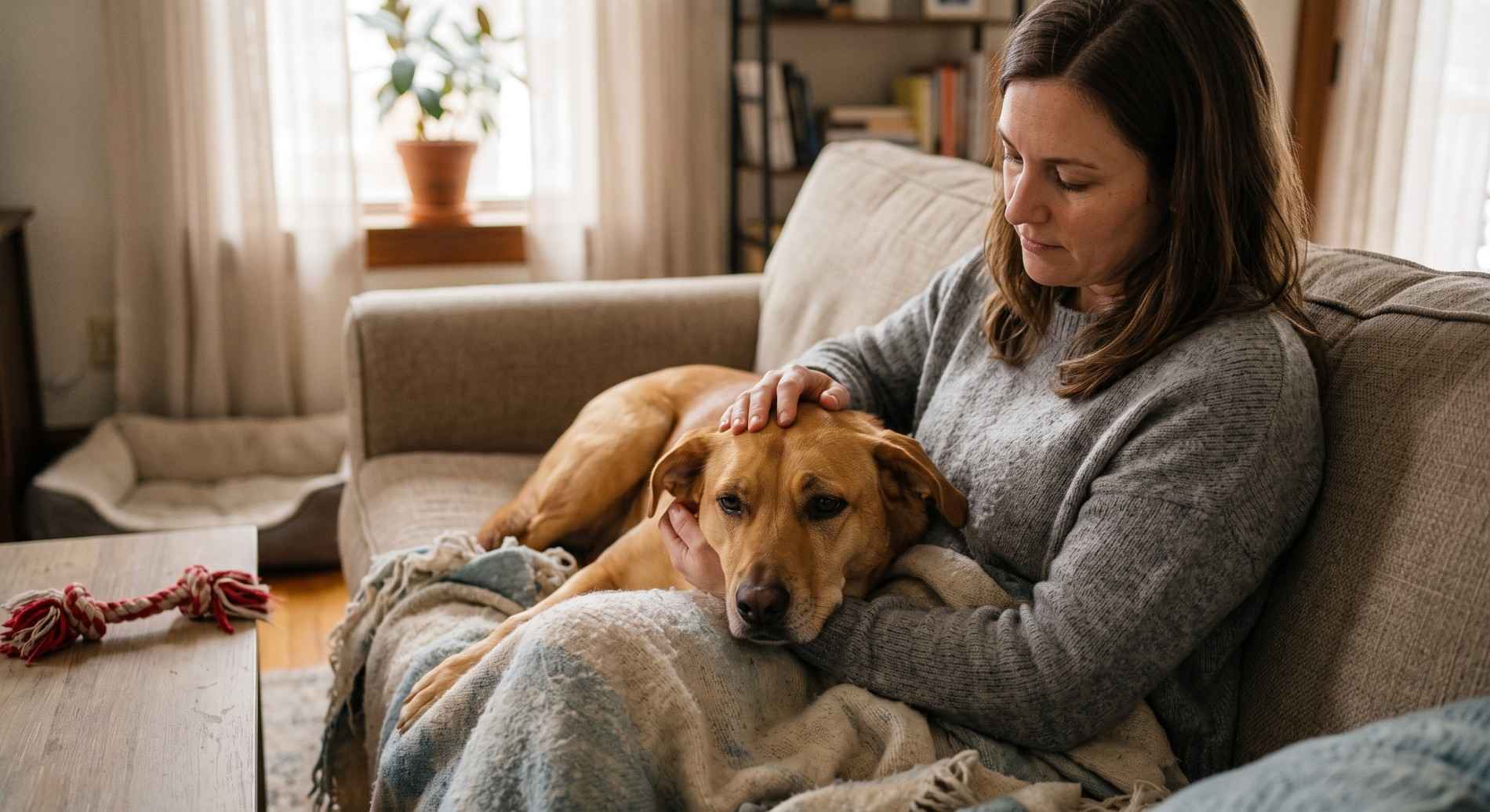
Your dog may need time to adjust to a changed household. Keeping familiar routines can provide some consistency while they get used to what has happened. Quiet companionship may also help, especially if your dog is seeking more closeness.
Watch their behavior rather than assuming you know what they need. One dog may want extra attention, while another may prefer a little more space.
Food and activity changes are also worth paying attention to. If your dog’s behavior changes significantly or you are concerned about their health, talk with your veterinarian rather than assuming every change is simply grief.
Understanding your dog’s response can make this difficult period a little easier for both of you.
What Can You Learn About Dog Grief?
Knowing that dogs can respond to loss gives you a better starting point when their behavior changes. Instead of wondering why your dog suddenly seems clingy, quiet, or less interested in food, you can look at those changes in the context of what has happened.
Animal Wellness Academy’s Do Dogs Grieve? course goes further, covering common signs of grief, the emotional bonds dogs form, why they may experience loss without understanding death, and practical ways to comfort them during periods of adjustment and stress. The short micro-video course also includes a lesson and quiz, making it easy to fit into a busy schedule.
Take Our Course: Do Dogs Grieve?
If your dog has recently lost a companion, or you simply want to be better prepared to support them through a future transition, our Do Dogs Grieve? course can help you understand what you may see and how you can respond.
Frequently Asked Questions
Do dogs grieve when another dog dies?
Dogs can show behavioral changes after losing a companion. These may include clinginess, reduced appetite, or changes in activity.
Do dogs understand when another dog dies?
Dogs may not understand death in the same way people do, but they can still experience the absence of a familiar companion.
How can I comfort my grieving dog?
Patience, familiar routines, companionship, and paying attention to your dog’s behavior can help during a period of adjustment.
How long does dog grief last?
Dogs respond to loss differently, so there is no single timeline that applies to every dog. Watch for ongoing or concerning changes and speak with your veterinarian when needed.