
PTSD in Dogs: Understanding Trauma and Helping Your Dog Feel Safe
A dog that suddenly becomes fearful, startles at everyday sounds, or struggles to be left alone may be dealing with more than a training problem. Past frightening experiences can affect how dogs respond to people, places, and situations, sometimes long after the original event has passed.
Understanding trauma-related behavior can help you respond with patience instead of frustration. It also helps you recognize when your dog needs professional support.
TL;DR: PTSD in dogs refers to trauma-related signs that can develop after an intensely frightening or threatening experience. Dogs may show increased fear, avoidance, hypervigilance, or changes in behavior, although these signs can also have other medical or behavioral causes. If you want to understand canine trauma and ways to support a dog who struggles with fear, explore Animal Wellness Academy’s PTSD in Dogs course.
Can Dogs Develop PTSD?
Dogs can develop lasting behavioral changes after traumatic experiences. These may include abuse, serious accidents, attacks by other animals, or exposure to frightening events. Some dogs recover with time and support, while others continue to react strongly to reminders of what happened.
Post-traumatic stress disorder (PTSD) is a recognized human mental health diagnosis. Trauma-related symptoms have been studied in dogs, but diagnosing canine PTSD is more complicated, and behaviors that resemble PTSD don’t automatically confirm the condition.
A dog that cowers when someone raises a hand, for example, may have learned to associate that movement with danger. Another dog may panic at the sound of fireworks after a frightening experience. These reactions deserve attention, even when the precise cause isn’t clear.
What Are the Signs of Trauma in Dogs?
Trauma can affect dogs in different ways. Some become withdrawn, while others seem constantly alert or react defensively to situations they previously handled comfortably.
Possible signs include:
- Heightened alertness: Your dog startles easily, scans the surroundings, or struggles to settle.
- Avoidance and hiding: They retreat from particular people, places, sounds, or objects.
- Changes in social behavior: A previously friendly dog may avoid contact or become unusually fearful around unfamiliar people.
- Sleep or appetite changes: Stress may affect resting patterns and interest in food.
- Reactivity: Your dog may bark, growl, lunge, or attempt to escape when frightened.
- Difficulty being alone: Some dogs become distressed when separated from a trusted person.
These behaviors can also be linked to pain, illness, anxiety, or other experiences. If your dog’s behavior changes suddenly, arrange a veterinary examination rather than assuming trauma is the cause.
How Can You Help a Dog Recover From Trauma?
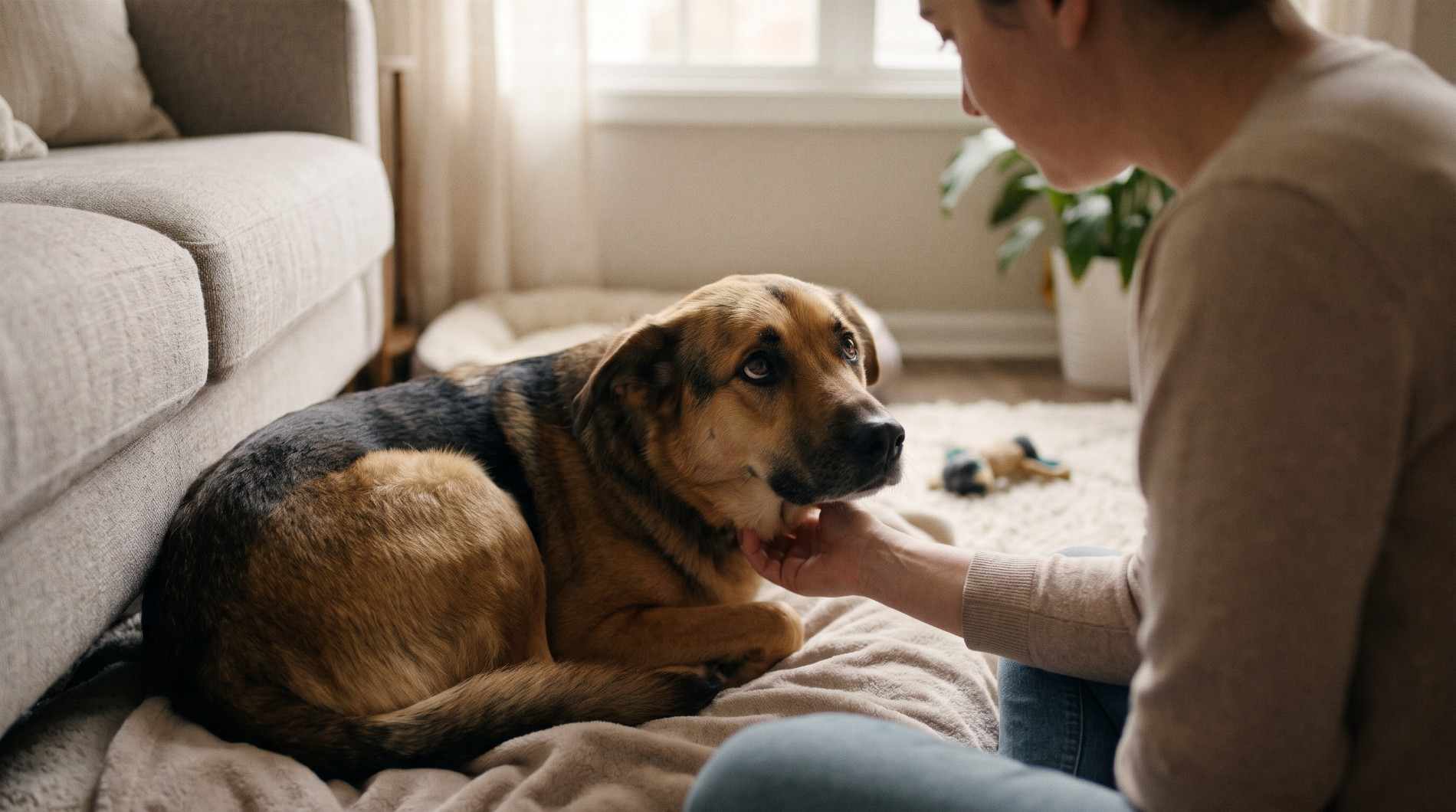
Helping a fearful dog starts with making them feel safe. Progress may take time, and what works for one dog may not work for another.
Try these steps to support your companion:
- Create a predictable routine. Regular mealtimes, walks, rest, and play can help your dog feel more secure.
- Provide a safe retreat. Set aside a quiet place where your dog can rest without being disturbed. Let them approach people when they’re ready.
- Avoid punishment. Scolding, forced interactions, or punishment-based training can make fear worse. Reward-based training is a better choice for helping fearful dogs build confidence.
- Respect your dog’s limits. Don’t force them to face a frightening person, sound, or situation. Work with a qualified professional on gradual exposure when appropriate.
- Seek veterinary guidance. A veterinarian can check for medical causes and recommend a treatment plan. Some dogs benefit from behavior therapy and, when indicated, medication.
Recovery isn’t always a straight line. Your dog may handle a familiar situation comfortably one day and struggle with it the next. Watch for small improvements, and give them time to adjust.
Take Our Course: “PTSD in Dogs”
Want to better understand what your dog may be experiencing after a frightening event?
Animal Wellness Academy’s PTSD in Dogs course offers an opportunity to learn more about trauma-related behavior, recognize signs of distress, and explore ways to support dogs who struggle with fear. It’s a useful starting point for pet parents who want to respond with greater understanding and make informed decisions about their dog’s care.
FAQs About PTSD in Dogs
Can a rescue dog develop PTSD?
A rescue dog may show lasting fear or anxiety after frightening experiences, neglect, or abuse. However, adoption history alone doesn’t establish PTSD. A veterinarian can help assess behavioral changes and possible underlying causes.
Can dogs recover from trauma?
Many dogs can improve with patient care, a predictable environment, and appropriate behavioral support. Progress varies, and some dogs need ongoing professional help.
Should I comfort my dog when they’re scared?
Offer calm reassurance and allow your dog to move to a safe place. Avoid forcing interactions or punishing fearful behavior. If fear is persistent or severe, seek veterinary advice.
When should I seek professional help for a traumatized dog?
Seek help if fear persists, worsens, interferes with daily life, or leads to attempts to escape or aggressive behavior. Start with your veterinarian, who can recommend a qualified veterinary behavior professional if needed.