
What Should You Keep in Your Dog’s First Aid Kit? A Pet Parent’s Guide
You’re out for a walk when your dog gets a small cut on a paw. Or perhaps your pup suddenly starts limping after a play session in the backyard. These moments can catch any pet parent off guard, and it’s much easier to think clearly when you’ve prepared for the unexpected.
A well-stocked pet first aid kit is a practical addition to your home, car, or travel bag. It won’t replace veterinary care, but having suitable supplies close at hand can help you respond to minor injuries and prepare for the next steps when something more serious happens.
TL;DR: A dog first aid kit should contain basic supplies for handling minor injuries while you arrange veterinary advice when needed. Knowing what to include, how to store it, and when an injury needs professional attention can help you feel more prepared. Animal Wellness Academy’s Putting Together Your Animal’s First Aid Kit course offers a short introduction to preparing a first aid kit with your animal’s needs in mind.
Why Does Your Dog Need a First Aid Kit?
Dogs are curious by nature. They explore new places, run through grass, investigate unfamiliar objects, and sometimes get into situations that leave them with a scrape or other injury.
A first aid kit gives you a designated place to keep useful supplies instead of scrambling through bathroom drawers when something goes wrong. It can be especially handy for active dogs, outdoor adventures, road trips, and households with several pets.
Preparation also means knowing your limits. First aid is meant to provide immediate support, not diagnose an illness or treat a serious injury on your own. Breathing difficulties, heavy bleeding, suspected poisoning, seizures, collapse, and major injuries require urgent veterinary attention.
What Should You Put in a Dog First Aid Kit?
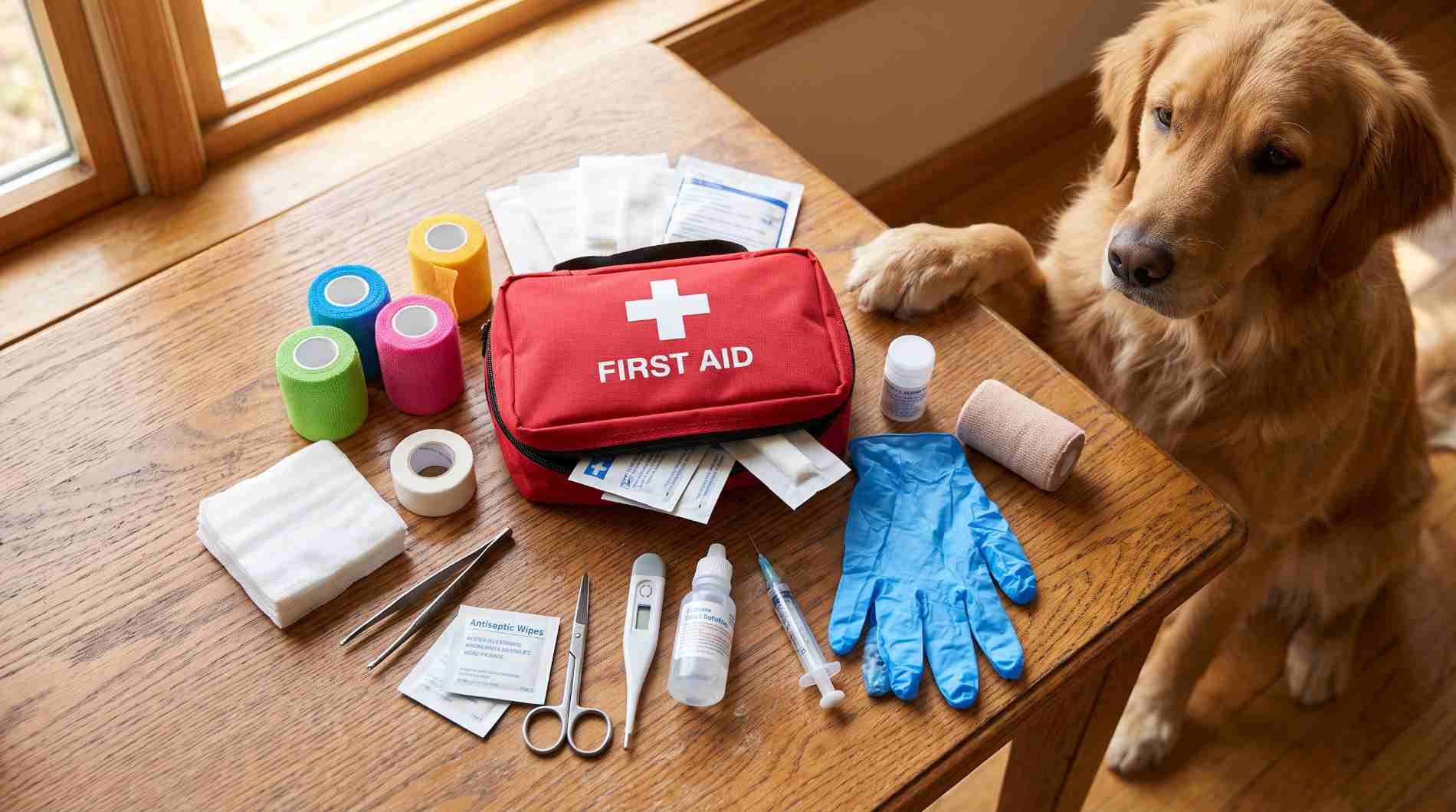
The right supplies depend on your dog’s size, health, lifestyle, and the activities you enjoy together. These basics are a useful starting point:
- Sterile gauze pads: Useful for covering minor wounds or applying gentle pressure to bleeding areas while seeking advice.
- Non-stick wound dressings: Help protect an injury without sticking directly to the wound.
- Self-adhering bandage material: Can help secure dressings when used correctly. Avoid wrapping tightly, as this may restrict circulation.
- Saline wound wash: Useful for gently rinsing minor wounds when appropriate.
- Blunt-ended scissors: Helpful for cutting dressing material. Keep scissors away from your dog’s skin.
- Disposable gloves: Help keep your hands clean while you assist your pet.
- Tweezers: May be useful for removing superficial debris, but embedded objects should be left to a veterinary professional.
- A digital thermometer designed for pets: Only use it if you know how to take your dog’s temperature safely.
- A tick-removal tool: Useful for removing ticks according to the tool’s instructions.
- Your veterinarian’s contact details: Include your regular clinic and the nearest emergency veterinary hospital.
You may also want a pet first aid guide, a muzzle suitable for emergencies if recommended and properly fitted, and a secure carrier or blanket for transport. Keep medications out of the kit unless your veterinarian has advised you to include them, with clear instructions for use.
Never give human painkillers or other medication to your dog without veterinary guidance. Some common human medicines can be toxic to pets.
How Can You Keep Your First Aid Kit Ready?
A kit is only useful if you can find it and its contents are safe to use.
Store supplies in a clean, waterproof container, away from excessive heat and moisture. Keep it somewhere accessible to adults but out of your dog’s reach. If you travel frequently, consider a separate kit for your vehicle or outdoor bag.
Check the contents every few months. Replace expired products, damaged packaging, and anything you’ve used. Make sure dressings remain clean and sealed, and review any written instructions so you know what each item is for.
It’s also worth keeping your dog’s medical information handy, including allergies, current medications, and your veterinarian’s details. During an emergency, having this information ready can help you communicate clearly with the veterinary team.
What Should You Do When Your Dog Is Injured?
First, stay as calm as possible and keep your dog away from further danger. Even a normally gentle dog may bite when frightened or in pain, so approach carefully and avoid handling an injury unnecessarily.
For serious bleeding, apply gentle, direct pressure with clean gauze while arranging urgent veterinary care. Don’t use tourniquets or attempt complicated treatments unless a veterinary professional specifically instructs you to do so.
If you suspect poisoning, contact a veterinarian or animal poison service immediately. Don’t induce vomiting or give home remedies unless directed by a professional. If your dog has a serious injury, don’t delay getting help while searching through your kit.
Knowing when not to treat an injury yourself is just as important as knowing which supplies to use.
Take Our Course: “Putting Together Your Animal’s First Aid Kit”
Want to feel more prepared when your dog needs help?
The Putting Together Your Animal’s First Aid Kit course from Animal Wellness Academy introduces the basics of assembling a first aid kit with your animal’s needs in mind. This short course includes one lesson, a quiz, and a course certificate, making it a convenient way to build your knowledge and prepare for unexpected situations.
Frequently Asked Questions
What is the most important item in a dog first aid kit?
There isn’t one item that covers every emergency. Sterile gauze, suitable dressings, saline wound wash, gloves, and emergency veterinary contact details are useful basics.
Can I use a human first aid kit for my dog?
Some supplies, such as gauze and gloves, may be suitable for both people and dogs. However, medications and certain products may be unsafe for pets, so check each item before using it.
Should I give my dog medication from my first aid kit?
Only give medication when your veterinarian has advised you to do so and provided clear instructions. Never assume a human medicine is safe for dogs.
How often should I check my dog’s first aid kit?
Review it every few months and after each use. Replace expired or damaged supplies and make sure essential items are available when you need them.