
How Could Disinfectant and Sanitizer Use Affect Your Dog or Cat?
Keeping your home clean matters when you share it with dogs or cats. But have you ever stopped to think about what your pet encounters after you spray a countertop, mop the floor, or use hand sanitizer?
Our animals experience their surroundings differently from us. Dogs and cats spend plenty of time sniffing floors and surfaces, walking through different areas of the home, and grooming themselves. That means the products we use around them deserve some thought.
TL;DR: Disinfectants and sanitizers can be useful tools, but frequent use of certain products may increase the chemical exposure your dog or cat encounters at home. Learning more about ingredients, cleaning habits, and alternatives can help you make more informed choices. Our “How Disinfectant and Sanitizer Use May Be Affecting Our Animals” course can help you explore this topic and rethink your household cleaning routine.
Why should pet parents think about household disinfectants?
A clean home and a pet-friendly home aren’t necessarily two different things. The question is what you’re using to clean it and how those products are being used.
Household disinfectants can contain a range of chemical ingredients. The AWA article on this topic highlights quaternary ammonium compounds, which are found in some household disinfectants, as one group pet parents may encounter. It also points out that products used on counters, floors, trash cans, and other surfaces can leave opportunities for pets to come into contact with residues.
That doesn’t mean every disinfectant is dangerous or that you should stop disinfecting altogether. It does mean that reading labels and thinking about where and how products are used can be worthwhile.
How might dogs and cats encounter cleaning products?
Pets don’t use countertops or mop buckets, but they can still come into contact with areas we’ve cleaned.
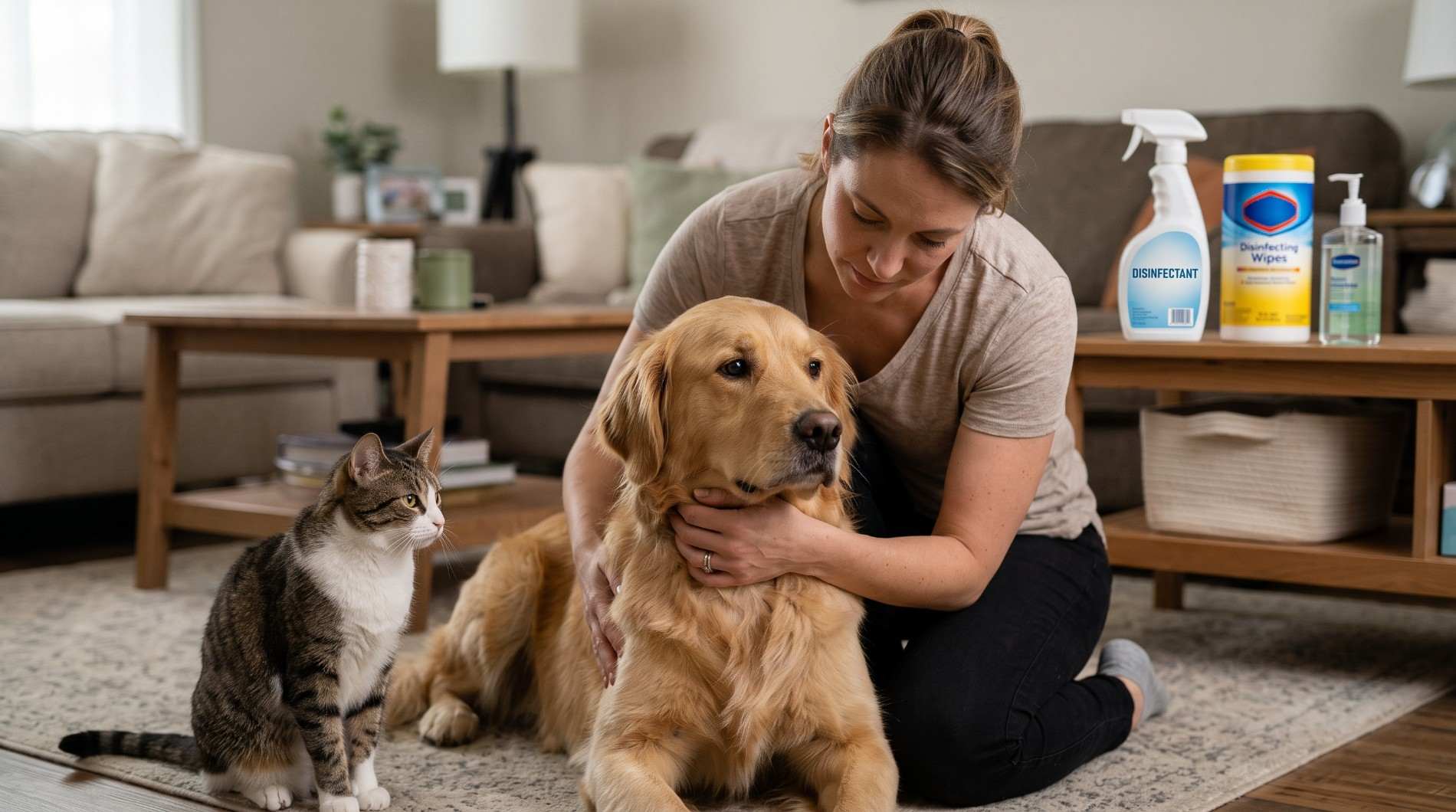
A dog may walk across a recently cleaned floor and later lick their paws. A cat may groom after walking across a treated surface. Both animals can also spend time close to the floor, where residues and dust may collect.
Hand sanitizer presents another consideration. Products containing alcohol should be kept where pets cannot access or ingest them. The AWA material also specifically cautions against homemade hand sanitizers containing methanol.
Simple storage habits matter. Keep cleaning products and sanitizers securely out of reach, and follow the product’s directions for use.
Does using more disinfectant always mean a cleaner home?
Not necessarily.
Cleaning habits should be based on what you’re actually trying to accomplish. Regular cleaning can remove dirt and debris, while disinfection serves a different purpose. Using strong products everywhere, all the time, isn’t automatically the best approach.
The AWA material suggests practical steps such as vacuuming, wet mopping, and considering steam cleaning as ways to reduce dust and maintain a cleaner home environment.
It’s also worth remembering that some situations genuinely call for appropriate disinfection. For example, infectious diseases may require specific cleaning protocols. Your veterinarian or public health authority can provide guidance when a particular pathogen is involved.
What can pet parents do differently?
Start by becoming a more careful label reader.
Look at the ingredients in the products you use regularly and consider whether you need a particular product for a particular job. Store cleaners securely, allow treated surfaces to dry as directed, and keep pets away from areas when product instructions call for it.
You can also think about whether simpler cleaning methods could handle everyday dirt. The goal isn’t to create a chemical-free home at all costs. It’s to understand what you’re using and why.
For dog and cat parents interested in reducing unnecessary chemical exposure, learning about household products can be a useful part of broader preventive care.
What can you learn about disinfectants and sanitizers?
If you’ve ever wondered whether your cleaning routine could be affecting your animals, the How Disinfectant and Sanitizer Use May Be Affecting Our Animals course gives you an opportunity to explore the topic in greater detail.
The course can help you think more critically about common disinfectants and sanitizers, how animals may encounter them, and what questions to ask when choosing products for a home shared with pets.
A little more awareness can go a long way when you’re making everyday choices for your animal family.
Take Our Course: “How Disinfectant and Sanitizer Use May Be Affecting Our Animals”
Want to take a closer look at the products you use around your pets?
Our How Disinfectant and Sanitizer Use May Be Affecting Our Animals course explores how disinfectants and sanitizers may affect animals and gives pet parents more information to consider when making household cleaning choices. If you’re interested in creating a cleaner, more thoughtfully managed home for your dog or cat, this course is a useful place to start.
Frequently Asked Questions
Are disinfectants safe to use around dogs and cats?
Safety depends on the specific product, its ingredients, how it is used, and whether pets can come into contact with it. Follow label directions and keep cleaning products inaccessible to animals.
Can dogs and cats be exposed to cleaning-product residues?
Yes. Pets can encounter treated surfaces through their paws, mouths, skin, and grooming behaviors. Keeping pets away from products and freshly treated areas according to label instructions can help reduce unnecessary exposure.
Should I stop using disinfectants if I have pets?
No. Some situations require appropriate disinfection. Instead, learn how products should be used, choose them thoughtfully, and follow relevant veterinary or public health guidance when disinfection is necessary.
What should I look for when choosing household cleaners?
Start by reading the product label and understanding its intended use and ingredients. Consider whether the product is necessary for the task and how you can prevent your pet from contacting it during and immediately after use.