

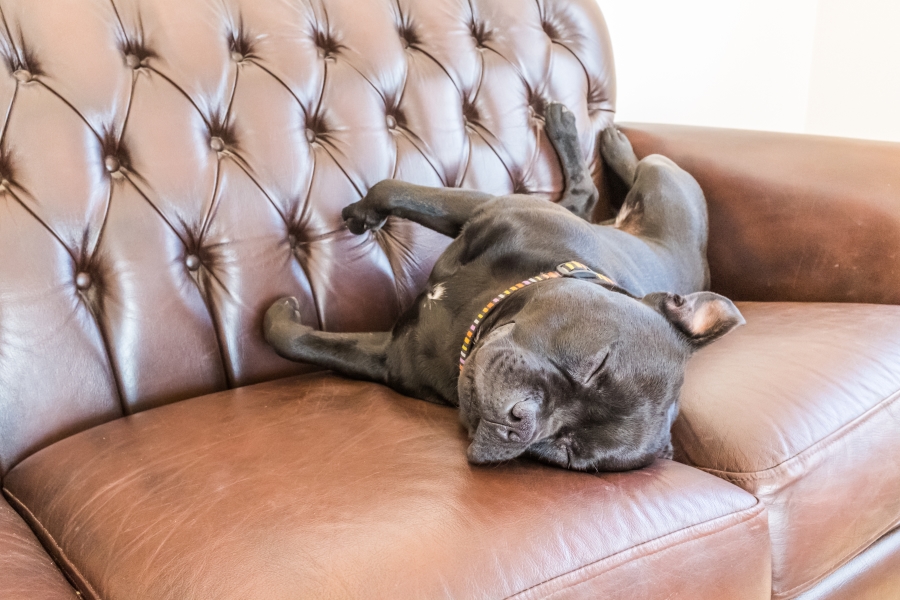
Why Is Your Dog Jumping on the Furniture and How Can You Change the Habit?
You sit down on the couch, and your dog immediately jumps up beside you.
Maybe you don’t mind.
Maybe you do.
Either way, it helps to understand why your dog wants to be on the furniture before deciding what to do about it.
Dogs may climb onto couches, beds, chairs, and other surfaces because they are comfortable, interesting, elevated, or associated with their people. Furniture can also become rewarding simply because being there gets attention.
TL;DR: Jumping on furniture is usually a normal behavior, not a sign that your dog is being stubborn or disobedient. If you want your dog to stay off the furniture, the most effective approach is to teach and reward an alternative behavior while making the unwanted behavior less rewarding. Consistency matters, especially when multiple people live in the home.
Is Your Dog Jumping on the Furniture? explores why dogs develop this habit and what pet parents can do to create clearer boundaries.
Why Does Your Dog Want to Get on the Furniture?
From your dog’s point of view, the couch may be a great place to be.
It’s soft.
It smells like you.
It may offer a good view of the room or the window.
And sometimes, getting onto the couch leads to petting, cuddling, or attention.
Dogs tend to repeat behaviors that produce something they want. If jumping onto the furniture consistently results in a comfortable resting place or interaction with a person, there may be little reason for the dog to stop.
That doesn’t mean your dog is deliberately ignoring your rules.
It means the behavior is working.
Is Furniture Jumping a Problem?
That depends on your household.
Some families are perfectly happy sharing the couch with their dogs. Others want furniture to remain dog-free.
There can also be practical reasons for setting a boundary. A large or excited dog can damage furniture or knock someone over. A dog jumping onto kitchen counters can also get access to food, hot cookware, sharp objects, or other hazards.
The important thing is deciding what rule you actually want.
If your dog is allowed on the couch sometimes but not at other times, the situation can become harder to understand unless the rules are clear.
Why Does Consistency Matter So Much?
Imagine your dog jumps onto the couch.
One person tells them to get down.
Another person laughs and pets them.
A third person lets them stay because they’re tired.
From the dog’s perspective, the outcome is unpredictable.
Sometimes jumping works.
Sometimes it doesn’t.
That uncertainty can make a behavior surprisingly persistent. Veterinary behavior guidance emphasizes that inconsistent reinforcement can maintain unwanted behaviors, even when people are trying to stop them.
Everyone in the household should understand the same rule.
Should You Punish Your Dog for Getting on the Furniture?
Punishment is not the only way to set boundaries, and it can create other problems.
Scolding or physically pushing a dog away may still provide attention, which can accidentally reinforce the behavior. More importantly, harsh responses can create fear or frustration.
A better training approach is to teach your dog what you want them to do instead.
For example, if the goal is to keep your dog off the couch, your dog needs somewhere else that is comfortable and rewarding.
That might be a bed, mat, crate, or another designated resting area.
What Should Your Dog Do Instead?
Stopping a behavior is often easier when you give your dog a clear alternative.
Instead of simply thinking:
Don’t get on the couch.
Think:
Go to this comfortable spot.
That gives your dog something they can succeed at.
Rewarding your dog for choosing the appropriate resting place can help make that behavior more worthwhile. Over time, the alternative can become part of the dog’s normal routine.
The exact approach depends on your dog, your household, and why the furniture is so appealing in the first place.
What If Your Dog Keeps Jumping Back Up?
Don’t assume that your dog has forgotten the rule.
The furniture may still be more rewarding than the alternative.
Perhaps the couch is softer. Maybe it gives your dog a better view. Maybe your dog wants to be close to you.
Or perhaps jumping onto the furniture has been rewarded for years.
Changing an established habit can take time. Dogs may need repeated opportunities to practice the new behavior, and everyone needs to respond consistently.
If your dog gets rewarded for the unwanted behavior even occasionally, that can make the habit harder to change.
What If Your Dog Suddenly Starts Jumping on Furniture?
A sudden change in behavior deserves a little more attention.
If a dog that normally avoids furniture suddenly starts seeking soft surfaces, becoming unusually clingy, or changing their normal routines, consider what else has changed.
Pain, anxiety, changes in the household, environmental changes, or other health or behavior concerns can sometimes affect a dog’s behavior.
If the change is sudden, persistent, or accompanied by other unusual signs, talk with your veterinarian.
Can Furniture Rules Be Different From Room to Room?
They can, but they need to be clear.
For example, you might allow your dog on one specific couch but not on beds or dining chairs.
That’s possible, but it requires your dog to learn the difference.
Clear boundaries and consistent reinforcement help your dog understand which locations are appropriate.
The goal isn’t to make every piece of furniture off-limits.
The goal is to make the household rules predictable.
What If You Actually Want Your Dog on the Furniture?
That’s completely reasonable.
There is no universal rule that says dogs should never be allowed on couches or beds.
If you’re comfortable sharing the furniture, you may still want your dog to understand cues for getting on and off. This can make daily life easier and gives you more control when guests arrive or when you need your dog to move.
Good manners are useful even when the behavior itself is allowed.
Take Our Course: Is Your Dog Jumping on the Furniture?
Is Your Dog Jumping on the Furniture? is a short course that looks at why dogs develop furniture-jumping habits and how pet parents can create clearer boundaries.
You’ll learn more about canine behavior, household expectations, and ways to encourage appropriate alternatives.
It’s a quick introduction to creating better furniture habits at home.
Frequently Asked Questions
Why does my dog keep jumping on the couch?
Dogs may jump onto furniture because it is comfortable, offers a good view, smells like their people, or results in attention.
Should dogs be allowed on furniture?
That’s a personal household decision. What matters most is that the rules are clear and consistent.
Does pushing my dog off the couch work?
Physically removing a dog may stop the behavior temporarily, but it doesn’t necessarily teach the dog what you want them to do instead.
How can I make an alternative resting spot more appealing?
A comfortable location, positive reinforcement, and consistent use can help your dog learn that the alternative is a good place to settle.
What if my dog’s furniture behavior suddenly changes?
A sudden behavior change can have many possible causes. If it persists or occurs alongside other unusual signs, speak with your veterinarian.