
How Can You Protect Your Dog From Venomous Snakes?
For dogs that spend time outdoors, a snake encounter can happen quickly.
A dog may investigate a snake out of curiosity, chase it through tall grass, or surprise one while exploring a trail. In areas where venomous snakes are present, knowing how to reduce the risk and what to do after a bite can make an important difference.
Snake species and venom vary by location, so local knowledge matters. But one rule applies broadly: a suspected venomous snakebite should be treated as a veterinary emergency.
TL;DR: The best way to protect your dog from venomous snakes is to reduce opportunities for encounters, keep your dog under control in areas where snakes are present, and learn what local species look like. If you suspect your dog has been bitten, contact a veterinarian immediately rather than waiting for symptoms to develop.
Venomous Snakes and Dog Safety explores the risks of snake encounters and what dog parents should know before heading outdoors.
Why Are Dogs at Risk Around Snakes?
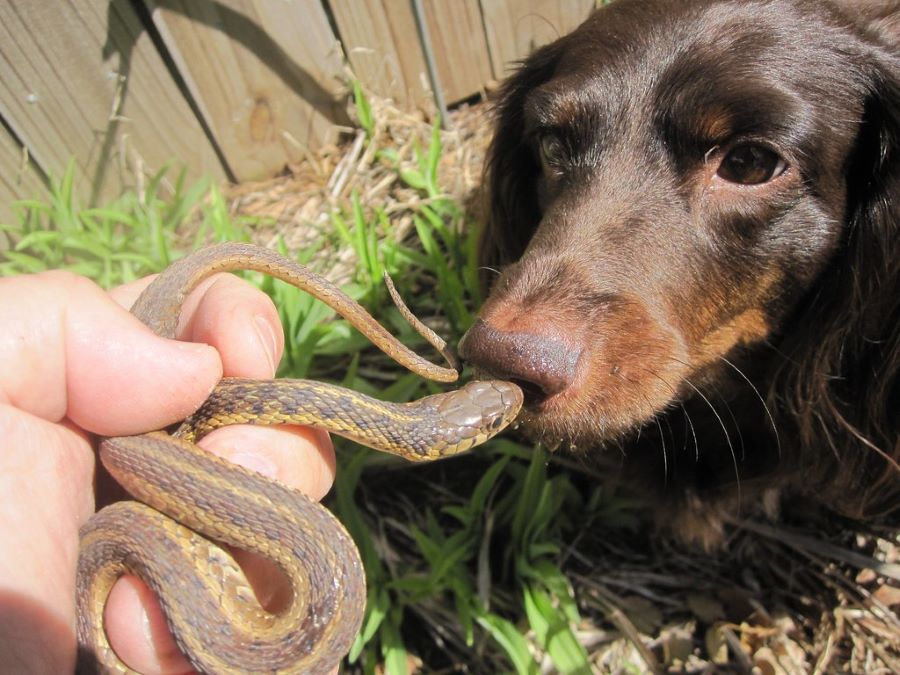
Dogs investigate the world with their noses, eyes, and mouths.
That curiosity can bring them close to wildlife that people might avoid.
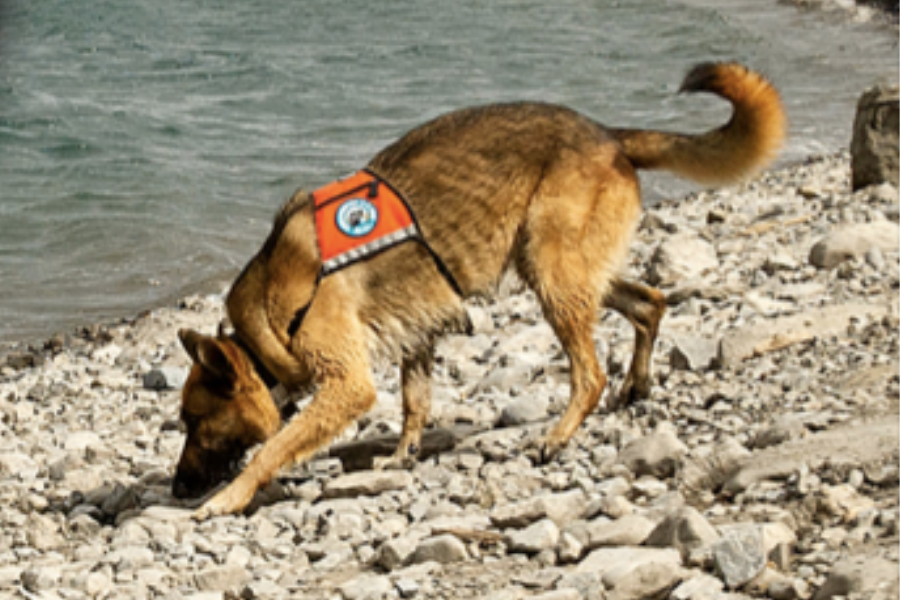
A dog sniffing through brush may encounter a snake before you even realize one is nearby. Some dogs may also bark at, chase, or attempt to catch snakes.
That can put the dog within striking distance.
The risk depends heavily on where you live and where you take your dog. Venomous snake species differ by region, so learning about the snakes found in your area is a useful part of outdoor safety.
How Can You Reduce the Risk of a Snake Encounter?
You cannot eliminate the possibility of encountering wildlife outdoors, but you can reduce opportunities for your dog to investigate.
Pay attention to where your dog is walking, especially in areas with tall grass, rocks, brush, wood piles, or other places where snakes may shelter.
Keeping your dog under control also matters. A dog that immediately runs into dense vegetation is harder to protect than a dog that stays within sight and responds reliably to your cues.
Outdoor awareness is particularly important during warmer periods and in areas known to support venomous snakes.
What Are the Signs of a Snakebite?
Signs vary depending on the snake, the location of the bite, and whether venom was injected.
A venomous bite can cause rapid swelling, pain, bleeding, or bloody discharge around the bite. Puncture marks may not always be easy to see, especially when swelling develops quickly.
Other signs can develop as venom affects the body.
A dog that has been bitten may become weak, distressed, or otherwise abnormal. Depending on the species and venom, more serious problems can develop.
That is why waiting to see whether your dog “seems okay” is not a good strategy after a suspected venomous bite.
What Should You Do If Your Dog Is Bitten?
Contact a veterinarian immediately.
Call your veterinary clinic or emergency hospital while preparing to leave. Tell them you suspect a snakebite and provide as much information as you safely can.
Keep your dog calm and limit movement during transportation. If possible, carry your dog rather than allowing them to walk around. Veterinary guidance also recommends keeping the bitten area at or below heart level during transport when practical.
If you can safely identify the snake from a distance, that information may help the veterinary team.
Do not put yourself at risk trying to catch, kill, or handle the snake.
Should You Try to Treat the Bite at Home?
No.
A suspected venomous snakebite is not something to manage with home remedies.
The appropriate treatment depends on the snake, the dog, the amount of venom involved, and the clinical signs. Veterinary treatment may include supportive care and, when indicated, antivenom.
Trying an unproven treatment at home can waste valuable time.
What About Cutting the Wound or Trying to Suck Out the Venom?
Do not attempt these kinds of treatments.
Home first-aid myths can make people feel as though they are taking action, but the priority is getting veterinary care quickly.
Do not put yourself or your dog through unnecessary procedures while trying to remove venom.
Instead, focus on keeping your dog calm, limiting movement, and getting to a veterinary hospital.
Should You Bring the Snake With You?
No.
Do not attempt to capture a snake after it bites your dog.
A second bite could injure you or someone else.
If you can identify the snake safely from a distance, take note of its appearance or location. A photograph may be useful if it can be taken without approaching the animal.
Your safety comes first.
Can a Snake Bite Be a Dry Bite?
Yes.
Some venomous snakes may bite without injecting venom. These are called dry bites. But you cannot safely assume that a bite was dry simply because your dog initially looks normal.
This is another reason prompt veterinary assessment matters.
A dog may need monitoring even when the initial signs appear mild.
What Can You Do Before Hiking or Exploring Snake Country?
Preparation can make outdoor adventures safer.
Learn which venomous snakes live in the area.
Know where the nearest emergency veterinary hospital is.
Keep your dog’s identification and veterinary information current.
Work on reliable cues that help you keep your dog close and redirect them away from wildlife.
And pay attention to your surroundings.
The goal isn’t to make outdoor exploration frightening. It is to understand the risks before they become an emergency.
Why Is Snake Safety Part of Responsible Dog Ownership?
Dogs are naturally curious.
You cannot expect a dog to understand that a particular snake could be dangerous simply because you do.
Your role is to manage the environment, understand local hazards, and be prepared to act if something goes wrong.
Snake safety is one part of a larger approach to outdoor awareness. The more familiar you are with the wildlife and hazards in your area, the better prepared you are to protect your dog.
Take Our Course: Venomous Snakes and Dog Safety
Venomous Snakes and Dog Safety is a short course that explores the risks venomous snakes can pose to dogs.
You’ll learn more about snake encounters, ways to reduce risk, and what dog parents should know to be better prepared when spending time outdoors.
It’s a quick introduction to an important part of outdoor dog safety.
Frequently Asked Questions
What should I do if I think a venomous snake bit my dog?
Contact a veterinarian immediately. Keep your dog calm, limit movement, and head to a veterinary hospital as quickly as possible.
Can you always see a snakebite?
No. Puncture wounds may be difficult to see, particularly if swelling develops quickly.
Should I try to catch the snake?
No. Do not put yourself at risk trying to capture or handle a snake.
Can a venomous snake bite be harmless?
A venomous snake may deliver a dry bite without injecting venom, but you cannot safely determine this at home. A suspected bite still requires prompt veterinary attention.
How can I reduce my dog’s risk of a snakebite?
Learn about local snake species, keep your dog under control in areas where snakes are present, avoid letting them investigate dense vegetation or likely snake habitat, and work on reliable cues that help you redirect them from wildlife.