

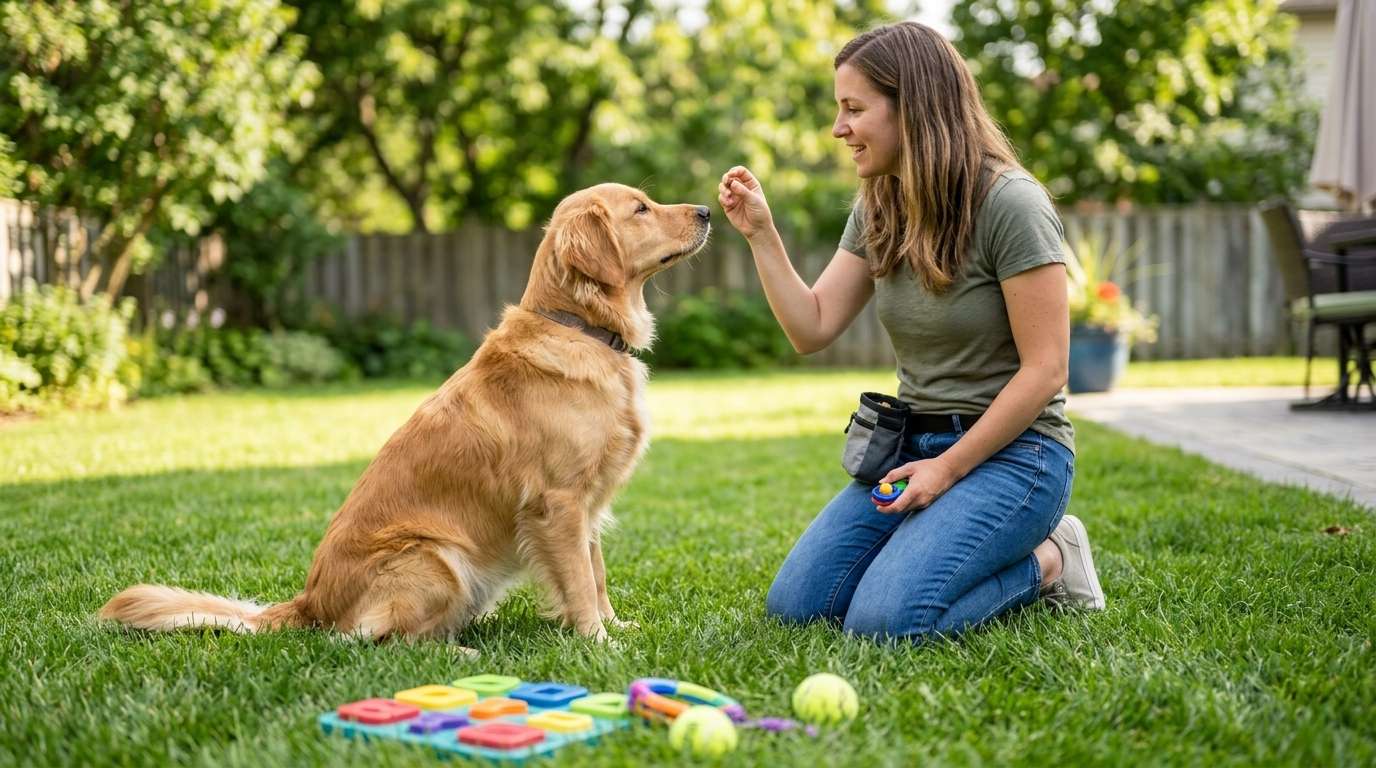
How Can You Enhance Your Dog’s Learning Ability?
Does your dog really have to be a Border Collie or German Shepherd to be a good learner? Not at all. Dogs of all breeds can learn, retain, and apply more information than we sometimes expect.
Training techniques matter, but learning doesn’t happen in isolation. Your dog’s overall wellbeing can also play a role in how ready they are to learn and engage with you. The Animal Wellness Academy course “How to Enhance Your Dog’s Learning Ability” explores this idea by looking beyond training alone.
TL;DR: All dogs are capable of learning, and the right training approach is only part of the picture. Supporting your dog’s body, mind, and soul may also help create a better foundation for learning. To explore the topic further, check out AWA’s “How to Enhance Your Dog’s Learning Ability” course.
Are some dogs naturally better learners?
Some breeds have earned reputations for being especially intelligent. Border Collies and German Shepherds are often mentioned when people talk about highly trainable dogs.
But breed reputation doesn’t tell the whole story.
According to the AWA course description, all dogs are capable of retaining and applying more knowledge than many people realize.
That matters because it’s easy to underestimate a dog that doesn’t learn a new behavior immediately. Your dog may simply need a different approach, more repetition, or better support for the way they learn.
Instead of asking whether your dog is “smart enough,” it can be more useful to ask how you can help them succeed.
How does training affect your dog’s learning?
Training gives dogs opportunities to learn through repetition, interaction, and experience.
Clear communication can make it easier for your dog to understand what you’re asking. Consistency also matters. If the same behavior receives completely different responses from one day to the next, your dog may have a harder time figuring out what you expect.
Patience helps, too.
A dog that doesn’t understand a cue isn’t necessarily being stubborn. Sometimes the lesson needs to be broken into smaller steps, or the environment may be too distracting for your dog to focus.
Good training meets the dog where they are.
Can your dog’s overall wellbeing affect learning?
The AWA course takes the idea of learning beyond training methods. Its description specifically encourages pet owners to consider supporting a dog’s body, mind, and soul as part of enhancing learning ability.
That broader perspective can change how you approach training at home.
A dog needs opportunities for physical activity, mental engagement, rest, social interaction, and positive experiences. Their individual needs can vary based on age, health, temperament, and lifestyle.
Learning can become part of everyday life rather than something that only happens during a formal training session.
A walk offers new smells and experiences. A simple food puzzle can encourage problem-solving. Practicing a familiar cue during daily routines gives your dog another chance to use what they’ve learned.
What can dog parents do to encourage learning?
Start by making learning enjoyable.
Keep training sessions appropriate for your dog’s attention and experience level. Use clear cues and reward behaviors you want to see again. Give your dog time to process new information rather than rushing through a long list of commands.
You can also look for opportunities outside traditional obedience training.
Teaching your dog a new trick, introducing an enrichment activity, or practicing a familiar behavior in a new setting can turn an ordinary day into a learning opportunity.
Most importantly, pay attention to your individual dog. What motivates one dog may not interest another.
Why look beyond traditional dog training?
It can be tempting to think of learning as a simple equation: teach a command, repeat it, reward it, and move on.
Dogs are more individual than that.
The AWA course encourages pet owners to consider the whole dog when thinking about learning ability. Rather than focusing exclusively on training techniques, it introduces the idea that supporting the body, mind, and soul can also be part of helping your dog learn.
That makes the topic relevant whether you’re teaching a young dog basic cues or simply looking for new ways to keep an adult or senior dog engaged.
What can you learn from the AWA course?
The How to Enhance Your Dog’s Learning Ability course is designed for pet owners, pet professionals, and veterinarians, and focuses specifically on dogs. It includes a lesson and quiz, giving learners a concise way to explore the subject.
For dog parents, the course can offer a fresh perspective on canine learning and encourage you to think about what happens outside the training session.
You may come away with a better appreciation for your dog’s individual learning potential and a broader way to think about supporting them.
Take Our Course: “How to Enhance Your Dog’s Learning Ability”
Want to help your dog get more from their learning experiences?
The How to Enhance Your Dog’s Learning Ability course gives pet parents an opportunity to explore how supporting the whole dog can complement the training approaches they already use.
Frequently Asked Questions
Can all dogs improve their learning ability?
The AWA course emphasizes that all dogs are capable of retaining and applying more knowledge than many people realize, regardless of breed.
Does dog training affect learning ability?
Training approaches are an important part of helping dogs learn. The AWA course also encourages looking beyond training methods and considering support for the dog’s body, mind, and soul.
Are some dog breeds smarter than others?
Certain breeds are widely regarded as highly intelligent or trainable, but breed isn’t the only factor that influences how an individual dog learns. Dogs have different experiences, motivations, temperaments, and needs.
Who is the AWA learning ability course for?
The course is designed for pet owners, pet professionals, and veterinarians, and is specifically focused on dogs.