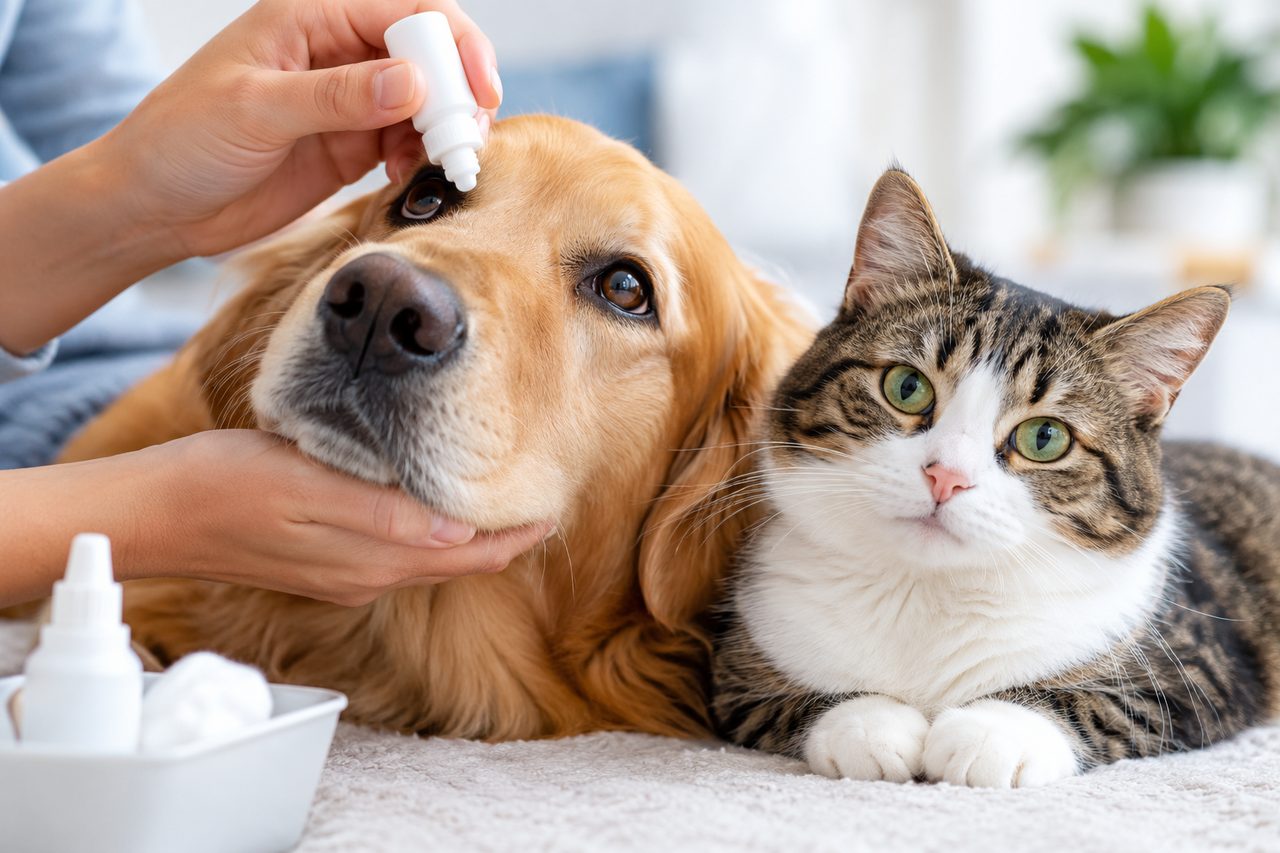
What Do Pet Parents Need to Know About Eye Care for Dogs and Cats?
Your dog or cat’s eyes can tell you a lot about how they’re feeling. Redness, discharge, squinting, cloudiness, or a sudden change in the way your pet sees can all deserve attention. Regular observation and simple eye-care habits can help you spot changes early and know when it’s time to call your veterinarian.
TL;DR: Good eye care starts with paying attention to your pet’s eyes and noticing changes from their normal appearance. Keeping the area clean and knowing which signs should prompt veterinary attention can help you protect your dog’s or cat’s eye health. Want to learn more? Take our Eye Care Tips for Dogs and Cats course to build your knowledge and feel more confident caring for your pet’s eyes.
Why Is Eye Care Important for Dogs and Cats?
Dogs and cats don’t always make it obvious when something is bothering them. A pet may simply blink more often, rub at an eye, or avoid bright light. Some animals may show only subtle changes at first.
That’s why knowing your pet’s normal eye appearance and behavior matters. Take a quick look during your usual grooming or cuddle routine. Are both eyes open normally? Is there unusual discharge? Does your pet seem comfortable?
Getting familiar with what’s normal makes it easier to recognize what’s not.
What Are Common Signs of Eye Problems in Pets?
Eye problems can look different from one pet to another. Some signs are easy to notice, while others can be surprisingly subtle.
Watch for changes such as:
- Redness or swelling around the eye
- Excessive tearing or unusual discharge
- Frequent blinking or squinting
- Pawing or rubbing at the face
- Cloudiness or a change in the eye’s appearance
- Keeping one eye partly or completely closed
- A sudden change in vision or behavior
These signs don’t tell you exactly what’s causing the problem. They simply mean your pet’s eyes deserve closer attention.
If an eye problem appears suddenly, seems painful, or is getting worse, contact your veterinarian rather than trying to diagnose it at home.
How Can You Keep Your Dog or Cat’s Eyes Clean?
For many pets, eye care can be part of an ordinary grooming routine. If you notice debris around the eye, gentle cleaning may help keep the area comfortable.
Use only products and techniques that are appropriate for the eye area, and avoid putting household products or unapproved substances in or around your pet’s eyes. Be especially careful if your dog or cat resists handling. An irritated eye can become more uncomfortable with repeated rubbing or poking.
Long facial hair can also collect moisture or debris around the eyes. Regular grooming may help keep the surrounding area cleaner, depending on your pet’s coat and individual needs.
When Should You Call the Veterinarian?
Not every bit of eye discharge means something serious, but some changes shouldn’t be ignored.
Seek veterinary advice if your pet has significant redness, swelling, pain, persistent squinting, marked discharge, cloudiness, an obvious injury, or a sudden change in vision. Eye conditions can have different causes, and the right treatment depends on what’s actually happening.
Avoid using leftover eye medication from a previous problem unless your veterinarian tells you to do so. A treatment that helped one eye problem may not be appropriate for another.
Take Our Course: “Eye Care Tips for Dogs and Cats”
Your pet’s eyes deserve more than a quick glance when something looks wrong.
The Eye Care Tips for Dogs and Cats course can help you learn more about caring for this sensitive area, recognizing changes, and becoming a more informed advocate for your dog’s or cat’s health.
Frequently Asked Questions
How often should I check my dog’s or cat’s eyes?
A quick look during regular grooming, cuddling, or handling can help you become familiar with what’s normal for your pet.
Is eye discharge normal in dogs and cats?
A small amount of debris can occur, but persistent, excessive, or unusual discharge should be discussed with your veterinarian, especially when other signs are present.
Can I use human eye drops on my pet?
Don’t use human eye drops or other eye products on your pet unless your veterinarian specifically recommends them.
What should I do if my pet is squinting?
Squinting can be a sign of eye discomfort. If it persists, is accompanied by redness or discharge, or appears suddenly, contact your veterinarian for advice.