

Can Home Physical Therapy Help Arthritic Dogs? What Dog Parents Should Know
Watching your dog slow down can be tough. Maybe the morning walk takes longer, jumping onto the couch has become a thing of the past, or your dog seems stiff after getting up from a nap. Arthritis can change how a dog moves, but thoughtful physical therapy may help support mobility, strength and everyday comfort.
Home physical therapy is not about pushing an older dog through a workout. It’s about using appropriate movement in a way that fits your dog’s needs.
TL;DR: Home physical therapy can be part of a broader plan for an arthritic dog, especially when exercises are recommended and monitored by a veterinarian or canine rehabilitation professional. If you want to better understand how physical therapy can fit into your dog’s routine, take our Home Physical Therapy for Arthritic Dogs course for practical guidance you can explore at home.
Why can physical therapy help dogs with arthritis?
Arthritis can affect a dog’s comfort and mobility, and dogs may become less active as movement becomes harder. Less activity can also mean less muscle use, which can make everyday movement more challenging.
A carefully designed rehabilitation program can focus on goals such as maintaining movement, supporting muscle strength, improving body awareness and helping a dog stay active within their abilities. For some dogs, a home exercise plan can work alongside professional rehabilitation rather than replacing it.
That distinction matters. The right exercise depends on where the arthritis is located, your dog’s pain level, physical limitations and overall health.
What might home physical therapy look like?
There isn’t one routine that works for every arthritic dog.
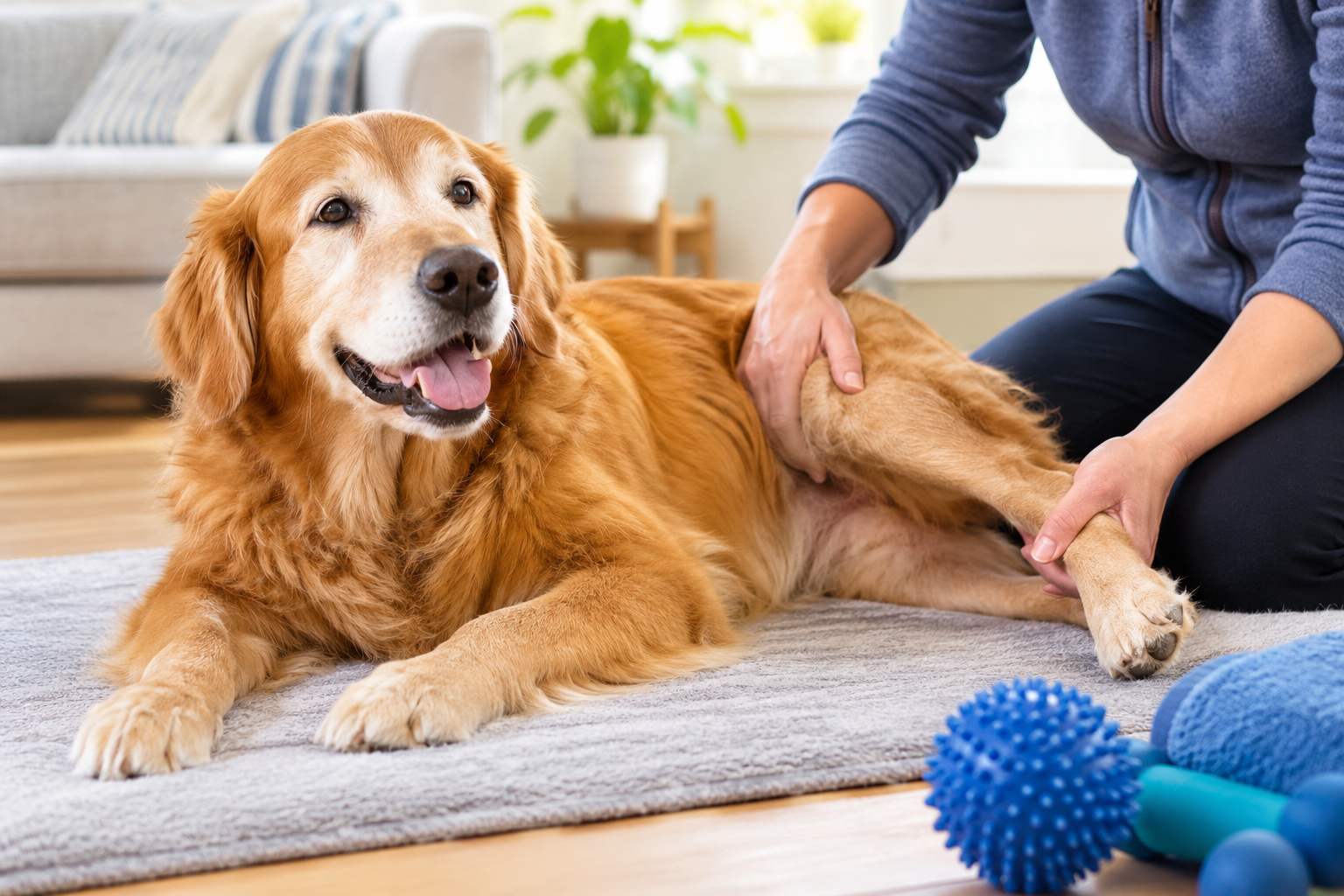
Depending on the dog and their rehabilitation plan, home activities may include controlled walking, gentle movement exercises, massage or exercises that encourage balance, coordination and body awareness. The goal is controlled, comfortable movement, not seeing how many repetitions your dog can complete.
Even something as simple as a walk can be adjusted. Soft surfaces may be easier on an arthritic dog’s joints than harder ground, while the length and pace should match the individual dog’s abilities.
Your dog’s response matters, too. If an exercise causes discomfort, stress or a noticeable change in movement, stop and check with the veterinary professional guiding the program.
Can dog parents do physical therapy at home?
Yes, but home therapy should not mean guessing.
A veterinarian can first determine whether arthritis is actually the reason behind your dog’s mobility changes. A rehabilitation professional can then help identify appropriate exercises and adjust them as your dog progresses. Veterinary rehabilitation assessments may include looking at gait, joint movement and muscle condition.
This is where learning can make a difference. Understanding the purpose of an exercise, how it should be introduced and what your dog is telling you can help you become a more informed partner in their care.
Our Home Physical Therapy for Arthritic Dogs course gives dog parents an opportunity to learn more about this approach and understand how appropriate home-based physical therapy can fit into an arthritis-care plan.
What should you remember about exercising an arthritic dog?
More exercise isn’t automatically better.
Arthritic dogs may benefit from regular, appropriate movement, but intensity needs to match the individual dog. Start slowly, follow professional guidance and give your dog time to adjust.
Physical therapy also works best as one part of a larger care plan. Depending on the dog, that plan may include veterinary pain management, weight management, environmental changes and professional rehabilitation.
The goal is simple: help your dog keep doing the things they enjoy while respecting what their body can comfortably handle.
Take Our Course: “Home Physical Therapy for Arthritic Dogs”
Want to learn more about supporting your arthritic dog through appropriate home physical therapy?
Our Home Physical Therapy for Arthritic Dogs course can help you build your understanding of the principles behind home-based rehabilitation and give you useful information to discuss with your dog’s veterinary care team.
Frequently Asked Questions
Can physical therapy help an arthritic dog?
Physical therapy can be part of an arthritis management plan and may focus on maintaining mobility, strength, flexibility and function. The right approach depends on the individual dog.
Can I do physical therapy with my dog at home?
Some exercises can be performed at home, but they should be appropriate for your dog’s condition. Veterinary or rehabilitation guidance is especially important when starting a new exercise program.
Should an arthritic dog exercise every day?
Many dogs benefit from regular, controlled movement, but the appropriate amount varies. Your veterinarian or canine rehabilitation professional can help determine what is suitable for your dog.
Is home physical therapy a replacement for veterinary care?
No. Home physical therapy can complement professional care, but it should not replace veterinary assessment, diagnosis, or treatment.