
How Can You Keep Your Dog’s Eyes Healthy?
Your dog’s eyes can tell you a lot about how they’re feeling. Clear, bright eyes are lovely to see, but keeping them healthy involves more than noticing when something looks different. A little attention during grooming and regular wellness checks can help you spot changes before they become harder to ignore.
From tear buildup to redness and squinting, knowing what’s normal for your dog can help you recognize when they might need extra care. You don’t need to be an expert to get started. You just need to know what to look for and when to ask your veterinarian for help.
TL;DR: Keeping your dog’s eyes healthy starts with gentle cleaning, regular checks, and watching for changes such as redness, cloudiness, unusual discharge, or squinting. Avoid using human eye drops or home remedies unless your veterinarian recommends them. Animal Wellness Academy’s Keeping Your Dog’s Eyes Healthy course is a helpful next step for dog parents who want to learn more about everyday eye care and recognizing possible problems.
Why Is Eye Care Important for Dogs?
Dogs use their vision to explore their surroundings, follow toys, and move confidently through the world. Their eyes can also be affected by injuries, irritation, infections, and certain eye conditions.
Some problems are easy to notice, while others begin with subtle changes. You might see your dog rubbing their face against the sofa, blinking more than usual, or developing watery eyes. These signs don’t always point to the same cause, so it’s best not to guess what’s wrong.
Regular veterinary wellness exams are another opportunity to check your dog’s eye health. Your veterinarian can examine the eyes and recommend further testing if something looks unusual. Tufts University’s Cummings School of Veterinary Medicine explains what veterinarians assess during a dog’s eye examination.
What Are the Signs of Eye Problems in Dogs?
A quick look at your dog’s eyes during your usual grooming routine can help you notice changes. Look for:
- Redness or swelling around the eyes.
- Cloudiness or a sudden change in appearance.
- Unusual or excessive tearing.
- Thick or discolored discharge.
- Frequent blinking, squinting, or keeping an eye closed.
- Pawing at the eyes or rubbing the face.
- Bumping into objects or seeming less confident in familiar surroundings.
A small amount of dried discharge in the corner of the eye may be harmless, but persistent or unusual discharge deserves attention. If your dog suddenly develops a painful-looking, red, cloudy, or closed eye, contact your veterinarian promptly. Eye problems can worsen quickly, and early assessment may help protect vision.
How Can You Clean Your Dog’s Eyes Safely?
If you notice a little dried discharge around your dog’s eyes, gently wipe the surrounding fur with a clean, soft cloth dampened with lukewarm water. Use a fresh section of the cloth for each eye, and avoid touching the eyeball itself.
Don’t scrub, pull at crusts that are firmly attached, or try to remove anything embedded in the eye. Avoid soaps, essential oils, and human eye drops unless your veterinarian specifically advises their use.
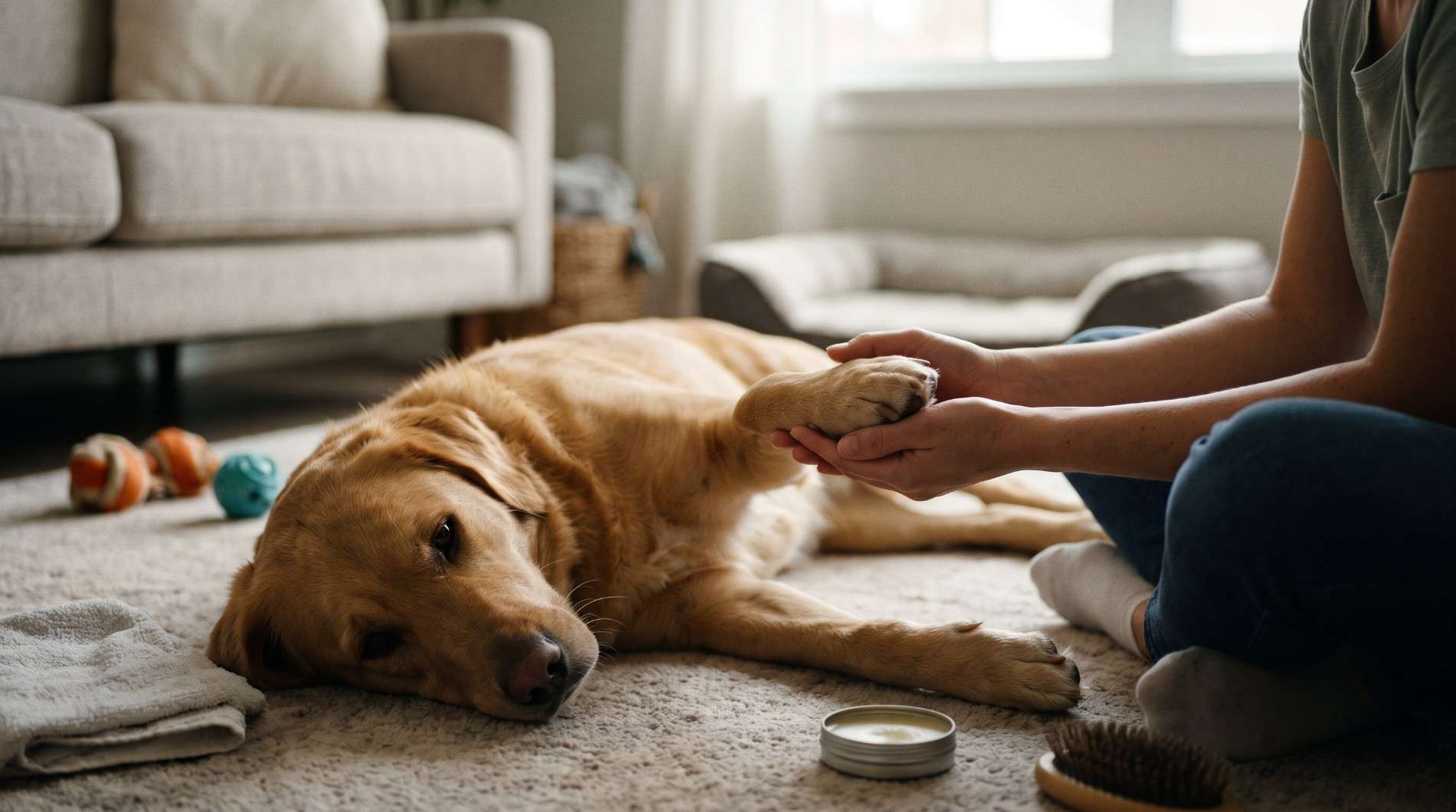
Dogs with facial folds or fur around their eyes may need extra attention to keep the surrounding area clean. If discharge keeps returning or the skin looks irritated, ask your veterinarian whether an underlying issue needs treatment.
How Can You Help Protect Your Dog’s Eyes?
A few everyday habits can help reduce avoidable irritation. Keep your dog away from household chemicals and avoid letting them put their head out of a moving car window, where wind and flying debris can injure their eyes.
During grooming, keep hair around the eyes tidy, especially if it grows toward the surface of the eye. If your dog has a breed that is prone to certain eye conditions, ask your veterinarian whether additional monitoring is appropriate.
Most importantly, don’t rely on home care to treat a suspected eye condition. Redness, squinting, pain, or unusual discharge should be assessed by a veterinary professional.
What Can You Learn From Animal Wellness Academy?
Good eye care often starts with knowing what to notice. Understanding simple care routines and recognizing warning signs can help you feel more prepared to look after your dog’s eyes as part of their overall well-being.
Animal Wellness Academy’s Keeping Your Dog’s Eyes Healthy course gives dog parents an opportunity to learn more about this part of everyday pet care. It’s a useful starting point if you want to build your knowledge, become more familiar with your dog’s eye health, and know when a change deserves professional attention.
Take Our Course: “Keeping Your Dog’s Eyes Healthy”
Want to feel more confident caring for your dog’s eyes?
Animal Wellness Academy’s Keeping Your Dog’s Eyes Healthy course can help you explore everyday eye care and learn what signs to watch for. Take a moment to build your knowledge and feel better prepared to support your dog’s comfort and well-being.
Frequently Asked Questions
How often should I check my dog’s eyes?
Take a quick look during regular grooming and cuddles. If you notice a change in appearance, discharge, or behavior, contact your veterinarian rather than waiting for the next routine checkup.
Is it normal for dogs to have eye discharge?
A small amount of clear or dry discharge can be normal. Thick, colored, persistent, or increasing discharge may indicate a problem and should be discussed with your veterinarian.
Can I use human eye drops on my dog?
Don’t use human eye drops unless your veterinarian specifically recommends them. The right treatment depends on what is causing the symptoms, and some products may be unsuitable for dogs.
When should I take my dog to the vet for an eye problem?
Contact your veterinarian promptly if your dog has redness, swelling, unusual discharge, cloudiness, or frequent squinting. Sudden eye pain, an eye held closed, or a sudden change in vision warrants urgent veterinary assessment.