
How Can You Keep Your Dog’s Paws Healthy?
Your dog’s paws do a lot of work. They carry your pup through daily walks, backyard play, hikes, and all those little adventures that make life together fun. But between hot sidewalks, rough ground, dirt, and overgrown nails, paws can take quite a beating.
Regular paw care helps you catch small problems before they become bigger concerns. You don’t need an elaborate grooming routine, either. A few simple checks and some attention to your dog’s surroundings can go a long way.
TL;DR: Keeping your dog’s paws healthy starts with regular inspections, clean and dry feet, trimmed nails, and protection from hot pavement and rough surfaces. Watch for limping, swelling, cracked pads, or persistent licking, and contact your veterinarian if you notice signs of injury. Learn more with Animal Wellness Academy’s Keeping Your Dog’s Paws Healthy course to build your knowledge of everyday paw care.
Why Is Paw Care Important for Dogs?
A dog’s paws do more than help them get from one place to another. Paw pads cushion each step, provide traction, and protect the tissues underneath. The spaces between the toes can also collect dirt, small stones, burrs, and other debris.
Without regular checks, a small cut or trapped object may go unnoticed until your dog starts licking their foot or limping. Preventive Vet recommends checking paw pads and the spaces between the toes for injuries, foreign objects, and changes such as swelling or discoloration.
Making paw checks part of your routine can help you notice changes early, especially after outdoor adventures.
How Can You Check Your Dog’s Paws at Home?
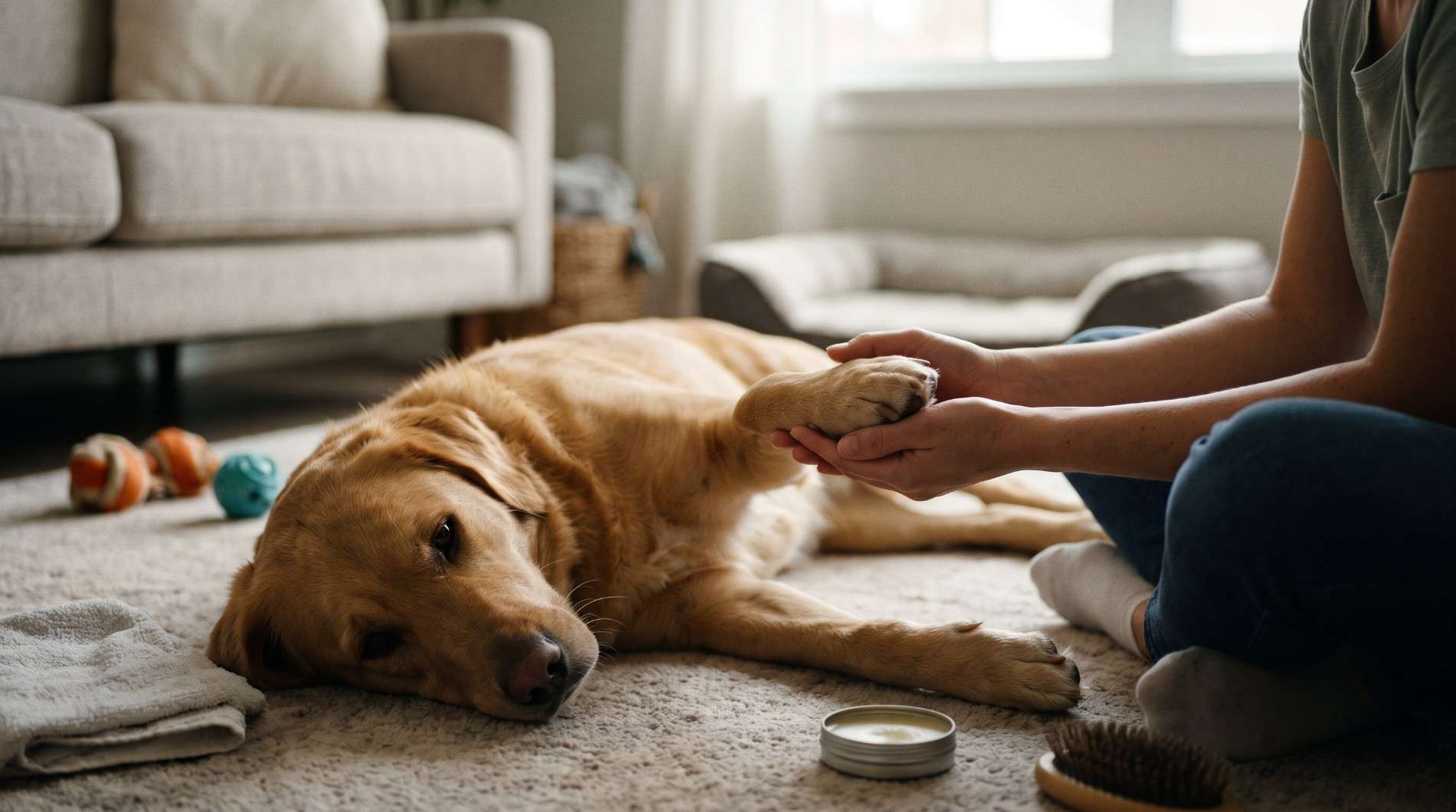
Choose a quiet moment when your dog is relaxed. Gently examine each paw, including the pads, nails, and spaces between the toes.
Look for:
- Cuts, cracks, blisters, or bleeding.
- Redness, swelling, or unusual discoloration.
- Broken nails or nails that have grown too long.
- Debris caught between the toes.
- Excessive licking, chewing, or signs of tenderness.
If your dog pulls away or seems uncomfortable, don’t force the inspection. Take a break and try again gently. If the paw appears painful or you suspect an injury, contact your veterinarian.
What Can Damage Your Dog’s Paw Pads?
Everyday surfaces can pose problems for sensitive paws. Hot pavement may burn paw pads, while gravel, sharp objects, and rough trails can cause scrapes or tears. Cold weather, ice-melting products, and certain household or garden chemicals may also irritate the skin.
On hot days, choose cooler walking times and shaded or grassy routes. Protective dog boots may help on rough terrain or in extreme temperatures, provided they fit properly and are used appropriately. Zoetis Petcare offers additional guidance on protecting paw pads during walks and outdoor activities.
After outings, check your dog’s feet and gently remove dirt or debris. If you wash the paws, dry them thoroughly, especially between the toes. Use only paw-care products intended for dogs, and ask your veterinarian about suitable options if the pads are dry or cracked.
How Often Should You Groom Your Dog’s Paws?
A quick paw check after walks and a more thorough inspection regularly can help you stay familiar with what’s normal for your dog. Nail care matters, too. Overgrown nails can become uncomfortable and interfere with normal movement.
If hair grows around the paw pads, keeping it neatly trimmed may help reduce matting and make inspections easier. Use pet grooming clippers rather than scissors near the pads, or ask a professional groomer for help if you’re unsure.
When Should You Call a Veterinarian?
Contact your veterinarian if your dog is limping, repeatedly licking a paw, or showing swelling, deep cracks, bleeding, or persistent discomfort. A wound caused by a sharp object may need professional treatment even if it looks small.
Don’t pull out an object that appears deeply embedded or apply human creams without veterinary advice. If your dog cannot put weight on the paw or has a serious wound, seek prompt veterinary care.
Take Our Course: “Keeping Your Dog’s Paws Healthy”
Want to feel more confident about your dog’s everyday paw care?
Animal Wellness Academy’s Keeping Your Dog’s Paws Healthy course is a useful next step for dog parents who want to learn more about caring for their dog’s feet, spotting potential problems, and making paw checks part of their routine.
Frequently Asked Questions
How often should I check my dog’s paws?
Check your dog’s paws regularly, especially after walks on rough ground or outings where debris may get caught between the toes. Frequent checks help you notice changes from your dog’s normal condition.
Should I put balm on my dog’s paw pads?
Some dog-specific balms may help protect or moisturize paw pads, but the right choice depends on your dog’s needs. Ask your veterinarian about persistent dryness, cracking, or irritation before treating it yourself.
Why does my dog keep licking their paws?
Paw licking can happen because of irritation, an injury, something caught between the toes, or other skin problems. If the licking is persistent, excessive, or accompanied by redness or swelling, contact your veterinarian.
Can hot pavement hurt my dog’s paws?
Yes. Hot pavement can burn paw pads. Walk during cooler parts of the day, choose shaded or grassy routes when possible, and avoid surfaces that are too hot for your dog.