
How Can You Safely Clean and Care for Wounds in Your Dog or Cat?
A small cut can look simple at first. Then your dog starts licking it, your cat keeps pawing at it, or the area becomes red and irritated. Knowing what to do next can make a stressful situation feel a little more manageable.
Basic wound care can help protect an injured area while you arrange appropriate veterinary care. The tricky part is knowing what you can safely handle at home and when a wound needs professional attention.
TL;DR: Cleaning and monitoring minor wounds can be part of responsible pet care, but not every injury should be treated at home. If you want to learn more about proper wound care for dogs and cats, explore the “How to Clean and Care for Wounds in Your Dog or Cat” course.
What should you do when your pet gets a wound?
Start by taking a moment to assess the injury.
Look at where the wound is, how large it appears, whether it is bleeding, and how your dog or cat is behaving. A frightened or painful animal may react differently than usual, so approach slowly and carefully.
If the wound is bleeding heavily, appears deep, has something embedded in it, resulted from a bite, or is accompanied by significant pain or other concerning symptoms, contact your veterinarian promptly.
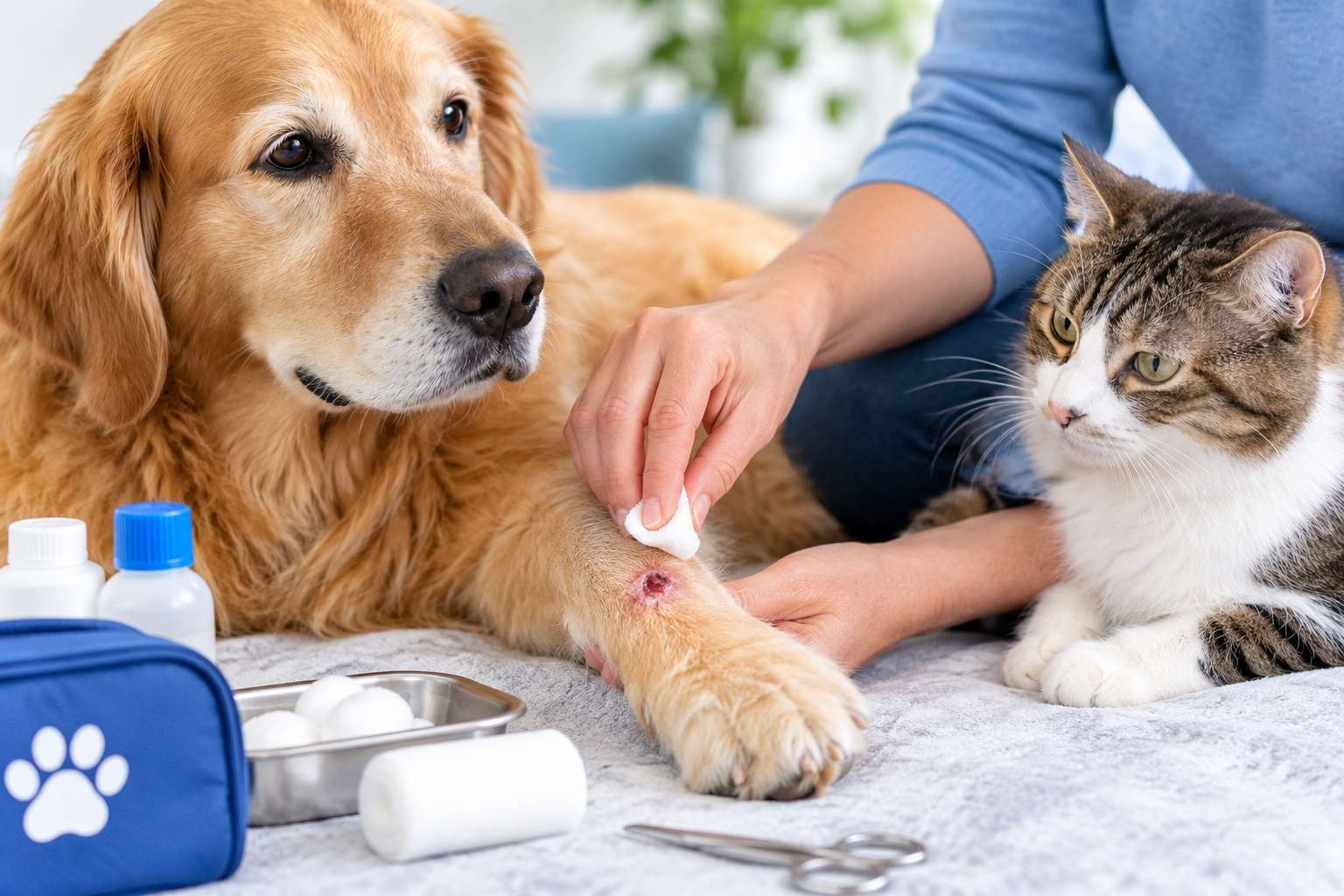
For a minor injury, gentle cleaning may be appropriate while you monitor the area and follow veterinary advice.
How should you clean a minor wound?
Gentle is the key word.
Use clean materials and avoid scrubbing or repeatedly disturbing the injured tissue. If you aren’t sure which cleaning solution is appropriate, ask your veterinarian rather than reaching for whatever happens to be in the bathroom cabinet.
Some household products can irritate damaged tissue or delay healing. Products intended for people aren’t automatically suitable for animals.
Keeping the area clean is useful, but more cleaning isn’t necessarily better. Excessive handling can irritate the wound and make your pet increasingly resistant to having the area examined.
Why shouldn’t your dog or cat lick a wound?
Dogs and cats naturally investigate injuries, and licking may seem like an attempt to clean the area. Unfortunately, repeated licking can irritate the wound and interfere with healing.
Your veterinarian may recommend a protective collar or another method of preventing access to the affected area, depending on the injury and its location.
Watch your pet closely after cleaning. If they immediately begin licking, scratching, chewing, or rubbing the wound, you may need to take additional steps to protect it.
What should you watch for while a wound heals?
Checking the wound regularly can help you notice changes.
Pay attention to increasing redness, swelling, warmth, discharge, unpleasant odor, worsening pain, or changes in your pet’s behavior. Loss of appetite, unusual tiredness, or reluctance to move can also be reasons to contact your veterinarian.
A wound that isn’t improving as expected deserves attention.
Try not to rely only on how the wound looks at one moment. Comparing it with how it looked previously can help you recognize whether things are improving or moving in the wrong direction.
When should you call the veterinarian?
Some wounds should be assessed by a veterinary professional rather than managed at home.
Deep wounds, punctures, serious bites, wounds near the eyes, injuries involving the chest or abdomen, uncontrolled bleeding, and wounds containing foreign material can require prompt veterinary attention.
Bite wounds deserve particular care because the visible opening may not show the full extent of the injury.
If you’re unsure whether a wound is minor, it’s safer to ask your veterinarian. A quick conversation can help you decide whether home care is appropriate or whether your pet needs an examination.
What can dog and cat parents learn about wound care?
Knowing basic wound-care principles can give you more confidence when your pet gets a minor injury. It can also help you recognize the difference between an injury that may need simple care and one that deserves veterinary attention.
The How to Clean and Care for Wounds in Your Dog or Cat course gives pet parents an opportunity to learn more about caring for wounds in both dogs and cats.
For animal parents who want to be better prepared for everyday mishaps, learning appropriate wound-care techniques can be a useful addition to their pet-care knowledge.
Take Our Course: “How to Clean and Care for Wounds in Your Dog or Cat”
Want to feel more prepared when your dog or cat gets a minor wound?
The How to Clean and Care for Wounds in Your Dog or Cat course can help you learn more about appropriate wound-care practices and what to consider when caring for an injured pet.
Frequently Asked Questions
Can I clean my dog’s or cat’s wound at home?
Some minor wounds may be appropriate for basic home care, but the right approach depends on the injury. Deep, serious, infected, or otherwise concerning wounds should be evaluated by a veterinarian.
Should I let my pet lick a wound?
It’s generally best to prevent repeated licking because it can irritate the injured area and interfere with healing. Your veterinarian can recommend an appropriate way to keep your pet from reaching the wound.
When does a pet wound need veterinary care?
Seek veterinary advice for deep wounds, punctures, significant bleeding, bite wounds, wounds with foreign material, injuries near sensitive areas, or wounds that become increasingly swollen, painful, red, or abnormal.
What should I avoid putting on my pet’s wound?
Avoid using household or human products unless your veterinarian has advised that they are appropriate for your pet. Some products can irritate injured tissue or be unsafe if licked or swallowed.