
What Should Dog and Cat Parents Know About High-Dose Vitamin C Therapy?
Vitamin C is probably best known as a nutrient found in foods and supplements. However, vitamin C can also be administered in injectable form. That raises an interesting question for dog and cat parents. What happens when vitamin C is given at a much higher dose?
High-dose vitamin C therapy is an area of integrative veterinary care that has attracted interest for its potential applications in certain health conditions. It is also an approach that requires professional oversight, since high doses and injectable treatments are very different from simply adding a vitamin supplement to your dog or cat’s diet.
TL;DR: High-dose vitamin C therapy involves administering vitamin C at doses well beyond ordinary nutritional supplementation, often intravenously. If you want to understand why this approach is being explored in veterinary care, take our “High Dose Vitamin C Therapy” course to learn more about its history, potential applications, and use in dogs and cats.
Why Is Vitamin C Important for Dogs and Cats?
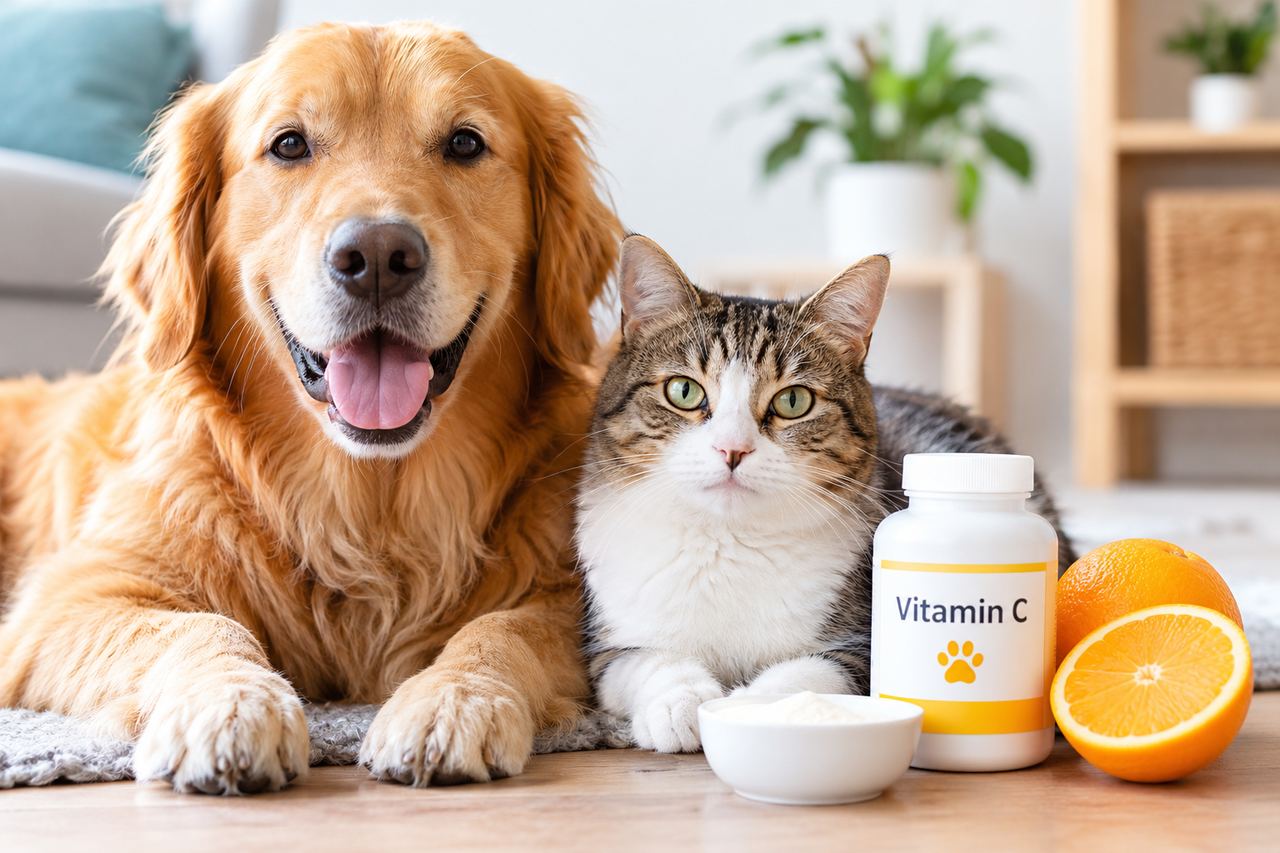
Vitamin C, also known as ascorbic acid, has several roles in the body, including antioxidant activity and involvement in collagen production. Unlike humans, healthy dogs and cats can make vitamin C themselves, so it isn’t considered an essential dietary vitamin for either species.
That doesn’t mean vitamin C has no place in veterinary care. Injectable vitamin C may be used for specific purposes under veterinary direction. The form, dose, and reason for using it are very different from giving a dog or cat a routine nutritional supplement.
This distinction matters. A high-dose treatment isn’t simply a bigger version of the vitamin C your pet might receive through food or an ordinary supplement.
What Is High-Dose Vitamin C Therapy?
High-dose vitamin C therapy refers to administering substantially larger amounts of vitamin C than would normally be provided through nutrition. The AWA course specifically focuses on high-dose vitamin C given intravenously and explores why this approach has been used in pets and people.
The course also looks at the history of vitamin C therapy and its potential applications in both dogs and cats.
For pet parents, understanding the reasoning behind an approach can be more useful than simply knowing its name. It gives you background you can bring into a conversation with your veterinarian about whether a particular therapy is appropriate for your companion.
Is High-Dose Vitamin C Used for Cancer?
Cancer is one of the areas discussed in connection with high-dose vitamin C therapy. The AWA course explores how the therapy has been considered for cancer and other health problems in dogs and cats.
That doesn’t mean vitamin C should be viewed as a proven cure for cancer. Cancer treatment varies depending on the type and stage of cancer, the individual animal, and the goals of care. Dogs and cats may receive treatments such as surgery, chemotherapy, radiation, or combinations of these approaches.
For dog and cat parents, learning about integrative therapies can help you understand what is being discussed and ask more informed questions when talking with your veterinary team.
Is High-Dose Vitamin C Safe for Dogs and Cats?
More isn’t always better.
Injectable vitamin C can have side effects, and high doses may cause gastrointestinal problems or increase the risk of bladder stone formation in susceptible animals. Certain dogs and cats may also need to avoid it or use it cautiously because of existing health conditions.
That’s why high-dose vitamin C therapy isn’t something to try on your own. The appropriate form, dose, route, and monitoring depend on the individual animal and the reason for treatment.
What Can Dog and Cat Parents Learn From This Course?
The High Dose Vitamin C Therapy course offers a focused introduction to this specialized area of integrative pet care. The lesson explores the history of vitamin C therapy and how high-dose intravenous vitamin C has been considered for dogs and cats.
Whether you share your home with a dog, cat, or both, the course can help you understand the ideas behind this approach and the potential applications being discussed. It gives you information you can use as a starting point for conversations with your veterinary team.
The course includes one lesson, a quiz, and a course certificate, making it a concise way to explore a specialized topic in veterinary wellness.
Take Our Course: “High Dose Vitamin C Therapy”
Curious about the history and potential applications of high-dose vitamin C in veterinary care?
The High Dose Vitamin C Therapy course takes a closer look at why high doses of vitamin C have been explored for dogs and cats, including its potential role in cancer and other health concerns. It gives dog and cat parents an opportunity to learn more about this specialized therapy and better understand what it involves.
Frequently Asked Questions
What is high-dose vitamin C therapy?
It is an approach that uses vitamin C at doses substantially higher than nutritional supplementation, often through intravenous administration. The AWA course focuses on this therapeutic approach in dogs and cats.
Can dogs and cats make their own vitamin C?
Yes. Healthy dogs and cats can synthesize vitamin C, so it isn’t considered an essential dietary vitamin for either species.
Is high-dose vitamin C a cure for cancer in dogs or cats?
No. High-dose vitamin C should not be presented as a proven cure for cancer. The AWA course explores its potential use in cancer and other health problems, while cancer treatment depends on each animal’s diagnosis and may involve established veterinary therapies.
Should I give my dog or cat high-dose vitamin C myself?
No. High-dose or injectable vitamin C should be discussed with your veterinarian. Injectable vitamin C has potential risks and may not be appropriate for every dog or cat.