
How Can Canine Rehabilitation Improve Your Dog’s Mobility and Quality of Life?
Watching your dog struggle to get up, climb stairs, walk comfortably, or keep up on a favorite outing can be difficult. Mobility changes can affect much more than how a dog moves. They can also change how much they play, interact with the family, and enjoy everyday activities.
Canine rehabilitation offers one way to support dogs dealing with mobility challenges. Depending on the individual dog and the reason for the problem, rehabilitation may be incorporated into a broader veterinary care plan to help support movement, comfort, strength, and daily function.
TL;DR: Canine rehabilitation can be an important part of caring for dogs with mobility challenges, helping address movement and function as part of a broader care plan. If you want to learn more about how rehabilitation may support your dog, the “How Canine Rehabilitation Can Improve Your Dog’s Mobility and Quality of Life” course is a useful place to start.
What is canine rehabilitation?
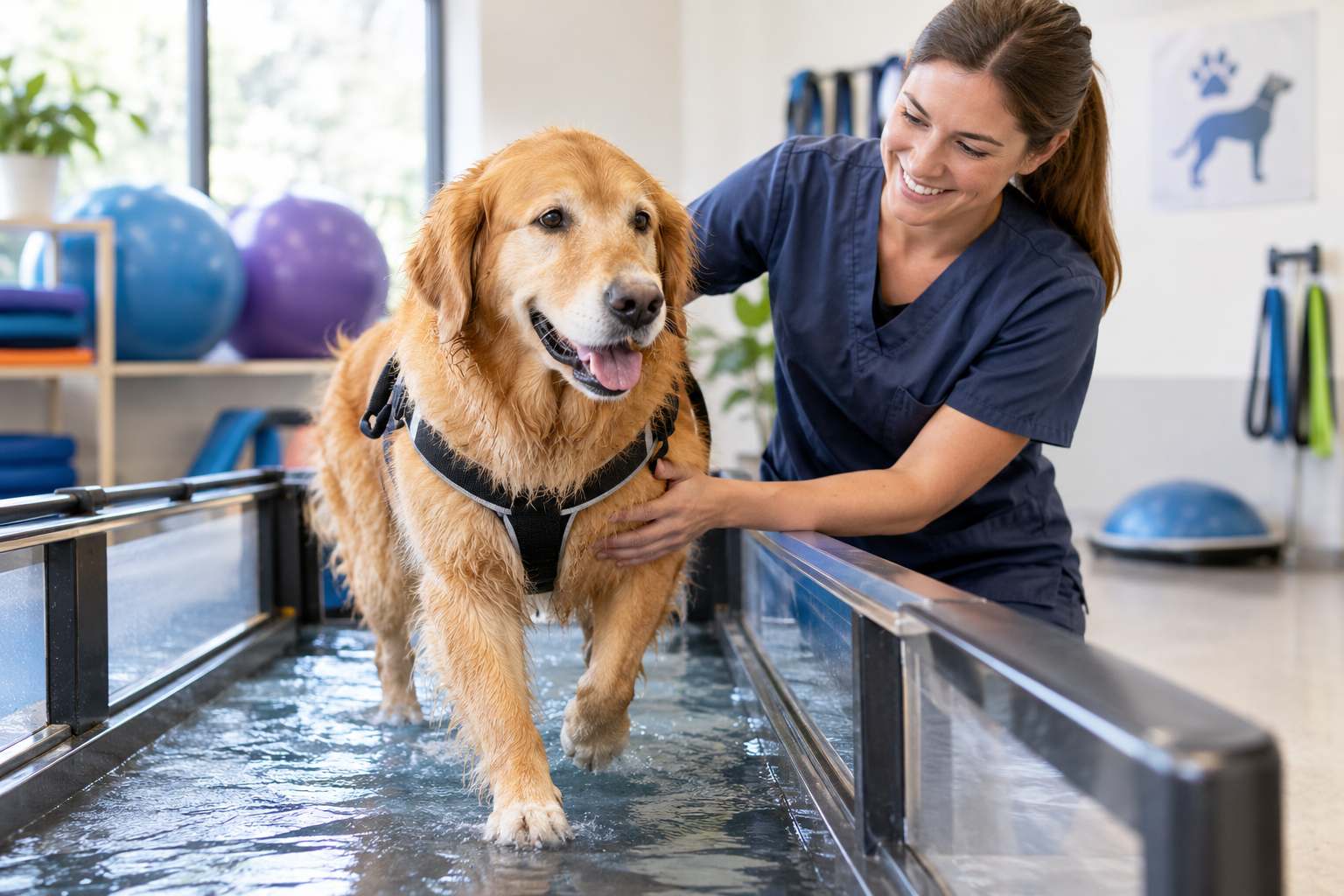
Canine rehabilitation uses therapeutic approaches to help dogs work toward better physical function. It may be considered for dogs recovering from injury or surgery, living with chronic conditions, or experiencing age-related mobility changes.
Rehabilitation isn’t a one-size-fits-all process. A dog’s condition, age, physical abilities, and goals all matter when determining what type of support may be appropriate.
For pet parents, that can be an important distinction. An exercise that seems simple may not be suitable for every dog, particularly when an injury, neurological condition, or painful joint problem is involved.
Which dogs may benefit from rehabilitation?
Rehabilitation can be relevant to dogs experiencing a range of mobility concerns. Dogs recovering from orthopedic procedures, dealing with joint problems, or living with neurological conditions may have rehabilitation included in their care.
Senior dogs can also experience changes in strength, balance, endurance, and movement. Supporting those changes thoughtfully may help them continue participating in activities they enjoy.
The first step is understanding why your dog’s mobility has changed. A veterinary evaluation can help identify the underlying problem and determine whether rehabilitation is appropriate.
How can rehabilitation support a dog’s mobility?
The goals of rehabilitation depend on the individual dog. Improving mobility may involve working on areas such as strength, flexibility, balance, endurance, or coordination.
The process can also change over time. A dog recovering from an injury may have different goals early in recovery than later, when the focus may shift toward rebuilding function and conditioning. AWA’s rehabilitation resources describe these changing goals, including improving mobility, endurance, strength, and neuromuscular control as a patient progresses.
That gradual approach is part of what makes professional guidance valuable.
Can rehabilitation improve a dog’s quality of life?
Mobility is closely tied to the things dogs do every day. Getting outside, moving around the house, playing, interacting with people, and maintaining normal routines all depend on physical function.
For some dogs, rehabilitation can be part of a broader strategy aimed at maintaining or improving those abilities. AWA also describes rehabilitation as part of multimodal care for certain painful musculoskeletal conditions rather than viewing a single therapy as the whole solution.
Quality of life isn’t only about whether a dog can walk. It’s also about what that dog can comfortably do and enjoy.
What can dog parents learn about canine rehabilitation?
If you’ve ever wondered whether rehabilitation could help your dog move more comfortably, learning about the approach can give you a better starting point.
The How Canine Rehabilitation Can Improve Your Dog’s Mobility and Quality of Life course gives pet parents an opportunity to explore canine rehabilitation and its potential role in supporting mobility and quality of life. The AWA course is presented by veterinarian Dr. Janice Huntingford and is specifically listed under dog health.
Learning more can also help you have more informed conversations with your veterinary team about your dog’s individual needs.
Take Our Course: “How Canine Rehabilitation Can Improve Your Dog’s Mobility and Quality of Life”
Want to learn more about canine rehabilitation and how it may support your dog’s mobility?
Our How Canine Rehabilitation Can Improve Your Dog’s Mobility and Quality of Life course gives dog parents a chance to explore this important area of veterinary care and better understand how rehabilitation may fit into a dog’s overall wellness plan.
Frequently Asked Questions
What is canine rehabilitation?
Canine rehabilitation uses therapeutic approaches to support a dog’s physical function, movement, and recovery. It may be used as part of care for certain injuries, surgeries, chronic conditions, or mobility changes.
Can senior dogs benefit from rehabilitation?
Some senior dogs may benefit from rehabilitation, depending on their individual health and mobility needs. A veterinary assessment can help determine whether rehabilitation is appropriate.
Can rehabilitation help a dog after surgery?
Rehabilitation may be included in recovery plans after certain surgeries. The appropriate approach depends on the procedure, the dog’s condition, and guidance from the veterinary team.
Should I start rehabilitation exercises with my dog at home?
Talk with your veterinarian or a qualified rehabilitation professional before starting exercises, particularly if your dog has an injury, recent surgery, pain, or a neurological condition. The right exercises and level of activity can vary considerably between dogs.