

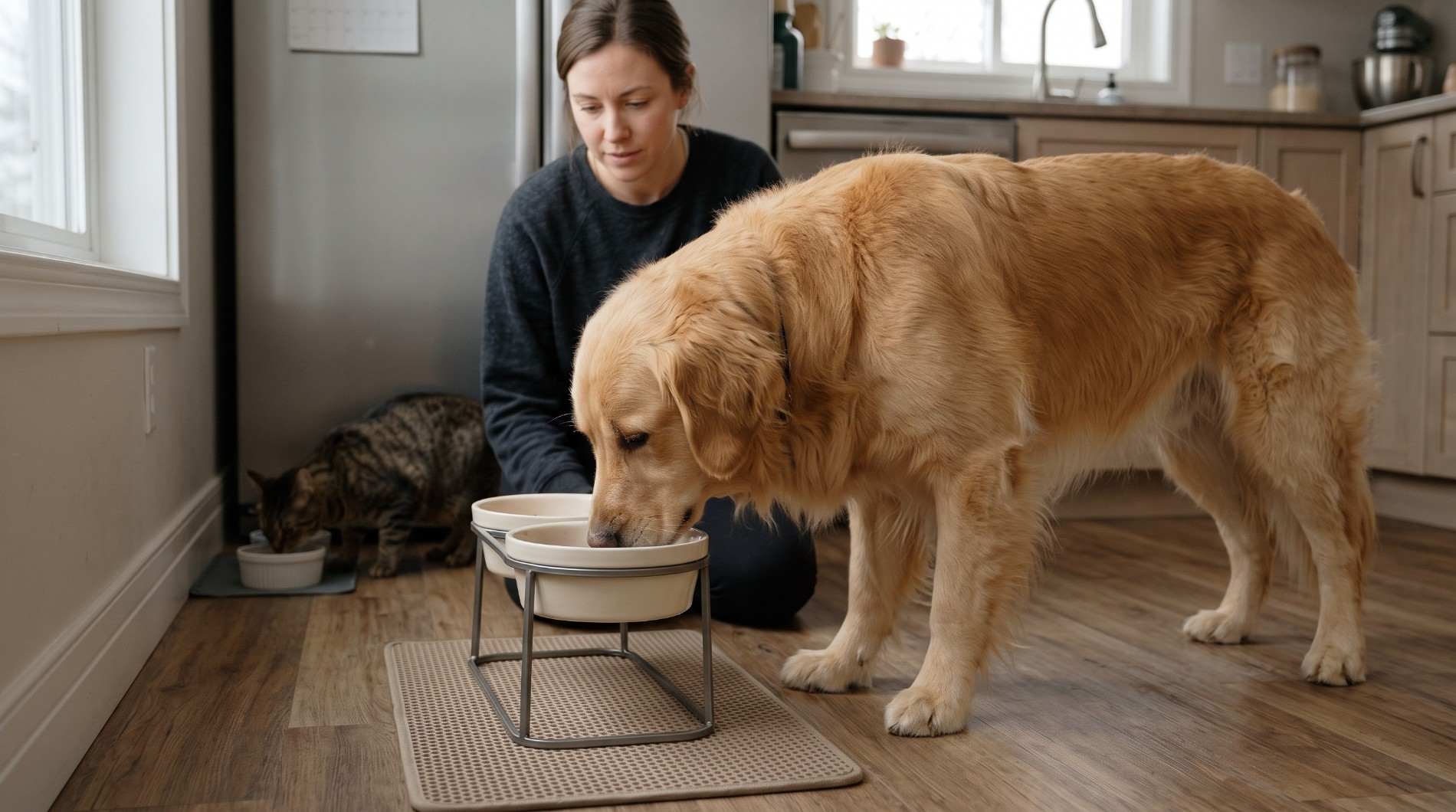
How Can Eating Habits Affect Your Dog’s Oral and Spinal Health?
The way your dog eats can tell you more than whether they’re hungry. Changes in chewing, food preferences, eating speed, or posture at the bowl may sometimes offer clues about your dog’s comfort and physical health.
Oral health and mobility are also connected to everyday activities like eating. A dog with dental discomfort may chew differently or avoid certain foods, while a dog experiencing pain or limited movement may have difficulty getting into a comfortable position to eat.
TL;DR: Your dog’s eating habits can offer useful clues about their oral health, comfort, and physical function. Paying attention to how your dog eats, what they choose to eat, and changes in their eating posture can help you spot concerns worth discussing with your veterinarian. To learn more about the relationship between eating habits, oral health, and spinal health, explore our “How Eating Habits Affect Oral Spinal Health” course.
What can your dog’s eating habits tell you?
Dogs are creatures of habit. If your dog suddenly takes longer to finish a meal, drops food from their mouth, chews differently, or avoids harder foods, it may be worth paying attention.
These changes don’t automatically mean your dog has a dental or spinal problem. Still, they can provide useful information about what’s happening.
Oral discomfort, for example, can affect the way a dog approaches food. AWA recommends watching for signs such as drooling, pawing at the mouth, bad breath, and changes in eating habits when monitoring dental health.
Your dog’s usual eating routine gives you something to compare against. That’s helpful.
How does eating relate to your dog’s oral health?
Eating requires the mouth, teeth, tongue, jaw, and surrounding muscles to work together.
Teeth help dogs grasp and break down food, while the tongue helps move food around the mouth. When something hurts, a dog may change the way they chew or handle food.
Some dogs may also show less obvious signs. They might still eat but take longer, favor one side of the mouth, or choose softer foods.
Regular dental care remains important. Brushing your dog’s teeth, paying attention to changes in the mouth, and arranging veterinary dental examinations when appropriate can help you stay aware of their oral health.
Can eating posture tell you something about your dog’s spine?
Eating isn’t only about the mouth. Your dog also needs to position their head, neck, and body to reach the food bowl.
A dog with discomfort affecting the neck, back, or limbs may alter their posture or movement around mealtimes. You might notice hesitation when bending down, shifting position repeatedly, or difficulty getting into a comfortable stance.
Again, these observations aren’t a diagnosis. They are clues.
If your dog’s eating posture suddenly changes, particularly alongside stiffness, weakness, reluctance to move, or other signs of discomfort, a veterinary assessment is appropriate.
Why should dog parents look at eating habits as a whole?
It can be tempting to focus on one behavior. Your dog isn’t finishing breakfast, so you assume they’re being picky. They’re eating more slowly, so you simply switch foods.
Sometimes, though, a change in eating behavior deserves a closer look.
Looking at your dog’s mouth, body posture, movement, appetite, and overall behavior together can provide a fuller picture. This doesn’t mean every small change signals a health problem. It means your observations can help you recognize when something is different.
Nutrition matters here, too. Maintaining a healthy weight can reduce unnecessary stress on a dog’s body, including the spine, while an appropriate, complete diet supports overall health.
What can you learn about eating habits and oral spinal health?
If you’ve ever wondered whether the way your dog eats could tell you something about their health, the How Eating Habits Affect Oral Spinal Health course gives you an opportunity to explore the subject in greater detail.
The course can help dog parents think about eating habits from a broader perspective, including the relationship between the mouth, eating behavior, posture, and physical health.
That perspective may help you become a more observant pet parent and give you better questions to bring to your veterinary team when something changes.
Take Our Course: “How Eating Habits Affect Oral Spinal Health”
Want to learn more about the connection between eating habits and your dog’s oral and spinal health?
Our How Eating Habits Affect Oral Spinal Health course gives pet parents an opportunity to explore this relationship and take a closer look at what everyday eating behaviors may reveal about their dogs. If you’re interested in understanding your dog’s health from more than one angle, this course is a useful place to start.
Frequently Asked Questions
Can eating habits indicate a dental problem in dogs?
They can sometimes provide clues. Changes such as slower eating, dropping food, chewing differently, or changes in food preferences may warrant attention, especially when they occur alongside other signs of oral discomfort.
Can spinal discomfort affect how a dog eats?
It may affect a dog’s ability to find a comfortable eating position. Changes in posture or reluctance to bend or move should be discussed with a veterinarian, particularly if they appear suddenly or persist.
Should I change my dog’s food if their eating habits change?
Not automatically. A change in eating behavior can have many possible causes. If the change is unusual or persistent, speak with your veterinarian before assuming the food itself is the problem.
What should I watch for during my dog’s meals?
Pay attention to changes in eating speed, chewing, posture, appetite, food preferences, and overall behavior. These observations can give you useful information to share with your veterinarian.