

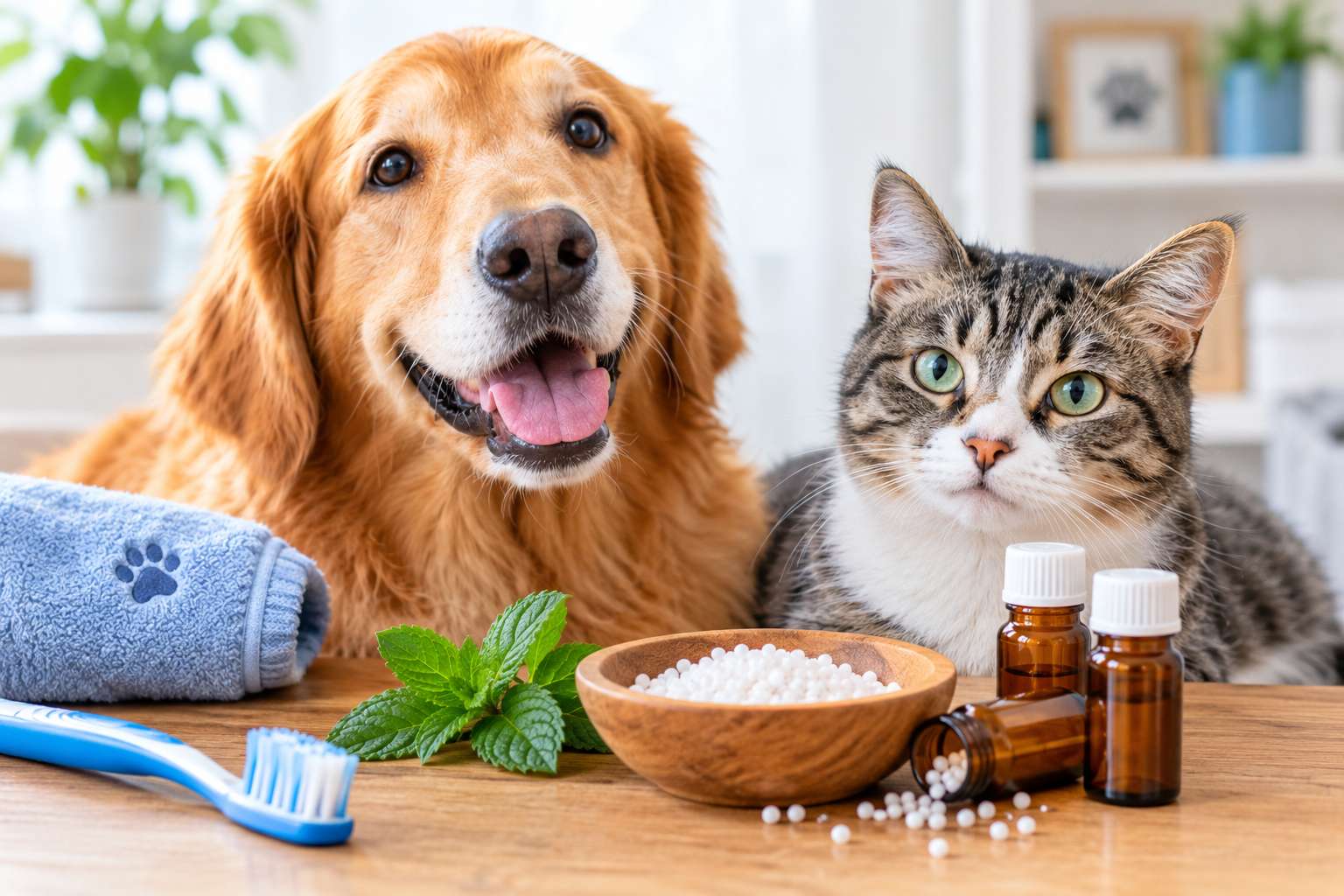
Can Homeopathy Help Your Dog or Cat’s Dental Problems?
Dental problems are common in dogs and cats, but they can be easy to overlook. A pet may continue eating normally even when their mouth is uncomfortable, leaving subtle changes in behavior as some of the first clues that something is wrong.
Bad breath, red or swollen gums, drooling, chewing differently, dropping food, or reluctance to have the mouth touched can all deserve attention. Regular dental care matters, too. Brushing, appropriate dental routines, and veterinary examinations can help you stay ahead of problems rather than waiting until your pet is clearly uncomfortable.
For pet parents interested in complementary approaches, homeopathy may also raise questions. Understanding what it can and cannot do is an important part of making informed choices about your pet’s dental care.
TL;DR: Homeopathy is one complementary approach some pet parents may want to learn more about when caring for their dog or cat’s dental health. It should not replace appropriate veterinary evaluation or treatment for dental disease. If you want to explore the topic further, our “Homeopathic Help for Your Dog or Cat’s Dental Problems” course can help you learn more about this approach and how it may fit into a broader dental-care routine.
What are the signs of dental problems in dogs and cats?
Your pet can’t tell you that their tooth hurts, so small changes can matter.
Bad breath is one of the signs pet parents commonly notice. You may also see gum redness, plaque or tartar buildup, excessive drooling, changes in chewing, or a preference for softer food. Some pets become less interested in toys or resist having their face or mouth handled.
Cats can be especially good at hiding discomfort. A change in eating habits or behavior may therefore be worth discussing with your veterinarian.
Don’t wait for severe symptoms before paying attention to your pet’s mouth.
Can homeopathy replace veterinary dental care?
No. A suspected dental problem deserves proper veterinary attention.
Dental disease can involve more than what you can see on the surface of the teeth. A veterinary professional can assess your pet’s mouth and determine whether treatment is needed.
Homeopathy, if used, should be considered within that bigger picture rather than as a reason to delay an examination or recommended dental treatment.
That distinction matters. Complementary care and veterinary care don’t have to be treated as competing choices.
Why might pet parents explore homeopathic approaches?
Some dog and cat parents are interested in learning about complementary options as part of a broader approach to their pets’ wellness. Homeopathy is one of those approaches, but it can be difficult to know where to begin or what questions to ask.
Learning more can help you separate a thoughtful approach from assumptions about what a particular remedy can accomplish.
It can also give you a better foundation for discussing your options with your veterinarian.
What can you learn about homeopathic help for dental problems?
If you’re curious about homeopathy and your pet’s dental health, the Homeopathic Help for Your Dog or Cat’s Dental Problems course offers an opportunity to explore the subject in greater detail.
Rather than trying to figure everything out from scattered information online, a dedicated course can give you a starting point for understanding the topic and considering how complementary care fits alongside your pet’s regular dental routine.
For pet parents who want to become more informed about their dogs’ or cats’ dental wellness, learning about different approaches can help you have more useful conversations with the professionals involved in your pet’s care.
How can you support your pet’s dental health?
Homeopathic approaches are only one part of the conversation. Daily dental care matters, too.
Depending on your pet and their individual needs, this may include regular tooth brushing, appropriate dental products, monitoring their mouth, and scheduling veterinary dental examinations when recommended.
Most importantly, pay attention to changes. A pet who suddenly has bad breath, struggles to chew, drools more than usual, or acts differently around food may need an assessment.
Small observations can give you an opportunity to act before a problem becomes more difficult to manage.
Take Our Course: “Homeopathic Help for Your Dog or Cat’s Dental Problems”
Want to learn more about homeopathy and how it relates to dental problems in dogs and cats?
Our Homeopathic Help for Your Dog or Cat’s Dental Problems course gives pet parents an opportunity to explore this complementary approach and build their understanding of the topic.
Frequently Asked Questions
Can homeopathy treat dental disease in dogs and cats?
Homeopathy should not be viewed as a replacement for veterinary diagnosis or treatment. Dental problems can require professional assessment and care.
What are common signs of dental problems in pets?
Bad breath, red or swollen gums, plaque or tartar, drooling, changes in chewing, dropping food, and changes in eating behavior can be signs that warrant attention.
Should I take my pet to the veterinarian for dental problems?
Yes. If you notice signs of dental discomfort or disease, a veterinary examination can help determine what is happening and whether treatment is needed.
Can homeopathy be part of a pet’s dental-care routine?
Some pet parents explore complementary approaches alongside conventional veterinary care. If you’re considering homeopathy, learning more about it and discussing your plans with your veterinarian can help you make informed decisions.